How to Develop a New Dog Shoe
author: Gigi
2026-11-27
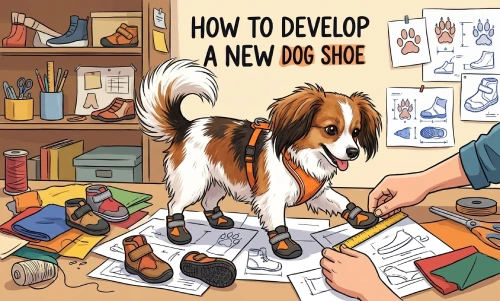
Developing a new dog shoe requires more than creating an attractive design. Unlike ordinary pet accessories, dog footwear must balance paw anatomy, walking comfort, material performance, protective functionality, and manufacturing feasibility.
Whether a business chooses OEM manufacturing based on its own design or ODM cooperation with a manufacturer's dog shoe product development team, understanding the complete development process helps reduce technical risks, avoid unnecessary sampling costs, and improve time-to-market efficiency.
1. How Does Market Research Identify Opportunities for a New Dog Shoe?
Before starting dog shoe product development, manufacturers and buyers should identify the specific market demand the new product is expected to address.
1.1 What Market Factors Should Be Evaluated Before Developing Dog Shoes?
Market research should examine four major areas:
- Target dog breeds and sizes: Small breeds may require lightweight footwear with flexible soles, while larger dogs may need stronger materials and greater abrasion resistance.
- Application scenarios: Summer pavement protection, winter snow, rainy conditions, indoor traction, and outdoor activities require different constructions.
- Competitor products: Analyze existing shoe designs, closure systems, material combinations, price ranges, and customer complaints.
- Consumer pain points: Common problems include shoes falling off, restricted paw movement, insufficient grip, poor breathability, and inconsistent sizing.
A particularly important issue is fit. Dog paws differ in length, width, toe distribution, and shape. A product designed around paw length alone may create pressure or excessive movement.
Practical market research should also involve examining existing dog shoe samples and documenting common fit problems. Comparing competitor products, collecting customer feedback, and recording paw measurements can help establish a more reliable dog shoe product development direction before prototyping begins.
1.2 How Should Buyers Define a New Dog Shoe Design?
Once market opportunities are identified, buyers should prepare a product brief covering:
1. Target market and intended application.
2. Main functional requirements.
3. Reference designs and preferred appearance.
4. Expected size range and breed coverage.
5. Target manufacturing cost and order quantity.
6. Branding, packaging, and delivery requirements.
In OEM cooperation, buyers generally provide the initial concept or specifications. In ODM cooperation, manufacturers contribute more actively to new dog shoe design development, construction recommendations, and product optimization.
2. How Are Dog Shoe Designs and Prototypes Developed?
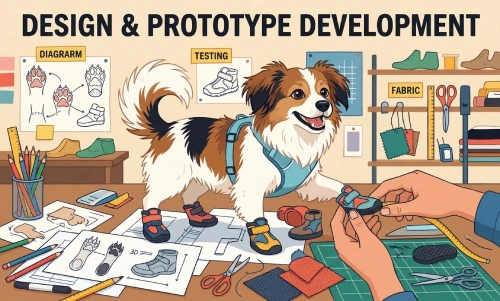
After confirming the product direction, the project moves into structural new dog shoe design and sample dog shoe product development. This stage translates a market concept into a physical product that can be evaluated and improved.
2.1 What Technical Elements Define a Successful New Dog Shoe Design?
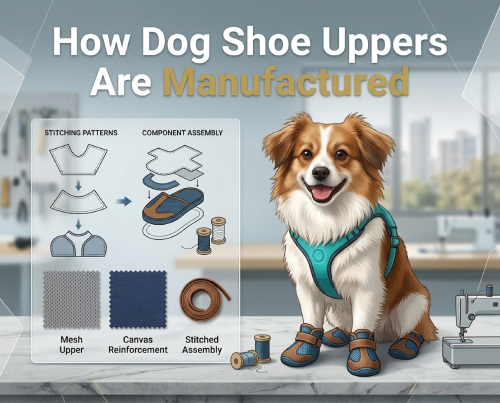
Upper structure: The upper must provide sufficient coverage without restricting paw movement. Mesh, polyester, nylon, and synthetic leather offer different levels of breathability, flexibility, and protection.
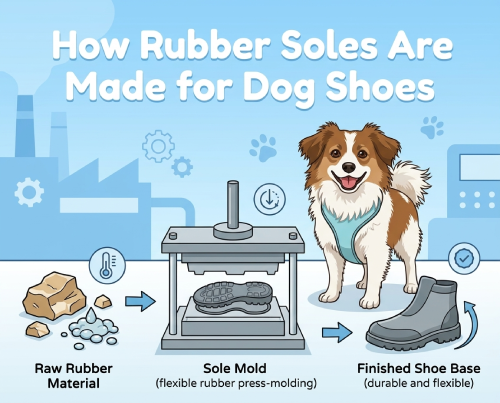
Outsole geometry: Sole thickness, flexibility, surface texture, and contact area influence grip and walking stability. A rigid outsole may improve protection but can interfere with natural paw movement.
Closure system: Hook-and-loop straps, elastic openings, and zippers must provide secure retention without excessive pressure around the ankle.
Internal construction: Lining, seams, reinforcement, and internal space affect comfort and reduce friction during movement.
2.2 What Happens During the Dog Boot Development Process?
The dog boot development process usually involves pattern development, component preparation, prototype construction, and repeated new dog shoe design adjustments.
A typical workflow includes:
- Preparing technical sketches and dimensional specifications.
- Developing shoe patterns based on paw measurements.
- Selecting an existing sole platform or developing a customized outsole.
- Producing the first physical prototype.
- Evaluating shape, opening dimensions, closure positioning, and construction.
- Revising the new dog shoe design according to fitting and performance feedback.
For OEM/ODM projects, these records also provide a practical reference for communicating design changes and confirming final specifications.
2.3 Why Are Technical Specifications Important for OEM/ODM Cooperation?
A technical specification sheet, commonly called a tech pack, should document:
- Product dimensions and size grading.
- Material descriptions and thickness.
- Upper and outsole construction.
- Stitching and bonding requirements.
- Closure specifications.
- Color references and logo positions.
- Packaging and labeling details.
Without these specifications, different departments may interpret the same new dog shoe design differently, resulting in inconsistent samples and production batches.
3. How Do Material Selection, Trial Production, and Product Testing Work?
Material selection and product testing determine whether a proposed design can deliver the expected performance under actual usage conditions.
| Product Application | Upper Material | Outsole Material | Main Performance Priority |
| Summer dog shoes | Breathable mesh, lightweight polyester | Thin rubber or TPR | Ventilation and flexibility |
| Winter dog boots | Insulated fabric, nylon | Rubber or TPR | Warmth, grip, and protection |
| Waterproof dog shoes | Coated textile, synthetic materials | Rubber or PVC | Water resistance and durability |
| Outdoor walking shoes | Reinforced nylon, synthetic leather | Abrasion-resistant rubber | Traction and wear resistance |
| Indoor dog shoes | Soft textile, flexible fabric | Lightweight anti-slip material | Comfort and floor grip |
Material selection should also account for compatibility between components.
During dog shoe product development, buyers should evaluate the complete material combination rather than selecting each component independently.
3.2 Why Is Trial Production Necessary Before Mass Manufacturing?
Trial production checks whether the approved new dog shoe design can be reproduced using actual production materials, equipment, and operating procedures.
Important inspection areas include:
- Cutting accuracy and material utilization.
- Stitching consistency and seam strength.
- Sole bonding and alignment.
- Closure positioning and fastening performance.
- Finished dimensions and pair symmetry.
- Production efficiency and defect rates.
3.2 What Tests Should Be Conducted Before Approving a New Dog Shoe?
Fit and wear testing: Evaluate whether shoes remain securely positioned during walking and turning. Observe pressure points, slipping, and restricted movement.
Flexibility testing: Check whether the outsole and upper can withstand repeated bending without cracking or separating.
Abrasion testing: Assess sole and upper resistance to friction under representative use conditions.
Bonding and seam testing: Evaluate whether adhesive connections and stitched areas maintain their structural integrity.
Water resistance testing: For waterproof products, assess water penetration through materials, seams, and component connections.
Fastener testing dog shoe R&D: Repeatedly open and close straps or other fastening systems to evaluate retention and wear.
A reliable dog shoe product development process should document test conditions and results instead of relying only on visual inspection. Waterproof materials should be tested at both material and finished-product levels because seams and component connections may create additional leakage risks.
Recording test results and dog shoe R&D helps manufacturers compare material options, identify weak points, and improve subsequent samples. Where possible, controlled wear trials using dogs of different sizes can provide practical feedback that laboratory tests alone cannot fully capture.
4. How Does Dog Shoe R&D Move from Approved Samples to Mass Production?
The final stage dog shoe R&D connects product engineering with commercial manufacturing.
4.1 How Do Factories Prepare for Mass Production?
A production-ready dog shoe product development package should include an approved reference sample, final technical drawings, material specifications, size grading, packaging requirements, and quality inspection dog shoe R&D standards.
The factory then organizes:
- Raw material purchasing and incoming inspection.
- Production scheduling and workstation allocation.
- Cutting, sewing, assembly, and sole attachment.
- Dog boot development process quality inspections.
- Final product dog shoe R&D inspection and packaging.
Guangzhou Petsun has specialized in premium quality pet shoes and dog boot development process since 1999, a controlled dog shoe R&D process should also establish version management.
4.2 What Are the Most Common Problems in New Dog Shoe Development?
Q1: Why do some new dog shoes look good but perform poorly during walking?
Appearance-focused dog shoe product development may overlook paw movement, weight distribution, closure retention, and outsole flexibility. Fit and wear testing dog shoe R&D should take place before final sample approval.
Q2: How can manufacturers prevent dog shoes from falling off?
Evaluate the relationship between paw dimensions, opening circumference, upper height, and fastening position. A more secure design should distribute holding force without creating excessive pressure.
Q3: Does developing a completely new outsole require additional tooling?
Usually, a new outsole geometry requires dedicated tooling. However, modifying an existing outsole through color, hardness, or surface adjustments may avoid the cost of developing a new mold. The decision depends on the extent of structural customization.
Q4: How many sample revisions are normally required?
There is no fixed number. A relatively simple modification may require only one or two rounds, while completely new constructions, custom soles, and complex size ranges may require additional revisions. The important point is to define measurable approval criteria for each round.
Q5: How can buyers protect their investment during OEM/ODM development?
Confirm design ownership, mold ownership, material specifications, confidentiality obligations, and restrictions on reproducing exclusive designs. These terms should be documented before dog shoe product development begins.
Q6: What is the biggest difference between sample approval and production approval?
Sample approval confirms that the product design meets expectations. Production approval confirms that the factory can reproduce that design consistently using production-intent materials, dog boot development process, and quality dog shoe R&D standards. A pre-production sample should bridge these two stages.
Whether you are planning a completely new collection,dog boot development process or improving an existing shoe model, you can contact Guangzhou Petsun for more information to start your next dog shoe development project.