How to Order Dog Shoes in Bulk
author: Gigi
2026-10-26
Chapter 1: How Should Buyers Prepare Before Ordering Bulk Dog Shoes?
Ordering bulk dog shoes requires more than selecting designs and negotiating prices. A weak process at any stage can lead to size imbalances, delayed delivery, unexpected costs, or products that fail to meet market expectations.
1.1 What Information Should Buyers Prepare Before Requesting a Quote?
Before contacting a supplier, define the target market, intended use, expected retail price, and estimated sales volume. Everyday walking shoes, breathable summer footwear, waterproof boots, and winter dog shoes have different material and construction requirements.
Prepare a purchasing brief that specifies:
- Product type, upper materials, sole construction, and closure system
- Size range, size chart, color options, and expected size distribution
- Estimated order quantity and customization requirements
- Packaging, labeling, delivery destination, and target delivery date
- Required quality standards and product testing
These details help suppliers quote comparable products rather than provide prices based on different assumptions. When buyers order dog shoes wholesale, incomplete specifications can create disputes later, especially when the sample and mass-produced goods are interpreted differently.
1.2 How Can Buyers Compare Quotes and Minimum Order Quantities?
The minimum order quantity dog shoes suppliers require depends on whether the product is a standard design, a customized item, or a new development. Existing designs may allow smaller orders, while custom colors, printed logos, new patterns, or specialized materials can require higher quantities.
| Purchasing factor | What buyers should verify |
| Unit price | Material, construction, packaging, and quantity basis |
| MOQ | Whether it applies per style, color, size, or total order |
| Sampling | Sample fees, customization costs, and approval time |
| Lead time | Production duration after deposit and final approval |
| Payment terms | Deposit, balance timing, and payment method |
| Shipping | Incoterms, freight responsibility, and destination charges |
A lower unit price does not automatically mean a better deal. Buyers should calculate landed cost, including freight, duties, inspection, packaging, warehousing, and potential returns. For a first dog shoe bulk order, a smaller trial quantity may be worth the higher unit cost because it limits inventory exposure while product demand is still uncertain.
Chapter 2: How Do Sampling, Confirmation, and Order Placement Work?
2.1 Why Is Sample Approval Essential Before a Wholesale Dog Boots Order?
A sample verifies whether the proposed design can meet the buyer's requirements before mass production begins. It should use the intended materials, stitching method, sole construction, closure components, and branding wherever possible.
For bulk dog shoes, buyers should test more than appearance. Check the fit across representative sizes, sole flexibility, grip, seam strength, closure security, and comfort during movement. Waterproof or winter products require additional checks relevant to their intended use.
If the sample needs changes, document each revision and request an updated version. Keep a signed or otherwise formally approved reference sample, along with the final specification sheet. Verbal approval alone can leave room for disagreement over fabric thickness, color, logo placement, or construction.
2.2 What Should Buyers Confirm Before Placing a Dog Shoe Bulk Order?
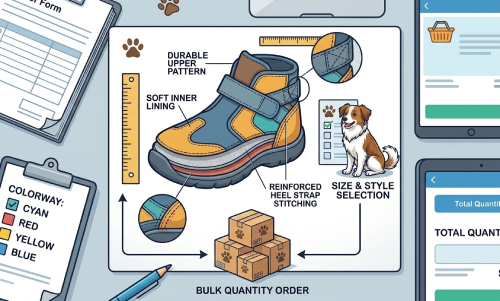
Once the sample is approved, the buyer and supplier should confirm all commercial and technical details in writing. The purchase order should identify the exact product version, quantities, size breakdown, colors, packaging, unit prices, payment terms, production lead time, and delivery arrangements.
For customized bulk dog shoes, artwork files and logo placement should also be approved. Confirm whether substitutions are permitted if a material becomes unavailable. Any proposed substitution should require buyer approval before implementation.
The order confirmation should clearly distinguish the sample approval date, production start conditions, estimated completion date, and shipping schedule. Lead times often begin only after the deposit, artwork, and final specifications have been confirmed. Clarifying this prevents misunderstandings when a buyer expects production to begin immediately after sending an inquiry.
2.3 How Can Buyers Manage Deposits and Payment Risks?
Payment terms vary by supplier, order size, and business relationship. Buyers should verify the supplier's legal identity, business details, bank account information, and contractual terms before transferring funds.
Avoid making payments to newly introduced bank accounts without independent verification. For larger dog shoe bulk order commitments, use a documented purchase order and agree on how delays, quality failures, cancellations, and refunds will be handled. Payment milestones should align with clear contractual obligations rather than informal promises.
Chapter 3: How Can Buyers Control Production, Quality, and Shipping Risks?
3.1 How Should Buyers Track Bulk Dog Shoes During Production?
After order confirmation, create a simple production schedule with milestones for material procurement, cutting, sewing, sole attachment, finishing, inspection, and packing. Request progress updates at agreed intervals, particularly when the order includes custom materials or multiple styles.
A production tracker should record planned dates, actual progress, outstanding issues, and the person responsible for each action. This makes it easier to identify delays before they affect the shipping deadline.
3.2 What Quality Inspections Should Take Place Before Shipment?
Quality control should occur throughout production rather than only when finished shoes are packed. Incoming materials should be checked for defects and consistency. During production, inspections can identify inaccurate cutting, weak seams, uneven sole attachment, and inconsistent sizing before large quantities are affected.
Before shipment, buyers should inspect the finished products against the approved sample and purchase order.
| Inspection stage | Main checks |
| Incoming materials | Fabric quality, color, thickness, and component specifications |
| In-process inspection | Cutting accuracy, stitching, bonding, and assembly |
| Final inspection | Appearance, measurements, closure function, and sole attachment |
| Packing inspection | Size labels, quantities, carton markings, and packaging condition |
For larger bulk dog shoes shipments, buyers can arrange an independent pre-shipment inspection using an agreed sampling plan and defect-acceptance criteria. The inspection scope should distinguish critical safety-related defects, major functional defects, and minor cosmetic issues.
A supplier's internal inspection report is useful, but it should not replace clearly agreed acceptance requirements. For products making claims about water resistance, grip, or durability, buyers should define appropriate tests instead of relying on visual checks alone.
3.3 How Can Importers Prevent Shipping Delays and Unexpected Costs?
Before production finishes, confirm the destination address, shipping method, carton dimensions, gross weight, shipping marks, and required export documents. Air freight may suit urgent or smaller shipments, while sea freight is often considered for larger orders with more flexible delivery schedules.
Confirm the applicable Incoterms and identify who is responsible for freight, insurance, export clearance, import clearance, and destination charges. Buyers should also verify customs classification, import duties, and destination-country product or labeling requirements with the relevant logistics provider or customs professional.
A dog shoe bulk order should not be considered complete simply because the factory has finished production. Goods must also be packed correctly, shipping documents must be accurate, and the shipment must be traceable.
Chapter 4: After-Sales Management and Common B2B Purchasing Questions
4.1 What Should Buyers Do If Bulk Dog Shoes Arrive with Defects?
Before placing an order, agree on a written claims procedure covering notification deadlines, required photographs, defect evidence, inspection records, and possible remedies. Depending on the contract, remedies may include replacement goods, rework, credit, or another mutually agreed solution.
When a wholesale dog boots order arrives, compare carton quantities, size labels, and product condition against the packing list and purchase order. Report discrepancies promptly and retain packaging, samples, and inspection evidence until the issue is resolved.
4.2 How Can Buyers Improve Repeat Orders and Inventory Planning?
After selling the first batch, review sales by size, style, and season. Track return reasons, customer complaints, product defects, and sell-through rates. This information helps buyers adjust future bulk dog shoes orders rather than simply repeating the original size distribution.
A structured purchasing record should retain approved samples, final specifications, purchase orders, inspection reports, shipping documents, and claims history. This creates a consistent reference for subsequent dog shoe bulk order negotiations and reduces the risk of specifications drifting between batches.
FAQ: What Are the Most Common Mistakes When Ordering Dog Shoes Wholesale?
Can buyers place a large order without testing samples?
It is risky, especially for new suppliers or customized designs. A sample helps verify fit, materials, construction, and functional performance before substantial inventory commitments are made.
Is a lower MOQ always better?
No. A smaller minimum order quantity dog shoes arrangement can reduce inventory risk, but unit prices may be higher. Compare total purchasing costs, sales forecasts, and the supplier's ability to replenish stock.
How can buyers prevent differences between samples and mass production?
Use an approved reference sample, detailed specifications, documented material requirements, and agreed inspection criteria. Any material or construction changes should receive written approval before implementation.
When should buyers arrange an inspection?
For new suppliers, customized products, or larger shipments, define inspection checkpoints before production starts. A pre-shipment inspection provides an opportunity to identify problems before goods leave the factory.
How should buyers choose a long-term supplier?
Evaluate product consistency, communication, quality management, delivery performance, and problem resolution across multiple orders. A dependable wholesale dog boots order partner should be able to maintain agreed specifications and provide clear updates when problems arise.
Successful bulk dog shoes purchasing depends on controlling every stage, from the initial quotation to after-sales resolution. Prepare detailed specifications, approve samples, document commercial terms, monitor production, inspect finished goods, and maintain complete order records.
If you are planning to order dog shoes wholesale, prepare your target quantities, size distribution, material preferences, customization requirements, and delivery schedule before requesting a quotation, just contact Guangzhou Petsun who specializes in high-quality pet shoes, with its main business focused on dog shoe design, production, and wholesale. Its emphasis on quality, innovation, customer satisfaction, and environmental responsibility reflects important considerations when evaluating a manufacturing partner.