Best Anti Slip Dog Shoes Secure Grip for All Terrains
Dogs encounter very different surfaces during everyday activities. Smooth indoor floors, wet sidewalks, gravel paths, muddy trails, and snow-covered ground each create different traction challenges. A sole that performs well on dry pavement may become less reliable on wet tile, while an aggressive outdoor tread may feel unnecessarily stiff during indoor walking.
This is why selecting the best anti slip shoes for dogs requires a combination of material science, outsole engineering, ergonomic design, and manufacturing expertise.
For B2B buyers, understanding these factors before placing a wholesale order helps build a more competitive product portfolio. Guangzhou Petsun is a pet footwear manufacturer specializing in dog shoes and customized pet footwear solutions. The company works with businesses looking to develop products that balance functionality, comfort, manufacturing feasibility, and market demand.
1. What Makes the Best Anti-Slip Dog Shoes Different from Ordinary Dog Boots?
How Does Anti-Slip Performance Improve a Dog's Walking Experience?
A dog's paws are naturally adapted to walking on many outdoor surfaces, but modern environments introduce challenges that are different from natural terrain. Polished flooring, smooth concrete, wet pavement, and artificial surfaces can reduce traction, especially for senior dogs, small breeds, and dogs with limited mobility.
Anti-slip dog shoes create an additional contact layer between the paw and the ground. Their outsole is designed to increase friction, distribute pressure, and help maintain contact during walking.
A well-designed shoe can support more confident movement without forcing the dog to change its natural gait. However, traction alone does not guarantee comfort. If a shoe is too rigid, too heavy, or poorly fitted, the dog may struggle to lift its paws or resist wearing it.
The best anti slip dog shoes therefore combine grip with flexibility, secure fastening, and a shape that accommodates natural paw movement.
Why Is Outsole Engineering More Important Than Simply Using a Non-Slip Material?
Many buyers assume that choosing rubber or silicone automatically creates a high-performance anti-slip product. In reality, the material is only one part of the equation.
The outsole's surface texture, contact area, hardness, thickness, and tread direction all influence its performance. Even a high-quality rubber compound can become less effective when the tread is too shallow or when the sole is excessively rigid.
For example, directional grooves can help improve traction during forward movement, while multidirectional patterns may provide better grip when a dog turns or changes direction.
Manufacturers must also consider the relationship between the outsole and the upper. A sole that grips well but separates from the shoe body after repeated bending will quickly lose its commercial value.
Which Dog Owners and Retail Markets Need Anti-Slip Dog Shoes Most?
Anti-slip footwear appeals to several customer segments, each with different purchasing priorities. Understanding these segments makes it easier for retailers to develop targeted product collections rather than competing exclusively on price.
| Customer Segment | Main Requirement | Product Opportunity |
|---|---|---|
| Senior dogs | Better stability on smooth floors | Lightweight indoor traction shoes |
| Small and toy breeds | Secure fit and flexible soles | Soft, lightweight anti-slip footwear |
| Active dogs | Grip during walking and outdoor exercise | Durable rubber or TPR outsoles |
| Hiking enthusiasts | Traction on uneven terrain | Reinforced outdoor dog boots |
| Urban pet owners | Protection from wet pavement | Water-resistant dog shoes |
| Pet rehabilitation customers | Controlled movement and comfort | Specialized soft-grip footwear |
2. Which Outsole Materials Offer the Best Anti-Slip Performance for Dogs?
Are Rubber Outsoles the Best Choice for High-Traction Dog Shoes?
Rubber is one of the most widely recognized materials for functional footwear because of its elasticity, abrasion resistance, and ability to develop effective friction against different surfaces.
For dog shoes, natural rubber and engineered synthetic rubber compounds can provide dependable traction when properly formulated. Rubber also allows manufacturers to create detailed tread structures, including raised lugs, grooves, and textured contact zones.
Its main advantage is versatility. A properly developed rubber outsole can support outdoor walking, wet pavement use, and more demanding terrain.
However, rubber is not automatically the most economical option. Material formulation, molding requirements, curing processes, and outsole thickness can increase production costs. Heavier rubber compounds may also affect the overall weight of small dog shoes.
For premium product lines, these additional costs may be justified by durability and perceived quality. For entry-level retail products, buyers should evaluate whether the performance improvement supports the intended selling price.
Why Is TPR a Popular Material for Wholesale Anti-Slip Dog Shoes?
TPR, or thermoplastic rubber, is a widely used material in pet footwear manufacturing because it offers a practical balance between flexibility, weight, moldability, and production efficiency.
Compared with some conventional rubber manufacturing processes, TPR can be processed through thermoplastic molding methods, making it suitable for producing consistent outsole shapes and detailed tread patterns.
For B2B buyers, this creates several advantages:
- More economical production for many medium-volume and large-volume orders.
- Flexible design possibilities for grooves, raised textures, and directional tread.
- A relatively lightweight construction suitable for everyday dog walking.
- Greater flexibility in color matching and product development.
Nevertheless, TPR formulations vary considerably. A lower-cost compound may provide acceptable grip on dry surfaces but less dependable performance when wet. Buyers should therefore request physical samples and test them under the conditions relevant to their target market.
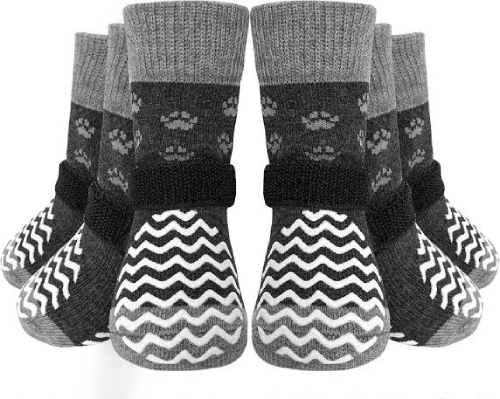
Can Silicone Soles Deliver Better Grip for Indoor Dog Shoes?
Silicone is particularly interesting for lightweight dog footwear, indoor traction products, and soft protective booties.
Its flexibility allows the sole to conform more closely to the paw's movement. Depending on the formulation and surface design, silicone can create a soft contact layer that helps reduce slipping on smooth floors.
Silicone also offers advantages in water resistance and flexibility across a broad range of temperatures. These characteristics make it attractive for products designed around comfort rather than rugged outdoor abrasion resistance.
However, silicone is not necessarily the best material for every application. Some formulations have relatively high material costs, and soft silicone may wear faster when repeatedly dragged across rough concrete or gravel.
For retailers, silicone-based products are particularly worth considering for indoor traction, lightweight footwear, and specialized comfort-focused collections.
How Do Rubber, TPR, and Silicone Compare in B2B Product Development?
| Material | Grip Potential | Durability | Flexibility | Relative Manufacturing Cost | Recommended Application |
|---|---|---|---|---|---|
| Natural or synthetic rubber | High, depending on compound | High | Medium to high | Medium to high | Outdoor and premium dog boots |
| TPR | Good to high, formulation-dependent | Medium to high | High | Low to medium | Everyday and all-purpose footwear |
| Silicone | Good on selected smooth surfaces | Medium, application-dependent | Very high | Medium to high | Indoor and lightweight traction shoes |
| PVC | Moderate, formulation-dependent | Medium | Medium | Low to medium | Budget-oriented products |
| EVA foam | Limited as a standalone outsole | Low to medium | Very high | Low to medium | Cushioning and lightweight indoor use |
The most suitable material depends on the target application, not simply which material has the strongest reputation. A practical sourcing strategy is to develop different outsole specifications for different customer segments instead of forcing one material to satisfy every use case.
3. How Does Tread Pattern Technology Improve Anti-Slip Dog Shoe Performance?
Why Are Multidirectional Rubber Treads Effective for Outdoor Dog Shoes?
Multidirectional tread patterns are designed to support movement in more than one direction. Dogs rarely walk in a perfectly straight line. They turn, accelerate, slow down, and adjust their paws when encountering obstacles.
A tread pattern with grooves oriented in different directions can improve contact and mechanical engagement across a wider range of movement.
For outdoor dog shoes, raised lugs may also help the outsole engage with loose ground such as gravel or packed soil. The spacing between lugs matters because overly dense patterns may collect mud, while excessively open patterns may reduce the available contact area on smooth surfaces.
The best design depends on whether the product is intended for urban walking, trail hiking, or mixed-terrain use.
How Do Micro-Textures and Fine Grooves Improve Surface Contact?
Micro-textures introduce small surface features that can increase friction under certain conditions. Fine grooves may also help manage water at the contact interface, although their effectiveness depends on the material compound, groove depth, and surface conditions.
For smooth indoor flooring, a relatively fine texture may provide better contact than a heavy outdoor lug pattern.
For wet outdoor surfaces, the design may require more pronounced grooves and a compound that maintains flexibility and friction.
From a manufacturing perspective, micro-texture development requires accurate tooling and careful control of material flow. The finer the texture, the more important it becomes to evaluate mold quality, surface consistency, and production repeatability.
Can Hybrid Outsoles Combine Cushioning and Anti-Slip Performance?
Hybrid outsole construction combines materials with different functional properties.
For example, an EVA cushioning layer can reduce weight and absorb impact, while a rubber or TPR outsole provides the ground-contact surface.
This approach can be valuable for premium dog footwear because it separates cushioning from traction. Instead of asking one material to perform every function, the manufacturer can optimize each layer.
However, hybrid construction introduces additional manufacturing considerations, including bonding strength, layer alignment, and material compatibility.
B2B buyers should evaluate hybrid soles when developing premium products, but they should also compare the added production cost with the expected retail price and customer demand.

4. How Should Retailers Select the Best Anti-Slip Shoes for Dogs by Terrain?
Which Anti-Slip Dog Shoes Work Best on Smooth Indoor Floors?
Indoor traction footwear requires a different approach from outdoor hiking boots.
Smooth flooring generally benefits from a flexible sole with a relatively broad contact area. Excessively deep lugs may reduce the amount of material touching the floor, while stiff soles can interfere with natural paw movement.
For this segment, lightweight silicone, soft TPR, or flexible rubber compounds may be appropriate depending on the desired price and durability.
Retailers should prioritize comfort, easy wear, and a secure fit rather than aggressive outdoor tread.
What Should Buyers Look for in Dog Shoes for Wet Pavement and Rainy Conditions?
Wet pavement creates a more demanding traction challenge because water can reduce friction between the outsole and the surface.
For rainy-weather products, buyers should consider the outsole compound, tread depth, drainage characteristics, and upper construction together.
A waterproof upper does not automatically mean that the outsole performs well when wet. Similarly, a textured outsole cannot compensate for poor fastening or an unstable fit.
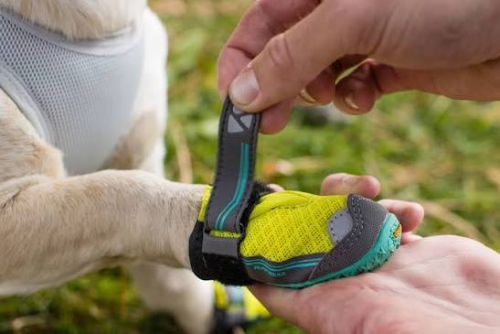
A practical product specification may include a water-resistant upper, molded TPR or rubber outsole, secure hook-and-loop fastening, and a tread pattern suitable for urban walking.
Which Dog Boot Soles Are Suitable for Gravel, Mud, and Hiking Trails?
Trail footwear needs greater abrasion resistance and stronger mechanical engagement with uneven ground.
Rubber compounds with reinforced tread structures are often suitable for demanding applications. TPR can also be used when the formulation and outsole geometry are designed for the intended terrain.
The upper should protect against debris while allowing sufficient flexibility around the paw joints.
For retailers targeting outdoor enthusiasts, the strongest product proposition is not simply "non-slip." It is a complete outdoor protection system combining traction, durability, secure fastening, and paw coverage.
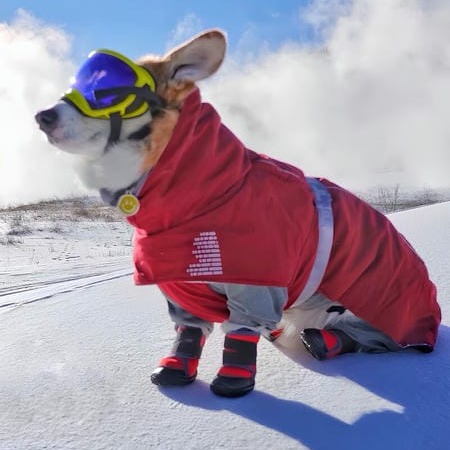
How Should Winter Dog Shoes Balance Grip, Flexibility, and Cold Resistance?
Cold weather can change the behavior of some outsole materials. Certain compounds become harder at lower temperatures, reducing flexibility and potentially affecting traction.
Winter footwear therefore requires more than adding insulation to the upper.
Buyers should request material specifications that address cold-weather flexibility, water resistance, and resistance to cracking. The tread should remain functional without becoming excessively rigid.
For snow and icy conditions, it is important not to overpromise. Ordinary rubber, TPR, and silicone soles do not guarantee reliable grip on black ice. Specialized traction designs may be necessary for more demanding conditions.
5. What Manufacturing Processes Create High-Quality Anti-Slip Dog Shoe Soles?
How Does Injection Molding Improve Outsole Consistency?
Injection molding is an important manufacturing method for TPR and other thermoplastic outsole materials.
The process involves heating the material, injecting it into a mold, and allowing it to cool into the desired shape. This enables manufacturers to produce consistent dimensions and detailed tread patterns.
For B2B orders, consistent molding is especially important because buyers need reliable sizing, stable appearance, and repeatable product quality across multiple production batches.
The initial mold investment can be significant, but the cost can be distributed across larger production quantities. This makes injection molding particularly attractive for customized products with long-term sales potential.
Why Does Rubber Vulcanization Matter for Outsole Performance?
Vulcanization is a process used to improve the physical properties of rubber by creating crosslinks within its polymer structure.
Depending on the compound and process, vulcanized rubber can offer improved elasticity, strength, abrasion resistance, and resistance to deformation.
For dog footwear, the benefits may include more stable traction characteristics and better durability under repeated flexing.
However, vulcanization requires appropriate equipment, temperature control, processing time, and material formulation. These factors can affect both unit cost and production lead time.
Buyers considering rubber outsoles should evaluate the complete manufacturing specification rather than comparing raw material prices alone.
How Does Outsole-to-Upper Bonding Affect the Durability of Anti-Slip Dog Shoes?
A strong outsole is only useful if it remains securely attached to the shoe.
The bonding process may involve adhesive selection, surface preparation, heat activation, pressure, and curing time. Each step affects the final bond strength.
Poor bonding can cause sole separation at the toe, heel, or flex point. This is especially problematic in dog footwear because the sole repeatedly bends during walking.
Quality control should include peel or adhesion testing, repeated flexing, and visual inspection of the bonded areas.
For wholesale buyers, requesting bonding specifications and sample testing before bulk production helps reduce the risk of product failures and customer complaints.
6. How Much Does Anti-Slip Dog Shoe Manufacturing Cost for B2B Buyers?
Which Factors Have the Greatest Influence on Anti-Slip Sole Costs?
The cost of manufacturing anti-slip dog shoes depends on multiple interacting factors rather than a single material price.
The major cost drivers include:
- Outsole material and compound formulation.
- Sole thickness, density, and tread complexity.
- Mold design and tooling investment.
- Upper material, lining, and waterproofing requirements.
- Size range and grading complexity.
- Logo application and packaging customization.
- Order quantity and production efficiency.
- Quality-control requirements and testing standards.
A basic TPR sole with a simple tread pattern may be more economical than a premium rubber outsole with complex multidirectional lugs.
However, a cheaper outsole may not deliver the durability or performance required by a premium retail segment.
How Do Different Customization Options Affect Manufacturing Budgets?
The following table provides a qualitative planning framework for B2B buyers. Actual costs depend on factory quotations, material specifications, order volume, and design complexity.
| Customization | Relative Cost Impact | Main Cost Driver |
|---|---|---|
| Standard outsole with existing mold | Low | Existing tooling |
| Custom outsole color | Low to medium | Color matching and material batch |
| Custom tread pattern | Medium to high | Mold modification or new tooling |
| New outsole mold | High initial investment | Tool design and fabrication |
| Premium rubber compound | Medium to high | Material and processing costs |
| Silicone traction construction | Medium to high | Silicone formulation and molding |
| Custom logo on upper | Low to medium | Printing, embroidery, or transfer |
| Custom packaging | Low to medium | Artwork, printing, and packaging quantity |
| Multiple new sizes | Medium to high | Size grading and additional tooling |
The most important principle is to distinguish one-time development costs from recurring production costs.
For example, a custom outsole mold may require a larger initial investment, but the per-pair tooling cost becomes lower as order volume increases.
How Can Wholesale Buyers Reduce Unit Costs Without Sacrificing Traction Quality?
A cost-efficient sourcing strategy starts with defining the target market clearly.
If the product is intended for everyday urban walking, a well-designed TPR outsole may provide an appropriate balance of performance and affordability. A premium rubber compound may be more suitable for a higher-priced outdoor collection.
Buyers can also reduce development expenses by adapting an existing outsole platform rather than designing every component from scratch.
Other practical approaches include consolidating color variations, optimizing size distribution, standardizing packaging, and planning repeat orders.
The goal is not to purchase the cheapest shoe. It is to achieve the best balance between landed cost, product performance, retail positioning, and long-term customer satisfaction.
7. What OEM and ODM Customization Options Are Available for Anti-Slip Dog Shoes?
How Can Brands Customize Outsole Materials, Colors, and Tread Patterns?
OEM and ODM programs allow brands to develop anti-slip dog footwear that aligns with their target customers and product positioning.
Depending on the manufacturing program, customization may include:
- Material selection: TPR, rubber, silicone, or hybrid construction.
- Tread engineering: Directional grooves, multidirectional lugs, or micro-textures.
- Color development: Custom outsole colors and coordinated upper designs.
- Brand identity: Embossed, molded, printed, or embroidered logos.
- Upper construction: Mesh, neoprene, waterproof fabrics, and reinforced panels.
- Fastening systems: Hook-and-loop straps, elastic openings, and adjustable closures.
- Packaging: Branded retail boxes, labels, and product inserts.
These options allow a brand to create a differentiated product without relying entirely on generic designs available throughout the market.
What Is the Difference Between OEM and ODM Dog Shoe Manufacturing?
OEM manufacturing generally means producing footwear according to the buyer's design, specifications, branding, and technical requirements.
ODM manufacturing allows buyers to develop products using an existing manufacturer's design expertise, product platforms, and engineering capabilities, with customization depending on the project.
For businesses entering the pet footwear market, ODM can help reduce development time and simplify the initial product launch.
For established brands seeking unique outsole structures or proprietary designs, OEM may provide greater control over product specifications and brand differentiation.
Guangzhou Petsun provides customized pet footwear development and manufacturing support. Buyers can explore its OEM and ODM customization services to understand available options for product development, branding, and customized dog shoe solutions.
How Should Buyers Evaluate MOQ, Sampling, and Production Lead Times?
MOQ, or minimum order quantity, varies according to the manufacturing process and the level of customization.
An existing product with standard materials and colors may require a different MOQ from a new design involving custom outsole tooling, specialized compounds, or multiple colorways.
Before placing an order, buyers should clarify:
- Whether the selected outsole mold already exists.
- Whether custom colors require a separate material batch.
- Whether sample development involves additional charges.
- Whether MOQ applies per design, color, or size assortment.
- How long sampling, tooling, and mass production will take.
- What quality standards must be met before shipment.
Clear communication during development helps both parties manage expectations and avoid unnecessary delays.
8. How Can Retailers Build a Competitive Anti-Slip Dog Shoe Product Portfolio?
Should Retailers Offer Multiple Sole Materials Instead of One Universal Design?
A diversified product portfolio can serve customers with different needs and budgets more effectively than a single all-purpose model.
For example, a retailer could develop three complementary product categories:
| Product Category | Recommended Positioning | Potential Outsole Direction |
|---|---|---|
| Indoor comfort shoes | Senior dogs and smooth flooring | Soft silicone or flexible TPR |
| Everyday walking shoes | Urban and suburban pet owners | Textured TPR or rubber |
| Outdoor adventure boots | Hiking and demanding terrain | Durable rubber or reinforced TPR |
This structure allows retailers to address different use cases while maintaining a clear product hierarchy.
It also creates opportunities for cross-selling. Customers who purchase indoor traction shoes may later seek outdoor footwear for travel, hiking, or seasonal protection.
How Can Product Features Support Better Retail Margins?
Retail margins are influenced by more than manufacturing cost. Product differentiation, perceived quality, customer education, packaging, and positioning all contribute to pricing power.
A well-developed anti-slip dog shoe can communicate value through tangible features such as:
- Clearly explained outsole material and traction design.
- Practical terrain-specific product positioning.
- Comfortable construction and easy fastening.
- Durable tread and reinforced high-wear areas.
- Accurate sizing information and fitting guidance.
- Transparent care instructions and product limitations.
For private-label brands, these features can support a more compelling product story and help reduce price-only competition.
Where Can Retailers Source Wholesale Dog Shoes and Ready-to-Sell Products?
Retailers and distributors do not always need to begin with a completely new product development project.
Ready-to-sell wholesale footwear can help businesses test market demand, build an initial assortment, and shorten the time required to introduce new products.
Guangzhou Petsun offers pet footwear solutions for businesses interested in wholesale sourcing and available inventory options. Buyers can explore the in-stock and wholesale services to learn more about sourcing existing products for retail distribution.
For broader product selection, including different dog shoe styles and footwear categories, visit the Guangzhou Petsun product collection.
A practical strategy is to begin with selected existing products, collect customer feedback, and then invest in customized outsole designs when demand has been validated.
9. How Should B2B Buyers Test Anti-Slip Dog Shoes Before Mass Production?
Why Should Buyers Conduct Traction Tests on Multiple Surfaces?
A supplier's description of a sole as "non-slip" is not a substitute for testing.
Traction should be evaluated under conditions that reflect the intended application. A shoe designed for indoor use should be tested on representative flooring, while an outdoor model should be evaluated on suitable dry and wet surfaces.
Buyers should document the test conditions, including the surface material, moisture level, applied load, and testing method.
The objective is not to claim that one shoe is slip-proof everywhere. It is to determine whether the product delivers consistent, appropriate performance within its intended use.
Which Durability Tests Help Evaluate Outsole Quality?
Several tests can provide useful information about the performance of dog shoe soles.
| Test | What It Evaluates | Why It Matters |
|---|---|---|
| Abrasion testing | Material wear under friction | Helps estimate outsole durability |
| Flex testing | Resistance to repeated bending | Identifies cracking or fatigue |
| Adhesion or peel testing | Bond strength between sole and upper | Reduces risk of sole separation |
| Hardness testing | Material resistance to indentation | Supports consistency between batches |
| Wet traction testing | Friction under wet conditions | Helps assess performance in rainy environments |
| Dimensional inspection | Sole thickness, width, and shape | Supports consistent sizing and fit |
Testing requirements should be agreed upon before mass production. Different product categories require different priorities, and not every test needs the same acceptance criteria.
How Can Quality Control Reduce Returns and Protect Retailer Reputation?
Quality control should cover both functional performance and customer-facing details.
A shoe may have a durable sole but still generate returns because the sizing is inconsistent, the straps are difficult to adjust, or the upper rubs against the dog's paw.
For this reason, quality inspections should include outsole appearance, bonding integrity, size measurements, fastening performance, stitching, and overall construction.
Retailers should also request product-specific fitting guidance and care instructions so that customers can select the correct size and use the footwear appropriately.
A systematic quality-control process helps protect brand reputation and creates a more reliable foundation for repeat wholesale orders.
10. How Can Businesses Choose the Right Anti-Slip Dog Shoe Manufacturer?
What Technical Capabilities Should a Dog Shoe Supplier Demonstrate?
A reliable manufacturer should be able to explain the relationship between material selection, outsole design, construction, and intended product performance.
Rather than focusing only on catalog images, buyers should evaluate whether the supplier can discuss:
- TPR, rubber, silicone, and alternative material characteristics.
- Outsole mold availability and customization requirements.
- Tread pattern development and design feasibility.
- Upper-to-sole bonding and production quality control.
- Sample development and size grading.
- MOQ, lead time, and production capacity.
- OEM and ODM project management.
A supplier with strong technical communication can help buyers identify potential issues before they become expensive production problems.
Why Is Product Development Support Important for Private-Label Brands?
For a private-label brand, manufacturing is only one part of the project.
Product development also involves translating a market opportunity into a manufacturable design. This may require adjusting outsole thickness, refining the fastening structure, selecting appropriate upper materials, or simplifying a complex tread pattern to improve production consistency.
Guangzhou Petsun supports businesses looking to develop and source dog footwear, including customized designs and branded product solutions.
The value of a manufacturing partner lies not only in producing the final product but also in helping buyers make informed decisions throughout the development process.
What Questions Should Buyers Ask Before Confirming a Wholesale Order?
Before committing to a production order, buyers should clarify the following:
| Evaluation Area | Questions to Ask |
|---|---|
| Material | What material and compound are used for the outsole? |
| Traction | What surfaces is the product designed for? |
| Durability | What abrasion and flex tests are available? |
| Customization | Can the sole, tread, color, and logo be modified? |
| Tooling | Is the mold existing or newly developed? |
| MOQ | Does MOQ vary by color, size, or design? |
| Sampling | What is the sample approval process? |
| Quality control | What inspection standards are applied? |
| Production | What are the expected lead times? |
| Packaging | Can branded retail packaging be supplied? |
These questions help establish a clear sourcing framework and reduce uncertainty when comparing manufacturers.
11. What Is the Best Anti-Slip Dog Shoe Strategy for Long-Term Business Growth?
Should Businesses Prioritize Performance, Price, or Product Differentiation?
The most successful product strategy usually balances all three rather than maximizing one factor.
A low-cost product may attract price-sensitive buyers but struggle to compete if the outsole wears quickly or the fit is uncomfortable.
A premium product may deliver better performance but require stronger brand positioning and customer education to justify its retail price.
A differentiated product can create opportunities in specialized segments, including indoor traction, senior dog footwear, outdoor hiking, and customized pet shoes.
The key is to align technical specifications with customer expectations and realistic market demand.
How Can Manufacturers and Retailers Build a Sustainable Product Development Partnership?
Long-term growth becomes easier when manufacturers and buyers approach product development as a collaborative process.
Retailers contribute market insights, customer feedback, and commercial objectives. Manufacturers contribute material expertise, engineering knowledge, production capabilities, and quality-control systems.
Together, they can refine existing designs, introduce customized products, and build a more coherent footwear collection.
Guangzhou Petsun works with businesses seeking dog footwear products for wholesale, OEM, and ODM projects. By combining market research with appropriate outsole technology and manufacturing planning, buyers can develop anti-slip dog shoes that are better aligned with their target customers.
Ultimately, the best anti slip dog shoes are not defined by a single material or tread pattern. They are the products that combine suitable traction, comfortable fit, reliable construction, and consistent manufacturing quality for their intended environment.
For retailers and distributors, the opportunity lies in selecting products with a clear use case, a competitive cost structure, and a dependable supply partner. For private-label brands, it lies in transforming these technical advantages into a product customers can trust and choose again.
Related Article