Wholesale Dog Shoes for Pet Stores
author: Gigi
2026-11-19
Dog shoes are becoming an interesting product category for pet retailers as owners pay more attention to paw protection, outdoor activities, and seasonal pet care. For pet store owners, however, stocking dog footwear involves more than selecting attractive designs. Different breeds require different sizes, while weather conditions and usage scenarios influence purchasing decisions.
A successful wholesale dog shoes for pet stores strategy should combine the right product assortment, effective merchandising, competitive pricing, and targeted promotions. This guide explains how retailers and distributors can develop a profitable dog footwear category while controlling inventory risks.
1. What Types of Wholesale Dog Shoes Should Pet Stores Stock?
The first step in building a successful dog footwear category is understanding customer needs. Instead of purchasing products based entirely on appearance, retailers should organize their assortment around functionality, seasonality, and target customers.
1.1 Which Pet Store Dog Boots Sell Across Different Seasons?
Different dog shoes address different purchasing motivations.
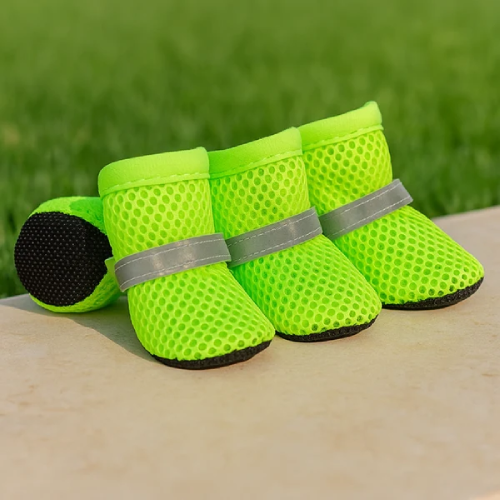
- Summer dog shoes: Lightweight mesh uppers and breathable fabrics help reduce heat accumulation while protecting paws from hot pavement. These products are suitable for urban dog owners and outdoor walkers.
- Winter dog boots: Waterproof materials, insulating linings, and anti-slip soles address snow, ice, and cold-weather conditions.
- Everyday protective shoes: Flexible soles and adjustable closures are suitable for routine walking and protection against rough surfaces.
- Fashion dog shoes: Attractive colors, sneakers, and decorative designs appeal to owners interested in pet fashion.
Retailers should avoid stocking too many similar products. A balanced assortment should cover distinct customer needs while maintaining sufficient depth in popular sizes.

1.2 How Should Retailers Build a Balanced Dog Shoe Assortment?
A practical approach is the Good-Better-Best pricing structure:
| Product Tier | Recommended Products | Retail Positioning | Customer Group |
| Good | Basic fabric dog shoes | Affordable everyday protection | Price-conscious buyers |
| Better | Breathable mesh and anti-slip shoes | Improved comfort and functionality | Regular dog owners |
| Best | Waterproof boots and specialized designs | Advanced features and premium styling | Outdoor enthusiasts and premium buyers |
For wholesale dog shoes for pet stores, size distribution deserves particular attention. Unlike ordinary accessories, dog footwear requires customers to select products according to paw length and width.
Retailers should request detailed size charts and sample sets from their suppliers. Rather than ordering equal quantities of every size, use local customer demographics and historical sales data to determine inventory allocation.
2. How Can Pet Stores Display Dog Shoes to Increase Retail Sales?
Even high-quality products can generate disappointing sales when customers cannot understand their benefits or find the correct size.
2.1 What Is the Best Way to Display Pet Store Dog Boots?
A useful merchandising strategy combines functional grouping with visual comparison.
Organize by usage scenario. Separate summer footwear, winter boots, everyday protective shoes, and fashion styles. Customers should be able to identify suitable products without examining every package.
Use visible size information. Display paw measurement instructions and size charts near the products. This reduces confusion and helps customers avoid choosing footwear based only on breed or body weight.
Show product construction. Where possible, display samples that allow customers to touch the upper material, examine the outsole, and understand the fastening system.
Create cross-selling displays. Position dog shoes near leashes, harnesses, outdoor accessories, and seasonal clothing. Customers purchasing walking equipment may also be interested in paw protection.
2.2 How Can Retailers Improve Online and Offline Product Presentation?
For physical stores, use clear shelf labels highlighting benefits such as breathable mesh, waterproof construction, adjustable straps, and anti-slip soles.
For e-commerce stores, product listings should include:
- Accurate paw-length and paw-width size charts.
- Close-up photographs of soles and fastening systems.
- Lifestyle images showing different usage scenarios.
- Material descriptions and care instructions.
- Clear guidance on measuring a dog's paws.
A reliable dog shoe retail supplier should ideally provide consistent product images, packaging information, and technical specifications to support retail merchandising.
3. How Should Pet Stores Price and Promote Wholesale Dog Shoes?
Pricing determines both customer conversion and category profitability. Retailers should consider wholesale costs, operating expenses, competitor positioning, and expected inventory turnover.
3.1 How Can Pet Stores Set Profitable Dog Shoe Retail Prices?
A common mistake is calculating retail prices by simply adding a fixed amount to the wholesale price.
Retailers should first calculate gross margin:
Gross Margin = (Retail Price - Cost of Goods Sold) / Retail Price × 100%
For example, if a pair of dog shoes costs $8 and sells for $20, the gross margin is 60%, before other operating expenses.
However, actual profitability also depends on shipping, payment fees, packaging, discounts, returns, and unsold inventory.
A tiered pricing strategy allows stores to serve different customer budgets while encouraging upgrades. Basic shoes attract first-time buyers, while waterproof or specialized designs can justify higher prices through functional benefits.
When evaluating pet product wholesale dog shoes, retailers should compare not only unit costs but also minimum order quantities, packaging expenses, replenishment speed, and defect handling.
3.2 Which Promotions Can Increase Dog Shoe Sales?
Seasonal campaigns: Promote breathable footwear before summer and waterproof boots before winter. Connect products with recognizable customer needs rather than relying only on discounts.
Bundle offers: Combine pet product wholesale dog shoes with harnesses, leashes, or outdoor accessories. Bundling can increase average transaction value while giving customers a practical shopping solution.
First-purchase incentives: Offer a modest discount or accessory with the first footwear purchase to encourage customers unfamiliar with the category to try it.
Loyalty programs: Provide returning customers with exclusive offers or seasonal product recommendations.
Educational promotions: Organize short in-store demonstrations showing how to measure paws and select appropriate footwear. Education can reduce purchase hesitation and prevent sizing-related returns.
For wholesale dog shoes for pet stores, promotional planning should also consider inventory availability. A campaign that generates demand without sufficient popular sizes can create lost sales and customer dissatisfaction.
4. How Can Pet Stores Work with Wholesale Dog Shoe Suppliers? Industry FAQ
Choosing a dependable dog shoe retail supplier is essential for maintaining product availability and consistent customer experience.
Q1: How Can Pet Stores Avoid Overstocking Dog Shoe Sizes?
Dog footwear has more complicated inventory requirements than many pet accessories because each style may involve multiple sizes and colors.
Start with a limited selection, monitor sales by SKU, and identify the most frequently purchased size combinations. Replenish proven products before expanding into additional designs.
Retailers should also ask dog shoe retail suppliers whether mixed-size orders and smaller replenishment quantities are available.
Q2: What Should Buyers Look for in a Dog Shoe Retail Supplier?
Evaluate five factors: product variety, material quality, sizing consistency, MOQ flexibility, and delivery reliability.
Request physical samples to examine stitching, sole flexibility, fastening strength, and overall construction. Also confirm whether the dog shoe retail supplier can maintain the same specifications across repeat orders.
A good dog shoe retail supplier should understand the practical needs of retail channels rather than simply provide a large product catalog.
Q3: Why Do Customers Return Dog Shoes Even When the Product Quality Is Good?
Incorrect sizing and poor fit are common reasons. Some customers select pet product wholesale dog shoes based on breed recommendations without measuring individual paws.
Retailers should provide clear measurement instructions and explain that front and rear paws may differ in size. Staff training and accurate size charts can significantly improve the purchasing experience.
Q4: How Can Small Pet Stores Compete with Large Retail Chains?
Independent stores can differentiate themselves through personalized recommendations, fitting assistance, carefully selected products, and local seasonal promotions.
Instead of competing solely on price, they can build trust by helping customers understand which footwear suits their dog's activities and environment.
Q5: Should Pet Stores Choose Ready-Stock or Customized Dog Shoes?
Ready-stock products are suitable for testing demand, reducing initial investment, and replenishing popular styles quickly.
Customized OEM/ODM products are more appropriate for retailers developing private-label brands or seeking exclusive designs and packaging.
A combination of both approaches can help retailers balance inventory flexibility with brand differentiation.
5. Building a Stronger Dog Footwear Retail Business
Successful pet product wholesale dog shoes programs depend on understanding retail customers, selecting functional products, and managing inventory according to actual demand.
Guangzhou Petsun, a dog shoe retail supplier, established in China in 1999, specializes in high quality pet product wholesale dog shoes. Its main business focuses on the design, production, and wholesale of dog shoes. The company's mission is to simplify pet parenting through quality, innovation, customer satisfaction, and environmental responsibility.
For dog shoe retail supplier, working with an experienced manufacturer can help provide access to different footwear styles and product development options. However, the most effective purchasing decisions should always be based on product quality, customer preferences, and retail performance.
Looking to expand your pet store's dog footwear category? Contact dog shoe retail supplier Guangzhou Petsun to discuss wholesale dog shoe collections, product specifications, and potential OEM/ODM cooperation for your retail business.
How to Source Wholesale Dog Shoes: A Global Sourcing Guide for B2B Buyers
Related Article

Discover how to source wholesale dog shoes worldwide. Compare China, Vietnam, and Turkey, evaluate suppliers, negotiate MOQs, and ensure consistent product quality. - Guangzhou Petsun
How to Source Wholesale Dog Shoes: A Global Sourcing Guide for B2B Buyers
Learn how to order dog shoes in bulk, from supplier quotes and sampling to production, quality inspection, shipping, and after-sales risk management. - Guangzhou Petsun
How to Order Dog Shoes in Bulk