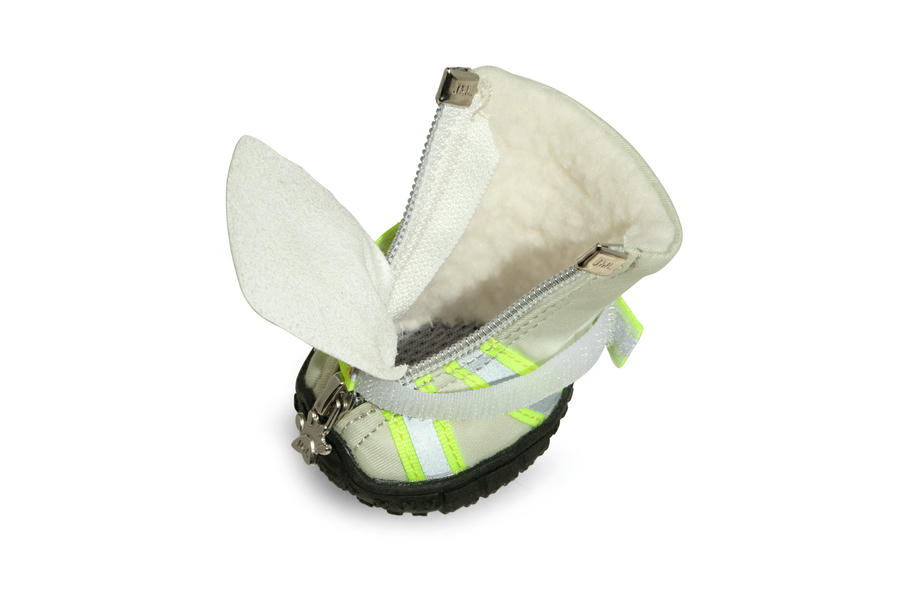
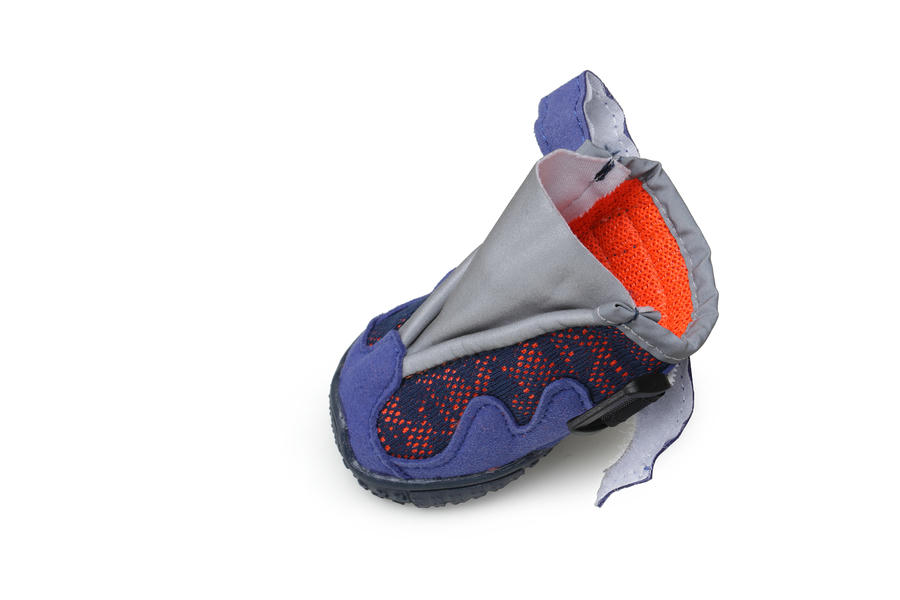
Dog Socks for Hot Pavement: Protect Paws from Burns
author: Gigi
2026-09-19
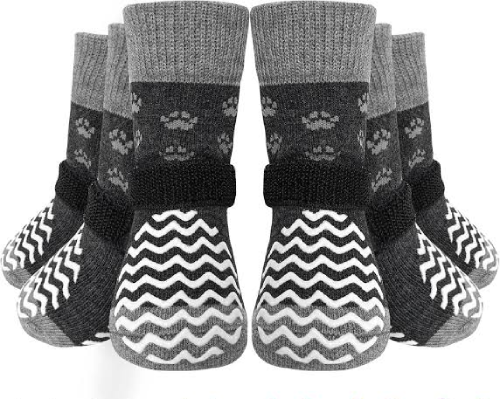
Summer creates a specific problem for dog owners that is easy to underestimate: pavement can become far hotter than the surrounding air. Asphalt, concrete, and dark sidewalks absorb solar radiation and transfer heat directly to a dog's paw pads. For pet retailers, distributors, and new pet-product entrepreneurs, this creates a seasonal product opportunity—but also raises an important question: what makes a paw protection product genuinely suitable for hot pavement?
The answer is more complicated than simply adding a non slip print to fabric dog socks for hot pavement. A useful summer paw protector needs to balance thermal insulation, breathability, traction, flexibility, fit, and retention.
Why Are Dog Socks for Hot Pavement Different From Ordinary Dog Socks?
Can ordinary fabric socks really protect paws from hot asphalt?
Not necessarily. Many conventional pet socks are designed primarily for indoor traction, wound protection, or preventing dogs from licking their paws. The dog socks for hot pavement’s main selling point is softness and grip rather than thermal protection.
When the dog socks for hot pavement is intended for outdoor summer walking, the construction requirements change. The material needs to create a physical barrier between the paw pad and the heated surface while remaining flexible enough for normal movement.
For retailers searching for dog socks for hot pavement, the first distinction should therefore be purpose rather than appearance. A sock that looks thick may still provide limited insulation if the material conducts heat quickly or becomes compressed during walking.
The same principle applies to socks for dogs for hot pavement. Buyers should examine the entire construction: upper material, sole structure, contact surface, stitching, closure system, and ventilation.
What happens when dogs walk on overheated pavement?
Repeated exposure can cause redness, discomfort, peeling, blisters, or burns on paw pads. The risk increases on dark asphalt, parking lots, concrete areas exposed to direct sunlight, and other surfaces that retain heat.
This creates an interesting B2B product requirement. Summer paw protector socks for dogs hot pavement cannot simply be marketed as a cute accessory. It needs to solve a clearly recognizable problem: reducing direct heat transfer while maintaining walking stability.
Which Materials and Features Make a Better Summer Paw Protector?
What insulation materials should dog socks hot pavement products use?
Material selection is one of the most important technical decisions.
A soft knitted upper can provide flexibility and airflow, while the paw-contact area may require a denser or more heat-resistant structure. Cotton-rich blends can offer softness and moisture absorption, but they may not provide sufficient protection on their own. Synthetic fibers can improve durability, elasticity, and dimensional stability.
For products positioned as dog socks for hot pavement, manufacturers should consider a layered construction. The upper section can prioritize breathability and comfort, while the lower section focuses on heat separation and abrasion resistance.
The challenge is finding the right balance. Excessively thick materials may improve insulation but make the socks for dogs hot pavement heavy and uncomfortable. Excessively thin materials may feel comfortable but provide insufficient separation from heated surfaces.
Why is an anti-slip sole essential for hot pavement protection?
Thermal protection is only one part of the product.
A dog walking on a smooth surface can lose traction if the sock twists, slides, or becomes loose. This is particularly problematic because dogs naturally place significant pressure on their paw pads when accelerating, turning, or stopping.
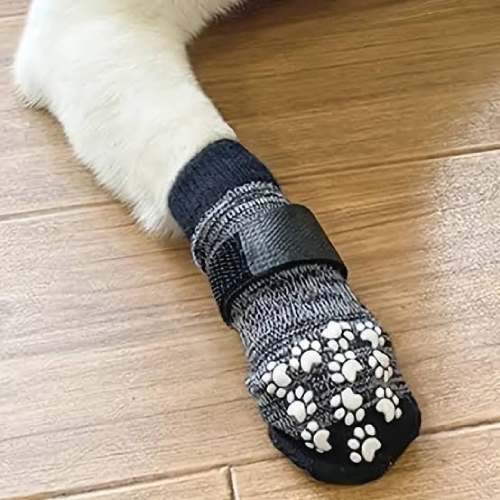
For socks for dogs hot pavement applications, silicone, rubberized prints, textured coatings, or other high-friction structures can improve contact stability. The pattern also matters. Continuous grip areas can provide broad contact, while patterned surfaces may improve flexibility.
How should manufacturers solve the problem of socks slipping off?
Fit is another major product-development issue.
Even technically excellent dog socks become ineffective if they fall off during walking. Dogs have different paw widths, leg shapes, coat densities, and activity levels, so one universal construction is rarely ideal.
Elastic cuffs can improve basic retention, while adjustable straps provide additional security. However, excessive compression can cause discomfort, so the closure system needs controlled tension rather than simply becoming tighter.
How Can B2B Buyers Develop and Wholesale Summer Dog Paw Protection Products?
What should retailers consider before buying socks for dogs for hot pavement wholesale?
The first consideration is target market. A retailer serving urban dog owners may need lightweight summer socks for dogs hot pavement for sidewalks and asphalt. A distributor supplying outdoor pet stores may prefer stronger constructions with enhanced abrasion resistance.
The second consideration is size coverage. Small, medium, and large dogs have significantly different paw dimensions. A narrow size range can limit sales, while too many sizes increase inventory complexity.
Packaging is another opportunity. Summer socks for dogs hot pavement products can be sold as individual pairs, replacement sets, multi-packs, or seasonal bundles. Multi-pack formats can be particularly useful because paw protectors experience wear and individual pieces can be lost.
Can dog socks hot pavement products be customized for private-label brands?
Yes. For B2B businesses, customization can involve much more than printing a logo.
Potential OEM or private-label options include fabric composition, sole material, grip pattern, color, size range, cuff structure, adjustable straps, packaging, labels, and product instructions.
A retailer targeting premium customers may prioritize softer materials, refined packaging, and a more discreet appearance. A mass-market distributor may focus on durable construction, multi-pack quantities, competitive pricing, and broad sizing.
What quality-control points matter before placing a large order?
For summer paw dog socks for hot pavement products, several checkpoints deserve particular attention.
First, test whether the upper maintains elasticity after repeated stretching. Second, inspect whether the sole remains attached after repeated bending. Third, evaluate grip performance on representative surfaces. Fourth, check stitching and seam positions because rough internal seams can cause irritation. Finally, test whether the closure remains secure without creating excessive pressure.
These checks are especially important for first-time buyers. A lower factory price is not necessarily economical if the final product generates high return rates or negative customer reviews.
How Can Businesses Capture the Summer Market for Hot-Pavement Paw Protection?
Why does summer create a strong seasonal opportunity for pet-product businesses?
Hot-weather paw protection dog socks for hot pavement has a natural seasonal demand cycle. As temperatures rise, dog owners become more aware of pavement burns, uncomfortable walks, and the need to change walking schedules.
This gives retailers several opportunities.
Instead of presenting the product as another generic dog accessory, businesses can build content around practical problems: how to recognize overheated pavement, how to measure a dog's paw, how to introduce protective footwear, how to clean summer paw protectors, and how to choose between lightweight socks and structured boots.
How should a B2B seller position the best dog socks for hot pavement?
The strongest positioning should be based on application rather than exaggerated performance claims.
Businesses should also avoid treating every product as suitable for every condition. Lightweight fabric protection may be appropriate for short urban walks, while more structured footwear may be preferable for prolonged exposure, rough terrain, or extreme surface conditions.
For wholesale buyers, this differentiation creates opportunities to build multiple product tiers rather than competing only on price.
FAQ: What questions should suppliers answer before a summer wholesale order?
Are all socks suitable for hot pavement?
No. Indoor anti-slip socks and outdoor thermal-protection products may have very different construction requirements.
Do thicker socks always provide better protection?
No. Thickness must be balanced with flexibility, ventilation, weight, and heat transfer characteristics.
Is an anti-slip sole enough to protect paws?
No. Grip improves stability but does not automatically provide adequate thermal insulation.
How can buyers evaluate a supplier's product quality?
Ask for material specifications, size information, construction details, samples, customization options, quality-control procedures, and production capacity.
Should retailers stock summer dog paw protectors all year?
Inventory strategy depends on market geography. In strongly seasonal markets, pre-season purchasing can help retailers prepare before demand peaks. In warmer climates, the category may support longer selling periods.
If you are developing a private label summer paw protection dog socks for hot pavement, Guangzhou Petsun can support product design, manufacturing, customization, and wholesale requirements based on your target market and product positioning.
Dog Socks for Summer: Cool & Comfortable Options
Dog Shoe Manufacturing Process
Related Article
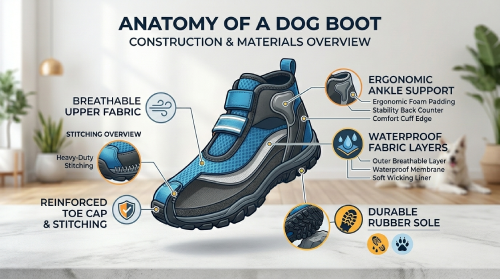
Explore dog shoe anatomy, key components, material selection, construction methods, and OEM customization tips to help B2B buyers source durable, comfortable dog footwear. - Guangzhou Petsun
Anatomy of a Dog Shoe: A Complete Guide to Components, Materials, and Construction
Discover winter dog socks, snow socks for dogs, warm insulation, waterproof materials, and anti-slip designs. Explore wholesale, OEM/ODM customization, and B2B sourcing strategies.
Winter Dog Socks Warm and Cozy Options for Cold Weather