Which Dogs May Benefit From Wearing Socks During Winter
Why Are Winter Dog Socks Becoming an Interesting Product for Pet Brands
This creates several opportunities for pet product brands. Winter dog socks can be positioned as lightweight paw-warming accessories for indoor use, as non-slip socks for dogs moving across smooth floors, or as part of a broader cold-weather pet accessory collection. The product's value depends on its intended use, construction, comfort, and ability to stay securely in place.
For B2B buyers, the opportunity extends beyond choosing a warm fabric. Retailers and distributors need to evaluate material performance, size coverage, grip patterns, packaging, seasonal inventory, and the cost of customization. Private-label brands may also need distinctive colors, patterns, labels, and coordinated winter collections.
Guangzhou Petsun provides a starting point for buyers exploring its dog footwear and related product range. When planning a winter collection, buyers should confirm which products and customization options are available and evaluate each style against the intended retail market.
1. What Are Winter Dog Socks, and How Do They Differ From Regular Dog Socks?
Winter dog socks are designed to provide additional warmth, comfort, or traction in cold-weather conditions. Compared with lightweight decorative or everyday socks, winter versions may use thicker knit fabrics, brushed interiors, fleece linings, wool blends, longer cuffs, or more substantial grip patterns.
However, thickness alone does not determine product quality. A very thick sock may restrict paw movement, trap moisture, or become uncomfortable inside a shoe. A thinner sock made from a suitable insulating knit may provide better flexibility and fit.
The first step for buyers is to decide whether the product is intended primarily for indoor warmth, indoor traction, or outdoor paw protection.
| Product type | Main purpose | Typical construction | Important consideration |
|---|---|---|---|
| Lightweight dog socks | Everyday indoor wear | Cotton or synthetic knit | Comfort and breathability |
| Fleece-lined winter socks | Indoor warmth | Knit outer fabric with brushed or fleece interior | Warmth without excessive bulk |
| Wool-blend socks | Insulation and temperature management | Wool mixed with synthetic fibers | Washability and fit retention |
| Non-slip winter socks | Warmth and floor traction | Knit fabric with silicone or rubberized grips | Grip placement and durability |
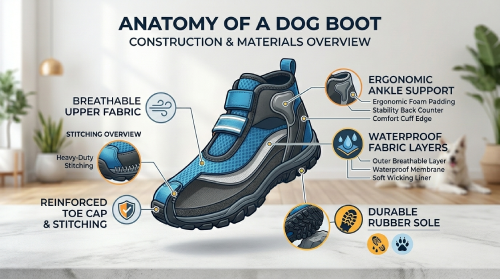
| Outdoor dog booties | Protection from snow, ice, and rough surfaces | More protective upper and outsole | Weather resistance, retention, and sole protection |
For retailers, these categories should be described clearly. A soft fleece-lined sock may be suitable for a cold indoor floor, but it should not automatically be marketed as waterproof footwear for deep snow.
Why Is the Intended Use More Important Than Fabric Thickness?
Consider two products: one has a thick fleece lining but a loose cuff and no traction, while the other uses a moderately insulated knit, a comfortable cuff, and well-positioned grip pads. The second product may offer better overall performance for indoor use because it combines warmth with stability and a more secure fit.
A winter product should therefore be evaluated as a complete system. Buyers need to consider insulation, moisture management, flexibility, grip, cuff construction, and how the sock behaves after washing.
2. Which Dogs May Benefit From Wearing Socks During Winter?
Not every dog needs winter socks. A healthy dog with a thick coat may tolerate cold conditions differently from a small, short-haired dog that spends much of its time indoors. Age, health, activity level, coat type, and the weather all influence how much protection an individual dog may need.
Veterinary guidance from Cornell University notes that small dogs, puppies, thin-coated breeds, older animals, and dogs with certain health conditions can be more vulnerable to cold weather. It also recommends checking paws for ice, salt, and signs of discomfort. Read Cornell University's winter safety guidance.
Are Winter Socks Useful for Small Dogs?
Winter socks for small dogs are a potentially attractive product category because small breeds are often closer to cold indoor flooring and may have less body mass to help retain heat. Short-haired breeds can also be more sensitive to low temperatures.
For indoor use, a soft sock may help reduce direct contact with cold flooring and improve traction on smooth surfaces. Buyers should prioritize a flexible construction, an appropriate size range, and a cuff that stays in place without squeezing the leg.
It is also important not to assume that socks alone provide enough protection for an outdoor walk. If the ground is wet, icy, or covered with de-icing chemicals, a more protective boot may be the better option.
Do Senior Dogs Need a Different Winter Sock Design?
Senior dogs may experience reduced mobility, arthritis, or difficulty maintaining balance on slippery floors. A winter sock with carefully designed grip areas can be useful in some indoor settings, provided the fit is comfortable and the product does not interfere with natural movement.
For this market, product development should prioritize secure fit, flexible fabric, low-bulk seams, and grip material that remains effective after repeated wear. A tight cuff should never be used simply to prevent slipping; it must not restrict circulation or cause pressure around the leg.
3. Can I Put Socks on My Dog for Winter?
Yes, some dogs can wear appropriately fitted socks for short, supervised periods, especially indoors. The important question is whether the product suits the dog's activity and environment.
Socks should not be forced onto a dog that shows persistent distress, and owners should monitor for chewing, slipping, skin irritation, or unusual changes in gait. A veterinarian can advise when a dog has an existing paw or mobility problem.
For product brands, this distinction matters because comfort claims should be supported by thoughtful design rather than by the assumption that every dog will tolerate footwear.
How Should Dogs Be Introduced to Winter Socks?
A gradual introduction is generally more practical than putting all four socks on and immediately expecting the dog to walk normally. Owners can start with a brief period indoors, use rewards, and observe whether the dog walks comfortably.
If the socks twist, fall off, bunch around the toes, or cause the dog to repeatedly chew at them, the size or design may be unsuitable. The product should be removed if it causes discomfort.
Manufacturers can support this process by providing clear sizing guidance and simple wear instructions on the packaging.
4. Which Materials Are Best for Winter Dog Socks?
Material selection determines how a winter dog sock feels, retains warmth, manages moisture, and performs after repeated washing. There is no single best material for every product. The right choice depends on the target market, climate, price point, intended use, and desired product life.
The most common development options include fleece-lined knits, wool blends, polyester-based fabrics, acrylic blends, and cotton blends.
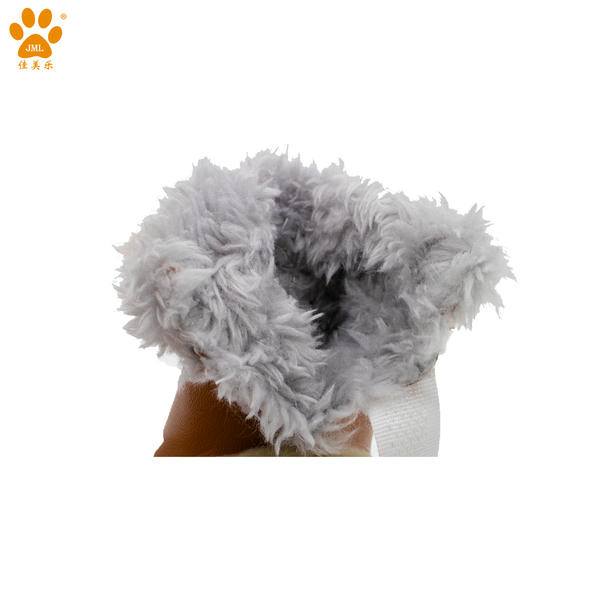
Suggested product image — fleece-lined dog socks:

Image reference: Fleece-lined dog footwear illustrating a warm interior and a grip-focused sole. This is a boot-style product rather than a lightweight sock; use it as a visual reference for winter construction options.
| Material | Warmth potential | Advantages | Limitations | Suitable product direction |
|---|---|---|---|---|
| Polyester fleece | Good insulation for its weight | Soft, quick-drying compared with many absorbent fabrics, widely available | Can retain odors or pill depending on construction | Everyday winter socks |
| Wool blend | Good insulation and moisture management when properly constructed | Natural fiber content and a premium product story | May shrink, require careful washing, or cost more | Premium winter collection |
| Acrylic blend | Lightweight insulation and color versatility | Often easier to maintain than some wool products | Performance varies by fiber and knit quality | Mid-range retail products |
| Cotton blend | Comfortable hand feel and familiar material | Can be soft and suitable for indoor use | Cotton absorbs moisture and dries relatively slowly | Indoor comfort socks |
| Polyester-spandex knit | Flexible and supportive | Stretch and recovery can help fit | Stretch does not replace correct sizing | Close-fitting sock designs |
Is Fleece a Good Choice for Winter Dog Socks?
Fleece is a popular choice because it can create a soft, insulating interior without making the product as heavy as some thick knitted constructions. It is also available in different weights and surface finishes, allowing manufacturers to develop products for different climates and price levels.
For B2B buyers, the key is to look beyond the word "fleece." Pile height, fabric density, backing construction, stretch, and seam placement can all affect comfort. A bulky lining may reduce the internal space available around the paw, so a design intended to fit snugly should be evaluated with the lining included.
Buyers should also assess whether the material pills, sheds fibers, or changes shape after repeated washing.
Are Wool-Blend Socks Better Than Synthetic Winter Socks?
Wool blends can offer an appealing balance of insulation and moisture management, making them suitable for premium positioning. However, the final performance depends on the wool percentage, the other fibers in the blend, yarn construction, and finishing process.
A wool-rich sock may have a softer or more natural material story, but it may also need more careful washing and may be more expensive. Synthetic blends can offer better dimensional stability, quicker drying, and more predictable production costs.
For brands developing several price tiers, a practical approach is to offer a fleece-lined entry-level product and a wool-blend premium option, then compare fit, wash performance, comfort, and cost before finalizing the range.
5. How Should Buyers Compare Fleece Linings, Wool Blends, and Knitted Fabrics?
Material specifications are useful, but they do not tell the whole story. Buyers should assess the finished sock, including the lining, knit density, cuff, seams, and grip material.
A fabric that feels warm when handled may become less comfortable if it traps moisture or causes excessive bulk. Similarly, a flexible knit may fit well at first but stretch out after repeated wear.
| Evaluation factor | What to check | Why it matters |
|---|---|---|
| Fabric weight and thickness | Compare samples using consistent measurements | Helps control bulk and warmth |
| Surface softness | Check the inner face and seam contact areas | Reduces the risk of uncomfortable rubbing |
| Stretch and recovery | Measure whether the fabric returns toward its original shape | Helps maintain fit |
| Moisture behavior | Evaluate drying and comfort under intended conditions | Helps avoid prolonged dampness |
| Pilling and shedding | Inspect after wear and washing simulations | Supports product appearance and durability |
| Shrinkage | Measure before and after care testing | Protects sizing consistency |
| Colorfastness | Check color change and transfer under relevant conditions | Helps maintain appearance |
| Grip compatibility | Assess how the sole coating bonds to the knit | Reduces the risk of peeling or cracking |
For a wholesale program, these checks should be tied to a defined sample specification. If a supplier changes the fabric supplier or composition, the buyer should determine whether the change requires a new sample review.
6. What Features Make the Best Dog Socks for Winter?
The best dog socks for winter combine warmth with comfort, a secure fit, appropriate traction, and manageable care requirements. A product with excellent insulation may still disappoint if it twists on the paw or slips off during normal movement.
The most useful features depend on whether the product is designed for indoor use or outdoor conditions.
Why Does a Non-Slip Sole Matter?
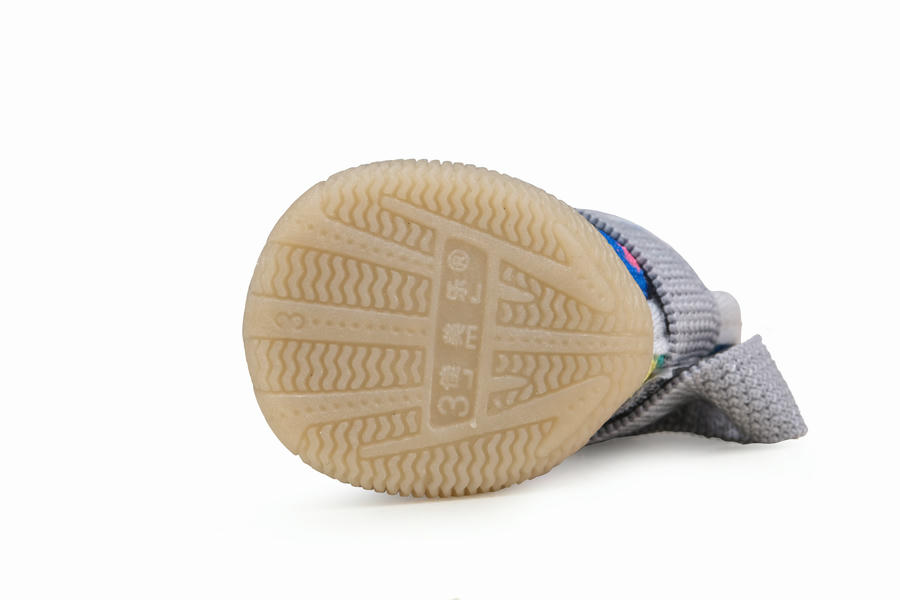
Smooth tile, laminate, and hardwood can be challenging for dogs that already have difficulty maintaining traction. Grip pads on the underside of a sock may help reduce slipping, but the result depends on the material, pattern, coverage, and contact between the grip and the floor.
Grip design should not be judged by appearance alone. Buyers should consider whether the pattern covers the areas that contact the ground, whether the grip material remains flexible, and whether it cracks or peels after washing.
A grip pattern that is too stiff may reduce flexibility, while a pattern that is too sparse may not provide enough traction. Product testing should therefore reflect the intended floor surfaces and the size of the sock.
What Makes a Cuff Secure Without Being Too Tight?
The cuff helps keep the sock in place, but excessive compression can cause discomfort. A wide, soft cuff or a carefully designed elastic section may help balance retention and comfort. Some designs use an additional adjustable strap, although that feature adds cost and requires its own fit and safety evaluation.
For small breeds, a bulky fastening system may be unnecessarily heavy. For active dogs, a cuff that is too loose may allow the sock to rotate or fall off. Buyers should test the finished product on appropriately sized paws rather than relying solely on flat garment measurements.
7. Are Winter Dog Socks Suitable for Snow, Ice, and Wet Outdoor Walks?
Winter dog socks are not automatically waterproof or suitable for deep snow. A conventional knitted sock can become wet, and damp material may become uncomfortable in cold conditions. Socks may also provide limited protection from sharp ice, road salt, or de-icing chemicals.
For short indoor use, warmth and traction may be the primary concerns. For outdoor use in harsh winter conditions, buyers should consider whether a boot with a more protective outsole, weather-resistant upper, and secure closure is more appropriate.
Cornell University recommends monitoring paws in cold weather, removing ice and salt after walks, and using well-fitting booties when appropriate. Read the veterinary guidance.
For B2B product positioning, it is better to define a product as an indoor winter sock, an indoor traction sock, or an outdoor protective boot than to make broad claims that one design performs equally well in every winter environment.
8. How Can Buyers Choose the Right Size for Winter Socks for Small Dogs?
Sizing is one of the most important factors in dog sock satisfaction. A sock that is too loose may rotate, bunch up, or fall off, while a sock that is too tight may compress the paw or restrict comfortable movement. Winter linings make sizing even more important because they reduce the usable internal space.
Buyers should establish a sizing system based on actual paw measurements rather than relying on breed names alone. Dogs of the same breed can have different paw widths and proportions, and front paws may differ from rear paws.
Which Paw Measurements Should Be Included in a Size Chart?
A practical size chart may include paw width, paw length, and the intended fit allowance. Measurements should be taken while the dog is standing naturally, with the paw bearing weight where possible, because the paw may spread under load.
The measurement instructions should also explain whether the chart refers to the paw itself or the finished sock dimensions. Confusing these two measurements can lead to inconsistent sizing.
For B2B brands, a well-developed size chart reduces customer uncertainty and helps retailers manage exchanges and returns.
Why Should the Lining Be Included in Fit Testing?
A shell fabric may stretch sufficiently when tested alone, but the finished sock can feel tighter after a thick fleece lining is added. The same issue may arise when grip coatings or reinforcement panels affect flexibility.
Every size should therefore be evaluated as a complete product. Buyers should check toe room, cuff retention, movement, and whether the sock stays aligned during short supervised wear trials.
9. How Should Winter Dog Socks Be Tested for Comfort and Durability?
A professional product development process should evaluate the finished sock, not just the raw fabric. A soft sample may initially feel comfortable but lose its shape after washing or develop grip-pad cracks after repeated use.
A practical quality plan can include:
- Fit and movement checks: Confirm that the sock stays in place without visibly restricting movement.
- Stretch and recovery testing: Evaluate whether the fabric retains its shape after repeated stretching.
- Wash testing: Check shrinkage, color change, pilling, seam condition, and grip performance.
- Grip durability: Inspect for cracking, peeling, or loss of grip material.
- Seam inspection: Look for broken threads, loose stitching, or uncomfortable seam edges.
- Wear simulation: Evaluate whether the sock twists, bunches, or develops holes under the intended use conditions.
For products intended for indoor traction, grip performance should be checked on relevant floor surfaces. For outdoor protective footwear, additional testing may be necessary for water resistance, abrasion, and closure retention.
The acceptance criteria should be established for the actual product. A single generic test cannot establish that every winter sock is suitable for every dog, climate, or activity.
10. How Can Wholesale Buyers Build a Profitable Winter Dog Sock Collection?
For retailers and distributors, winter dog socks are seasonal accessories that can complement dog coats, paw-care products, dog shoes, and other cold-weather items. A focused assortment is often easier to manage than a large collection of nearly identical designs.
A balanced product range could include a basic knitted sock, a fleece-lined model, a non-slip indoor version, and a premium wool-blend style. These products can serve different price points and consumer needs without requiring the retailer to stock too many overlapping options.
Guangzhou Petsun's dog footwear product range can be used as a starting point when exploring related product categories. Buyers should confirm the availability of specific winter sock styles and whether they can be developed or sourced as part of a wider assortment.
Which Products Should a New Retailer Stock First?
A new retailer may begin with a small number of core designs that cover the most common size groups and use cases. This approach allows the business to test customer response before committing to a broad assortment.
For example, a retailer targeting small companion dogs may prioritize compact sizes, soft linings, and attractive colors. A retailer selling mobility accessories may put more emphasis on grip performance and fit retention.
Seasonal planning is also important. Buyers should consider lead times, sample approval, packaging production, freight, and the expected start of local winter demand. Ordering too late can reduce the selling window, while ordering too early without demand data can tie up working capital.
How Can a Retailer Reduce Seasonal Inventory Risk?
A useful strategy is to separate core styles from trend-driven variations. Core products can use stable colors and familiar constructions, while seasonal designs can be introduced in more limited quantities.
Buyers should compare the full landed cost—not only the factory unit price—including freight, duties where applicable, packaging, inspection, and potential returns. The product with the lowest initial cost may not deliver the best margin if its quality or sizing creates more customer complaints.
11. How Does OEM and ODM Customization Work for Winter Dog Socks?
OEM and ODM projects allow brands to develop products that fit their own market positioning. Depending on the manufacturer's capabilities, customization may include fabric selection, lining construction, color combinations, printed patterns, grip design, labels, packaging, and size specifications.
The distinction is useful for purchasing teams. In a typical OEM arrangement, the buyer supplies a more defined design or specification for manufacturing. In an ODM arrangement, the manufacturer may contribute more of the existing product design or development work. Actual service scope varies by supplier and project.
Guangzhou Petsun's custom services page is the appropriate starting point for discussing OEM/ODM requirements. Buyers should confirm whether winter dog socks are within the current customization scope, what development support is available, and which options affect MOQ, price, and lead time.
Which Customization Options Have the Greatest Commercial Value?
Not every custom feature creates enough value to justify its cost. For winter socks, the most useful options may include a distinctive color palette, a recognizable grip pattern, an exclusive label, or packaging that clearly communicates warmth and intended use.
Material changes can have a larger impact on cost and production complexity than a simple color change. Adding a lining, changing the knit structure, or introducing a new grip compound may require extra development and testing.
A buyer should separate essential requirements from optional upgrades before requesting a quotation. This makes supplier comparisons more meaningful and helps avoid paying for features that customers may not value.
How Should Buyers Plan MOQ and Sample Approval?
Minimum order quantity depends on the manufacturing process, material availability, color selection, packaging, and whether the design uses existing tooling or requires new development. There is no single MOQ that applies to every winter sock project.
Before approving bulk production, buyers should request a representative sample made with the intended materials and construction. The sample should be evaluated for fit, warmth, grip, appearance, washing performance, and packaging before the final specification is approved.
A clear approval process helps reduce the risk of receiving bulk goods that differ from the sample used during development.
12. What Factors Determine the Wholesale Price of Winter Dog Socks?
Wholesale pricing is influenced by material cost, fabric weight, lining construction, grip material, sewing complexity, size range, order volume, packaging, and customization requirements. Freight and other landed costs also affect the final price paid by the buyer.
Rather than comparing quotations on unit price alone, purchasing teams should compare products with equivalent specifications.
| Cost factor | Potential effect on pricing | What buyers should compare |
|---|---|---|
| Fabric composition | Wool blends or specialized knits may cost more than basic fabrics | Fiber content and material performance |
| Lining | Additional fleece or thicker construction increases material use | Lining weight, coverage, and finish |
| Grip pattern | More extensive or complex grip applications may add processing cost | Coverage, durability, and application method |
| Design complexity | Special colors, patterns, or construction changes can increase setup work | Development cost and repeat-order requirements |
| Packaging | Custom printed boxes, labels, or inserts add cost | Packaging specification and quantity |
| Order quantity | Larger orders may spread certain setup costs over more units | Price breaks and inventory exposure |
| Quality requirements | Additional inspection or testing may add cost | Required reports and acceptance criteria |
| Shipping and duties | Affect total landed cost | Delivery terms and destination costs |
How Can Buyers Compare Quotes Fairly?
The quotation request should specify the same material composition, lining, grip design, sizes, color assortment, packaging, and inspection requirements for every supplier. Without a common specification, one quotation may be lower simply because it describes a simpler product.
Buyers should also ask which costs are one-time development expenses and which are recurring production costs. This is especially important for OEM/ODM projects, where samples, custom packaging, or special material sourcing may add upfront charges.
Is the Lowest Unit Price Always the Best Option?
Not necessarily. A cheaper product may use a thinner lining, less durable grip material, or a less consistent size specification. These differences may not be obvious from a quotation, but they can influence customer satisfaction and repeat purchases.
The best commercial decision balances product performance, expected retail price, defect risk, order quantity, and inventory turnover. For a seasonal product, excessive stock can be just as costly as a small difference in unit price.
13. How Can Wholesale Buyers Source In-Stock Winter Dog Socks?
In-stock purchasing can be useful when buyers need to replenish inventory quickly, test a product before a larger order, or prepare for winter demand without waiting for a fully customized development cycle.
However, availability should be confirmed for the exact style, color, and size mix. A product appearing in a supplier's catalogue does not necessarily mean that all variants are ready for immediate shipment.
Guangzhou Petsun's in-stock and wholesale services provide a starting point for discussing ready-to-ship product options and wholesale requirements. Buyers should verify current stock, quantities, packaging, delivery timing, and whether the available product matches the intended retail specifications.
When Is In-Stock Purchasing More Suitable Than Custom Development?
In-stock products may be appropriate when speed and lower development complexity are the main priorities. They can also help retailers evaluate demand before investing in a customized collection.
OEM/ODM development may be more suitable when the buyer needs exclusive materials, branding, packaging, sizing, or a differentiated product design. The decision should reflect the commercial value of customization and the available time before the selling season.
A practical approach is to test demand with an existing style and use sales feedback to guide a later customized order.
14. How Should Retailers Package and Market Winter Dog Socks?
Packaging should explain what the product does without overstating its capabilities. A buyer choosing winter dog socks needs to understand the material, size, intended use, care instructions, and whether the design is intended primarily for indoor warmth or traction.
A clear packaging hierarchy might include:
- Product name and intended use.
- Material composition and lining information.
- Paw-measurement instructions and size chart.
- Washing and care instructions.
- Guidance to supervise use and check fit.
- A clear distinction between indoor socks and outdoor protective footwear.
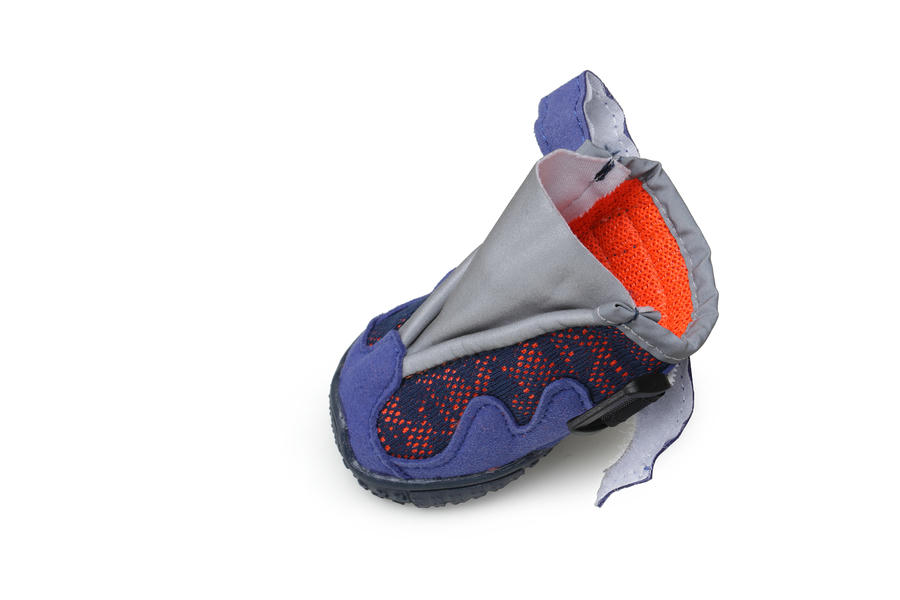
For online listings, useful product photography includes a close-up of the lining, the underside of the grip pattern, the cuff construction, and the sock being worn by a dog. A size chart and a simple guide to measuring the paw can also reduce confusion.
Which Product Claims Should Be Avoided?
Avoid describing a knitted sock as waterproof unless the finished construction has been tested to support that claim. Similarly, do not claim that a product prevents frostbite or makes prolonged exposure to freezing temperatures safe.
A more accurate approach is to describe the materials, design features, and intended use. For example, "fleece-lined for added indoor warmth" is more specific than a broad promise that the product keeps every dog's paws warm in all winter conditions.
15. How Can Brands Plan a Seasonal Winter Dog Sock Collection?
A successful winter collection needs more than attractive colors. It should provide a clear assortment strategy, consistent sizing, appropriate material choices, and enough lead time for sampling, production, shipping, and retail preparation.
A simple development calendar may include four stages:
- Product planning: Define target customers, price points, product categories, and expected demand.
- Sampling and evaluation: Review materials, fit, grip, colors, and care performance.
- Production and quality control: Confirm the approved specification, packaging, and inspection plan.
- Launch and replenishment: Monitor sales, returns, customer feedback, and remaining inventory.
Buyers should also consider geographic differences. A market with cold but dry winters may favor fleece-lined indoor socks, while a market with frequent snow and road salt may place greater value on protective outdoor boots.
For Guangzhou Petsun, buyers considering a seasonal program can begin with the product range, discuss development through OEM/ODM custom services, and review in-stock and wholesale options where relevant. Product availability, customization scope, MOQ, and lead time should be confirmed for the actual order.
How Can Buyers Choose the Right Winter Dog Socks for Their Market?
The best winter dog socks combine suitable insulation, comfortable fit, secure retention, appropriate traction, and practical care requirements. Fleece-lined knits can be attractive for everyday warmth, wool blends can support a premium product position, and synthetic blends may offer useful advantages in washability and cost control.
For B2B buyers, the strongest sourcing decisions begin with a clear use case. Decide whether the product is intended for indoor warmth, traction on smooth floors, or more demanding outdoor conditions. Then compare the materials, lining, cuff, grip pattern, sizing system, and finished-product performance.
Wholesale buyers should compare equivalent specifications and calculate the full landed cost rather than focusing only on unit price. Brands seeking differentiation can explore OEM/ODM options, while buyers who need faster replenishment may consider available in-stock products.
Guangzhou Petsun's dog footwear product range, OEM/ODM custom services, and in-stock and wholesale services are useful starting points for discussing product selection and purchasing requirements.
Ultimately, a winter dog sock collection is most likely to perform well when it solves a specific customer problem, fits comfortably, uses materials suited to its intended purpose, and is supported by clear product information and reliable quality control.
Winter Dog Socks Warm and Cozy Options for Cold Weather
How to Evaluate a Dog Shoe Supplier
Related Article