Dog Shoe Supplier Checklist
This is the exact philosophy that drives Guangzhou Petsun. We believe that a successful B2B relationship is built on radical transparency and meticulous preparation. To help you navigate the complexities of global sourcing and avoid common procurement pitfalls, we have compiled this comprehensive, battle-tested checklist. Use these critical dog shoe manufacturer questions during your next dog boot factory inquiry to ensure you are protected, informed, and positioned for success.
What Are the Most Critical Dog Shoe Manufacturer Questions to Ask Before Signing a Contract?
Before you even discuss pricing, you must establish the foundational rules of engagement. A professional manufacturer will welcome these questions, as they demonstrate that you are a serious, knowledgeable buyer. Your initial checklist should cover the "Big Seven": Minimum Order Quantities (MOQ), realistic lead times, clear Incoterms, customization capabilities, sample development processes, quality control (QC) protocols, and secure payment terms. Skipping any of these can leave your supply chain vulnerable to unexpected disruptions.
How Does the Dog Shoe Manufacturer MOQ Impact Your Initial Investment and Cash Flow?
The dog shoe manufacturer MOQ is often the first hurdle for emerging brands, but it requires nuanced negotiation. Do not just ask, "What is your MOQ?" Instead, dig deeper:
- Is the MOQ per style, per color, or per size run? (A factory might quote an MOQ of 500 pairs, but require 100 pairs per color, drastically inflating your initial inventory).
- Can the MOQ be lowered for a first-time trial order to test market reception?
- Are there tiered pricing breaks that make a slightly higher MOQ more cost-effective per unit? Understanding these tiers allows you to align your procurement strategy with your actual cash flow and warehousing capacity, preventing you from being trapped with dead stock.
What Are the Real Lead Times, and How Does the Factory Handle Production Delays?
Lead times in pet footwear manufacturing are rarely as simple as "30 days." You must break this down into specific phases:
- Material Procurement: How long does it take to source the specific nylon, rubber, or Velcro you require?
- Sample Development: How many weeks are allocated for prototyping and revisions?
- Mass Production: Once the pre-production sample is approved, what is the exact turnaround time? Crucially, you must ask: What is the penalty or remediation process if the factory misses the agreed-upon delivery date? A reputable supplier will have a clear, written policy for delays caused by their own operational bottlenecks, ensuring your retail launch dates remain protected.
Which Price Terms and Incoterms Should You Negotiate to Protect Your Margins?
A deceptively low per-unit price can hide a multitude of additional costs. Always clarify the Incoterms (International Commercial Terms). Are you being quoted EXW (Ex Works, where you pay for everything from the factory door onward) or FOB (Free on Board, where the factory covers costs up to the port of departure)? Additionally, demand a granular breakdown of costs. Are mold fees, custom packaging, labeling, and inland freight included in the quote, or are they treated as surprise add-ons later? Transparent factories will provide a detailed, line-item proforma invoice so you can accurately calculate your landed cost and retail markup.
What Customization Options Are Available, and Do They Meet Your Dog Shoe OEM Requirements?
Not all customization is created equal. When evaluating your dog shoe OEM requirements, it is vital to understand the spectrum of manufacturing services available to you. For a deep dive into how we structure these partnerships, you can explore our dedicated capabilities at OEM and ODM Custom Services.
The Difference Between Basic OEM and True ODM Innovation
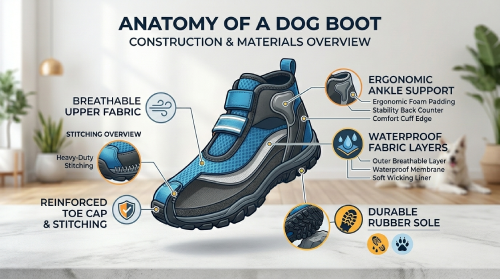
Basic OEM (Original Equipment Manufacturing) typically involves taking a factory’s existing "blank" shoe and simply adding your logo, custom colors, or branded packaging. While cost-effective, it offers little market differentiation. True ODM (Original Design Manufacturing), however, is a collaborative engineering process. It involves creating a custom ergonomic shoe-last, designing a proprietary tread pattern for superior traction, and selecting specialized materials (like hydrolysis-resistant rubber or ripstop nylon) tailored to your brand’s unique performance claims.
Navigating Mold and Tooling Costs
If your dog shoe OEM requirements include custom molds for rubber soles or unique hardware (like custom-molded buckles), you must clarify the tooling costs upfront. Ask: Who owns the mold after it is paid for? Is the mold fee refundable after a certain order volume is reached? A fair supplier will clearly state that the mold is your intellectual property and will store it securely for your future production runs.
How Does the Sample Policy Work, and Can Sample Costs Be Deducted from Bulk Orders?
Sampling is the most critical phase of product development, yet it is often mishandled. A professional process should include multiple stages: a 2D tech pack review, a 3D prototype or "first article" sample, and finally, a Pre-Production Sample (PPS) made with the exact materials and assembly line that will be used for mass production. Always ask: What is the cost of sampling, and is this fee deductible from the final bulk order? Reputable manufacturers routinely deduct sample costs from the first official purchase order, as it demonstrates their commitment to earning your long-term business rather than just making a quick profit on a prototype.
What Quality Control Measures and Warranty Terms Are in Place for Defective Units?
Quality cannot be inspected into a product at the end; it must be built into the process. When reviewing a supplier’s QC capabilities, look for these specific checkpoints:
Understanding AQL Standards and In-Line Inspections
Ask the factory what Acceptable Quality Limit (AQL) standard they follow (e.g., AQL 2.5 for major defects, 4.0 for minor defects). More importantly, ask about their in-line inspections. Are quality checks performed during stitching and sole bonding, or only at the very end? Catching a misaligned sole during assembly is cheap; discovering it after 5,000 pairs are boxed and shipped is a financial disaster.
Defining the Warranty and Remediation Process
Even with strict QC, a small defect rate is an reality of manufacturing. You must establish a clear warranty term. If a batch exceeds the agreed AQL defect rate, who bears the cost of rework, return shipping, or replacement units? A confident manufacturer will have a straightforward, written remediation policy that protects your bottom line.
Which Payment Terms Offer the Best Balance of Security and Cash Flow for B2B Buyers?
Never agree to 100% upfront payment. The industry standard for secure, custom manufacturing is a 30% deposit via T/T (Telegraphic Transfer) to initiate material procurement and production, with the remaining 70% balance due after a successful Third-Party Inspection (TPI) but before the goods are shipped. For very large orders, an Irrevocable Letter of Credit (L/C) at sight can offer additional financial security for both parties. Always ensure the payment terms are explicitly detailed in a formal Proforma Invoice (PI) or Sales Contract.
Does the Supplier Offer In-Stock Wholesale Options for Faster Market Entry?
Not every business strategy requires a 90-day custom manufacturing lead time. If you are a retailer looking to quickly test a new product category, or if you need to replenish best-selling items immediately, ready-to-ship inventory is invaluable.
For brands seeking speed and flexibility, Guangzhou Petsun offers a robust selection of pre-manufactured, high-quality footwear. You can explore our ready-to-ship catalog and wholesale terms at Wholesale Services. This service allows you to bypass mold fees and sampling delays entirely, enabling you to get premium, durable dog shoes onto your shelves in a fraction of the time, with much lower initial capital risk.
How Can You Verify the Factory’s True Manufacturing Capabilities Beyond Their Sales Pitch?
In the digital age, it is easy for a trading company to masquerade as a direct manufacturer. To verify true capabilities, ask for a live video tour of the production floor, specifically requesting to see the stitching department, the molding machines, and the QC inspection area. Reputable manufacturers like Guangzhou Petsun welcome third-party audits and video calls because they have nothing to hide. Additionally, ask for references or case studies of other international brands they currently supply. A factory’s willingness to be transparent is the strongest indicator of their operational integrity.
Why Is Building a Long-Term Partnership More Valuable Than Just Chasing the Lowest Price?
It is tempting to choose the supplier who offers the absolute lowest per-unit cost. However, in pet footwear, the cheapest option often cuts corners on adhesive quality, rubber density, or stitch reinforcement—flaws that will inevitably result in product failure and customer churn.
At Guangzhou Petsun, we view every client not as a one-time transaction, but as a long-term partner. We invest in premium materials, rigorous testing protocols, and open communication because we know that your brand’s growth is directly tied to our manufacturing excellence. Partnering with an experienced, transparent team ensures that your products not only arrive on time and on budget but also deliver the uncompromising quality that end consumers demand.
Ready to secure a reliable, high-quality supply chain for your brand? Stop guessing and start building with confidence. Explore our full range of custom and in-stock pet footwear solutions, and let’s discuss how we can bring your next product line to life at www.petshoe.com
Best Dog Sneakers: Comfortable Shoes for Long Walks
What is the Dog Shoe Quality Control Process
Related Article