How Do You Choose the Right Sole for Dog Shoes
What Are the Main Types of Dog Shoe Soles?
What Makes Rubber Soles the Gold Standard for Traction?
Rubber soles have earned their reputation as the most popular choice for dog shoes, and for excellent reasons that go beyond simple tradition. When you think about it, rubber offers an almost magical combination of properties that other materials struggle to match. Natural and synthetic rubber compounds provide exceptional grip on virtually any surface—whether that's wet pavement, icy sidewalks, muddy trails, or smooth indoor floors. The material's natural elasticity allows it to conform slightly to surface irregularities, creating more contact points and better traction. But here's what really matters: rubber soles maintain their grip even when wet, which is crucial since dogs often walk through puddles, dew-covered grass, or rain-slicked streets. The durability is another huge advantage—quality rubber can withstand thousands of steps without wearing through, making it cost-effective for both manufacturers and end consumers. However, not all rubber is created equal. Some compounds prioritize flexibility, while others focus on maximum durability or enhanced grip. Understanding these variations helps you match the right rubber formulation to your target market's needs.
Why Are EVA Soles Perfect for Lightweight Comfort?
EVA (Ethylene-Vinyl Acetate) soles have revolutionized the dog shoe industry by addressing one of the most common complaints: weight. Think about it from your dog's perspective—imagine having to lift heavy boots with every single step. That's exactly what traditional rubber soles can feel like, especially for smaller breeds or older dogs with joint issues. EVA foam is incredibly lightweight, often weighing 30-40% less than comparable rubber soles, which makes a dramatic difference in how naturally dogs can move. But the benefits go far beyond just weight reduction. EVA has excellent shock-absorbing properties, cushioning each step and reducing impact on your dog's joints, paws, and legs. This makes it particularly valuable for senior dogs, dogs recovering from injuries, or breeds prone to hip dysplasia and arthritis. The material is also naturally water-resistant and easy to clean, though it's worth noting that EVA typically offers less traction on slippery surfaces compared to rubber and may wear faster on rough terrain. For urban dogs who primarily walk on sidewalks and indoor surfaces, or for dogs who need maximum comfort over maximum durability, EVA soles represent an excellent choice that prioritizes their wellbeing with every step.
How Do TPR Soles Balance Flexibility and Durability?
TPR (Thermoplastic Rubber) soles occupy a fascinating middle ground in the dog shoe sole spectrum, offering a compelling compromise that appeals to many manufacturers and buyers. Imagine taking the best qualities of both rubber and plastic and blending them together—that's essentially what TPR achieves. These soles provide better flexibility than traditional rubber, allowing for more natural paw movement and easier breaking-in periods. At the same time, they offer superior durability compared to EVA or fabric alternatives, making them suitable for moderately active dogs who need reliable protection without the premium price tag of high-end rubber compounds. TPR soles are also easier to mold into complex tread patterns during manufacturing, giving designers more creative freedom to develop unique grip patterns tailored to specific activities or terrains. The material performs well across a wide temperature range, maintaining flexibility in cold weather without becoming brittle, and resisting softening in hot conditions. However, it's important to note that while TPR offers good traction, it may not match the grip performance of specialized rubber compounds on extremely slippery surfaces. For brands targeting the mid-market segment or looking for versatile all-purpose soles, TPR represents a smart, balanced choice.
How Does Sole Material Affect Grip and Traction?
What Tread Patterns Work Best for Different Terrains?
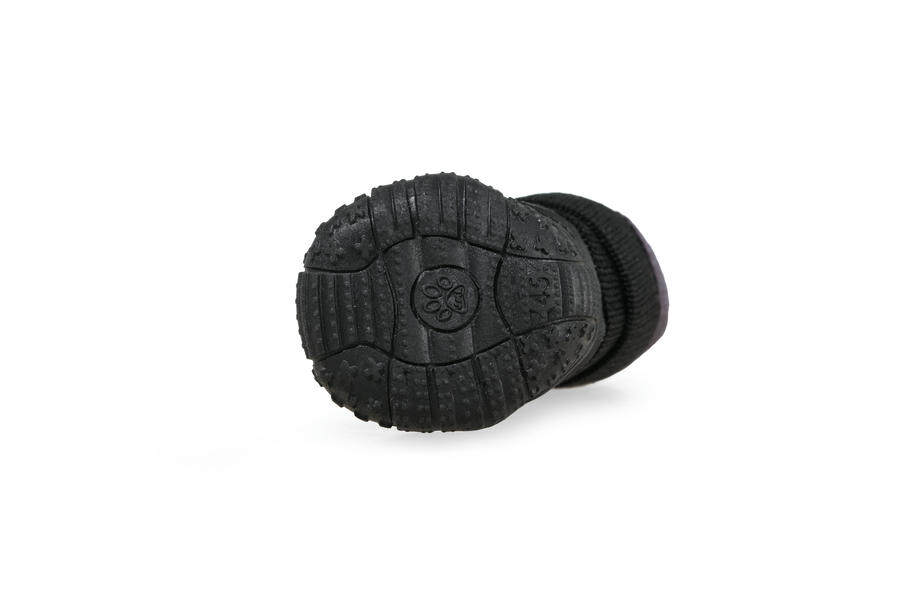
The tread pattern on a dog shoe sole isn't just about aesthetics—it's a critical engineering decision that directly impacts safety and performance across different environments. Think of it like tire design for cars: what works perfectly on a smooth highway might be dangerously inadequate on a muddy mountain trail. For urban environments with primarily smooth surfaces like concrete, asphalt, and indoor flooring, shallow, closely-spaced tread patterns with multiple contact points provide excellent grip without collecting debris. These patterns often feature small nubs or waves that create friction without being overly aggressive. For hiking and outdoor adventures, you need deeper, more aggressive lugs that can bite into soft soil, grip rocky surfaces, and shed mud effectively. These patterns typically have wider spacing between lugs to prevent mud buildup, along with multi-directional designs that provide traction whether your dog is moving forward, backward, or sideways on uneven terrain. Winter and ice conditions require specialized patterns with even deeper grooves and sometimes incorporate small metal or ceramic studs for enhanced ice grip. Some innovative designs even feature variable tread depths—deeper in high-wear areas like the center pad, shallower around the edges for better flexibility. Companies like Guangzhou Petsun offer various tread pattern options to match specific use cases, understanding that one size definitely doesn't fit all when it comes to traction needs.
How Can You Ensure Non-Slip Performance on Wet Surfaces?
Wet surfaces present one of the greatest challenges for dog shoe design, and ensuring reliable non-slip performance requires careful consideration of multiple factors working together. The fundamental issue is that water creates a lubricating layer between the sole and the ground, dramatically reducing friction. To combat this, high-quality dog shoe soles use rubber compounds specifically formulated to maintain grip when wet—these often include silica or other additives that enhance wet traction. But material alone isn't enough. The tread design must effectively channel water away from the contact surface through strategically placed grooves and sipes (those tiny slits you see in tire treads). These channels allow water to escape, maintaining direct contact between the sole and the ground. The pattern should also include numerous small edges and biting points that can penetrate the water film and grip the actual surface underneath. Another crucial factor is the sole's ability to conform slightly to surface texture—softer compounds can do this better, creating more contact points. For manufacturers and buyers, testing non-slip performance isn't optional; it should include trials on wet tile, wet concrete, wet wood, and other common slippery surfaces. The best approach often involves consulting with OEM ODM details experts who can recommend specific compound formulations and tread designs proven to excel in wet conditions, ensuring your products keep dogs safe regardless of weather.
Why Does Surface Contact Area Matter for Dog Safety?
The amount of sole surface actually touching the ground at any given moment plays a surprisingly crucial role in your dog's stability and safety, yet it's often overlooked in favor of flashier features. When a dog walks, their paws naturally splay and contract, and the sole needs to accommodate this movement while maintaining consistent contact with the ground. Too little contact area, and the shoe becomes unstable, increasing the risk of slips, falls, and ankle injuries. Too much rigid contact, and you restrict natural paw movement, potentially causing gait abnormalities and discomfort. The ideal design maximizes contact during the weight-bearing phase of each step while allowing flexibility during the swing phase. This is where sole geometry becomes critical—the shape, curvature, and flexibility all influence how much surface touches the ground and when. Wider soles generally provide more stability, especially for older dogs or those with balance issues, but they must be balanced against the need for natural movement. The contact area also affects pressure distribution; larger contact areas spread impact forces more evenly, reducing stress on joints and paw pads. For dogs with specific conditions like arthritis or recovering from injuries, maximizing stable contact area while maintaining appropriate flexibility can significantly improve their confidence and mobility. Manufacturers working with Guangzhou Petsun can access various sole geometries designed to optimize this critical balance for different dog sizes, breeds, and activity levels.
What Role Does Durability Play in Sole Selection?
How Do Different Sole Materials Wear Over Time?
Understanding how various sole materials degrade with use is essential for setting realistic expectations and ensuring customer satisfaction. Rubber soles, particularly those made from high-quality compounds, typically offer the longest lifespan, often lasting 6-12 months with regular use before showing significant wear. The wear pattern usually starts with smoothing of the tread pattern in high-contact areas, particularly under the main paw pads, before progressing to actual thinning of the material. Premium rubber compounds resist this wear better and maintain their grip properties longer, even as the tread depth decreases. EVA soles, while incredibly comfortable and lightweight, tend to compress and lose their cushioning properties faster than rubber, typically showing noticeable wear within 3-6 months of regular use. The material can develop permanent compression marks, become less springy, and eventually crack or split if pushed beyond its limits. TPR soles fall somewhere in between, offering decent durability of 4-8 months while maintaining better flexibility than rubber throughout their lifespan. However, environmental factors dramatically affect all these timelines—dogs who walk primarily on rough concrete or asphalt will wear through soles much faster than those who mostly traverse grass and dirt trails. Extreme temperatures, exposure to oils or chemicals, and the dog's weight and gait all influence wear rates. For B2B buyers, understanding these wear patterns helps in positioning products correctly and providing accurate care instructions to end consumers.
What Factors Influence Sole Longevity Beyond Material Choice?
While material selection is crucial, several other factors significantly impact how long dog shoe soles actually last in real-world conditions, and understanding these can help you make smarter purchasing and design decisions. The dog's weight is perhaps the most obvious factor—heavier dogs exert more pressure on soles with each step, accelerating wear proportionally. But it's not just about total weight; gait abnormalities, uneven weight distribution, or conditions like arthritis can cause uneven wear patterns that prematurely destroy one area of the sole while other parts remain relatively new. The walking surface matters enormously—rough concrete and asphalt are incredibly abrasive and will wear down even the toughest soles much faster than natural surfaces like dirt, grass, or packed trails. Frequency and duration of use obviously play roles, but so does the type of activity; a dog who hikes vigorously over rocky terrain will wear soles differently than one who takes leisurely neighborhood walks. Proper fit is another critical but often overlooked factor—shoes that are too loose can cause friction and uneven wear, while overly tight shoes can distort the sole and create stress points. Care and maintenance also matter; regularly cleaning soles to remove embedded debris, allowing shoes to dry properly between uses, and rotating between multiple pairs can all extend lifespan. For retailers and brands, educating customers about these factors through wholesale details and product guides can dramatically improve customer satisfaction and reduce returns.
When Should You Prioritize Durability Over Other Features?
While it's tempting to always choose the most durable sole option, there are specific scenarios where prioritizing longevity makes the most sense, and others where it might actually be counterproductive. For working dogs, service animals, or highly active adventure dogs who use their shoes daily in demanding conditions, durability absolutely must be the top priority. These dogs simply can't afford sole failure mid-mission or mid-hike, and the cost of frequent replacement outweighs the premium for long-lasting materials. Similarly, dogs with specific medical conditions requiring consistent shoe wear—such as severe allergies requiring constant paw protection, or post-surgical recovery needing stable support—benefit from soles that maintain their integrity over extended periods. Large breed dogs also typically need more durable soles simply due to the greater forces involved in their movement. However, there are situations where prioritizing durability might be a mistake. For small breed dogs or senior dogs with limited mobility, the extra weight and reduced flexibility of ultra-durable soles might cause more problems than they solve. Dogs who only occasionally wear shoes—for brief vet visits, occasional icy walks, or short-term injury recovery—don't need maximum durability and would be better served by lighter, more comfortable options. Seasonal users, like dogs who only need shoes during winter months, might prioritize features like insulation or ice traction over pure longevity. Understanding your target customer's specific use case is essential for matching the right durability level to actual needs rather than simply assuming more durable is always better.
How Important Is Flexibility in Dog Shoe Soles?
Why Do Dogs Need Natural Paw Movement in Their Shoes?
The flexibility of a dog shoe sole isn't just a comfort feature—it's fundamental to your dog's physical health, natural movement patterns, and overall willingness to wear shoes. Unlike humans who have adapted to wearing rigid footwear throughout our lives, dogs are digitigrade animals, meaning they naturally walk on their toes with their heels elevated. This anatomical difference makes paw flexibility absolutely critical for proper biomechanics. When a dog's paw strikes the ground, it naturally flexes, spreads, and adapts to surface contours, absorbing shock and maintaining balance. A sole that's too rigid restricts this natural movement, forcing the dog to alter their gait, which can lead to joint stress, muscle strain, and even long-term orthopedic issues. Think about it from the dog's perspective: imagine trying to run or climb stairs while wearing stiff, inflexible boots that don't bend with your feet—it would feel unnatural, awkward, and potentially painful. Beyond the physical aspects, restricted movement affects a dog's confidence and proprioception (their awareness of where their paws are in space). Dogs rely heavily on sensory feedback from their paw pads to navigate terrain, and overly rigid soles dampen this feedback, making dogs feel uncertain and unstable. The ideal sole provides enough structure to protect against sharp objects and harsh surfaces while remaining flexible enough to allow natural paw flexion, toe spread, and adaptive movement. This balance is particularly crucial for active dogs, growing puppies whose bones and joints are still developing, and senior dogs who may already have compromised mobility.
How Can You Test Sole Flexibility Before Bulk Ordering?
Testing sole flexibility properly before committing to large orders is essential for ensuring product quality and customer satisfaction, and it requires a systematic approach that goes beyond simply bending the shoe with your hands. Start with the basic bend test: hold the shoe at the heel and toe, then bend it to approximately 45-60 degrees—the sole should flex smoothly without creating sharp creases or resistance points, and it should return to its original shape without permanent deformation. However, this simple test only tells part of the story. You also need to evaluate flex location—the sole should bend primarily at the ball area (where the dog's paw naturally flexes) rather than in the middle or at the heel. Check for torsional rigidity by twisting the shoe; it should resist twisting to provide stability but not be so rigid that it fights natural paw rotation. Temperature testing is crucial because flexibility can change dramatically in different conditions—test soles in both cold (refrigerated) and warm conditions to ensure they maintain appropriate flexibility across the temperature range your customers will encounter. Weight-bearing tests are equally important; place the shoe under pressure simulating a dog's weight and then attempt to flex it, as some soles that seem flexible when unloaded become rigid under actual use. For comprehensive evaluation, consider having dogs of various sizes actually wear prototype samples and observe their gait, looking for signs of restricted movement, hesitation, or unnatural stepping patterns. Working with manufacturers like Guangzhou Petsun who can provide detailed flexibility specifications and testing data helps ensure you're making informed decisions based on actual performance rather than assumptions.
What's the Balance Between Support and Flexibility?
Finding the sweet spot between providing adequate support and maintaining natural flexibility is one of the most challenging aspects of dog shoe sole design, and getting it wrong in either direction can lead to serious problems. Too much flexibility, and the sole fails to protect against sharp objects, provides insufficient stability on uneven terrain, and wears out quickly. Too much rigidity, and you restrict natural movement, cause discomfort, and potentially create long-term orthopedic issues. The ideal balance varies significantly based on the dog's specific needs and intended use. For dogs recovering from injuries or those with conditions like weak pasterns or carpal issues, slightly more support and structure may be beneficial to provide stability during healing, though even then, some flexibility must be maintained to prevent muscle atrophy and joint stiffness. Active dogs navigating varied terrain need soles that offer protective rigidity against rocks and roots while remaining flexible enough to conform to uneven surfaces and allow natural adjustment. Small breed dogs and puppies generally benefit from maximum flexibility with minimal structure, as their lighter weight means they need less protection from puncture, and their developing bodies require unrestricted movement. Large breed dogs and working dogs can handle—and often need—more structured soles that provide durability and protection without sacrificing all flexibility. The sole's thickness also plays a role; thinner soles naturally flex more easily but offer less protection, while thicker soles need careful engineering to maintain flexibility despite increased material. Some innovative designs use strategic flex grooves or segmented sole construction to provide targeted flexibility in specific areas while maintaining structure where needed. Understanding your target market's specific needs and clearly communicating the support-to-flexibility ratio of your products helps customers make appropriate choices.
What Should You Know About Waterproofing and Weather Resistance?
How Do Different Sole Materials Handle Moisture?
Moisture management is a critical but often overlooked aspect of sole performance, and different materials handle water in dramatically different ways that directly impact both the shoe's longevity and your dog's comfort. Natural rubber is inherently waterproof and doesn't absorb moisture, making it an excellent choice for wet conditions. However, while the rubber itself won't degrade from water exposure, prolonged moisture can affect the adhesives bonding the sole to the upper, potentially causing delamination over time. Synthetic rubber compounds generally share these waterproof properties while often offering better resistance to degradation from repeated wet-dry cycles. EVA foam presents a more complex picture—while it's technically water-resistant and won't absorb large amounts of moisture like a sponge, it can trap water in its cellular structure, leading to longer drying times and potential odor issues if not properly dried between uses. Repeated saturation and drying can also cause EVA to break down faster than when kept dry. TPR materials typically offer good water resistance similar to rubber, though the specific formulation matters significantly. Beyond the sole material itself, the interface between the sole and upper is often the weak point for water intrusion. Even with a completely waterproof sole, water can seep in through stitching, seams, or the bond line if not properly sealed. Some manufacturers use waterproof membranes or sealants at this junction, while others rely on construction methods that minimize penetration points. For dogs who frequently encounter wet conditions—whether from rain, snow, puddles, or water activities—choosing soles with proven water resistance and ensuring proper construction quality is essential for preventing not just discomfort but also bacterial and fungal growth that thrives in damp environments.
What Materials Resist Temperature Extremes Best?
Temperature resistance is crucial for dog shoes since they're exposed to everything from scorching summer pavement to freezing winter snow, and different sole materials respond very differently to these extremes. Rubber soles, particularly high-quality compounds, generally perform well across a wide temperature range, maintaining flexibility in cold conditions down to about -20°C (-4°F) before becoming noticeably stiffer, and resisting softening in heat up to around 60°C (140°F). However, cheap rubber compounds can become brittle in extreme cold or sticky and soft in intense heat, compromising both performance and durability. EVA foam has more limited temperature tolerance—it performs excellently in moderate conditions but can become stiff and less cushioned in very cold weather, and may soften excessively in extreme heat, potentially deforming under pressure. This makes EVA less ideal for dogs in climates with severe temperature swings unless specifically formulated for extended temperature ranges. TPR materials typically offer good temperature resistance, often performing better than EVA in cold conditions while maintaining stability in heat, though specific performance varies by formulation. Beyond the material itself, color plays a surprising role in temperature performance—dark-colored soles absorb more heat from sunlight, potentially becoming uncomfortably hot on summer pavement, while light colors reflect heat but may show dirt more easily. For dogs walking on hot surfaces, some manufacturers incorporate heat-reflective materials or insulating layers between the sole and paw. In cold conditions, the sole's ability to insulate against frozen ground matters as much as its flexibility—thicker soles provide better insulation but may sacrifice some flexibility. Understanding your market's typical climate conditions and choosing sole materials specifically formulated for those temperature ranges ensures your products perform reliably when dogs need them most.
How Does Weather Affect Sole Performance and Lifespan?
Weather conditions don't just affect how dog shoe soles perform in the moment—they significantly impact long-term durability and can dramatically shorten lifespan if not properly accounted for in material selection and customer education. UV radiation from sunlight is one of the most damaging environmental factors, gradually breaking down the molecular structure of sole materials, causing them to become brittle, crack, and lose their grip properties. Rubber compounds with UV inhibitors resist this degradation better, while untreated materials can show visible deterioration after just one season of regular sun exposure. Repeated wet-dry cycles, common in rainy climates or for dogs who encounter water regularly, can accelerate wear by causing materials to expand and contract, creating micro-cracks that eventually propagate into visible damage. Salt from winter road treatment is particularly corrosive, eating away at sole materials and causing premature degradation—this is why winter dog shoes often need replacement more frequently than those used in other seasons. Extreme temperature fluctuations cause materials to expand and contract repeatedly, creating stress that can lead to cracking, separation from uppers, or permanent deformation. Mud and abrasive dirt particles can become embedded in tread patterns, working like sandpaper to accelerate wear with each step. For B2B buyers and manufacturers, understanding these weather-related degradation factors is crucial for both product development and customer communication. Providing clear care instructions—like rinsing shoes after salt exposure, storing them away from direct sunlight, and allowing proper drying between uses—can significantly extend product life. Offering wholesale details that include weather-specific product recommendations helps retailers guide customers to the right choices for their local climate conditions.
How Do You Match Sole Type to Specific Activities?
What Soles Work Best for Urban Walking and Daily Use?
Urban environments present unique challenges that require specific sole characteristics different from those needed for wilderness adventures or specialized activities. City dogs primarily encounter smooth, hard surfaces like concrete sidewalks, asphalt streets, tile floors, and wooden decks, which means aggressive tread patterns designed for mud or snow are not only unnecessary but can actually reduce traction on these smooth surfaces. For daily urban use, you want soles with shallow, closely-spaced tread patterns or even slightly textured smooth surfaces that maximize contact area on hard, flat ground. The material should prioritize durability since concrete and asphalt are incredibly abrasive, making rubber or high-quality TPR ideal choices that can withstand thousands of steps without wearing through. Weight becomes important for urban dogs who may walk several miles daily—lighter EVA or thin rubber soles reduce fatigue and make shoes less obtrusive for regular wear. Flexibility is crucial since urban dogs navigate curbs, stairs, and varied elevations constantly, requiring soles that bend naturally with each step. Traction on wet surfaces is essential since city dogs encounter rain-slicked sidewalks, wet tile in buildings, and polished floors regularly, making non-slip performance a safety priority. Some urban dogs also need protection from hot pavement in summer, requiring soles with insulating properties or heat-reflective materials. Noise level matters more than many realize—hard rubber soles can create loud clicking sounds on hard floors that startle some dogs or annoy owners, so slightly softer compounds that dampen sound while maintaining durability are often preferred. For dogs who spend significant time indoors, sole markings on floors are another consideration; non-marking compounds prevent those frustrating black scuff marks on tile and hardwood. Companies like Guangzhou Petsun offer sole options specifically engineered for urban environments, balancing all these factors for optimal daily performance.
Which Soles Are Ideal for Hiking and Outdoor Adventures?
Hiking and outdoor adventures demand soles that can handle dramatically different challenges than urban walking, requiring a complete rethinking of priorities and design features. When your dog is navigating rocky mountain trails, muddy forest paths, loose scree, stream crossings, and unpredictable terrain, the sole becomes critical safety equipment rather than just protective gear. Deep, aggressive tread patterns with multi-directional lugs are essential for gripping uneven surfaces, preventing slips on inclines, and providing stability on loose material. The tread needs wide spacing to shed mud effectively—closely-spaced patterns quickly become clogged with mud, turning into smooth, useless surfaces with zero traction. Material choice becomes crucial; you need rubber compounds tough enough to resist puncture from sharp rocks, thorns, and branches, yet flexible enough to conform to irregular surfaces and maintain grip. Durability is paramount since abrasive granite, sharp slate, and rough trails will quickly destroy softer materials. The sole must maintain performance when wet, as outdoor adventures inevitably involve stream crossings, rain, dew-covered grass, and muddy conditions. Temperature resistance matters since mountain environments can swing from freezing mornings to hot afternoons. Some advanced hiking soles incorporate rock plates—thin, rigid layers that protect against sharp rock penetration while maintaining overall flexibility. The sole should also provide some insulation from cold ground during rest stops or snow travel. Weight becomes less critical than performance for occasional adventure use, allowing for more robust, protective constructions. Torsional stability helps prevent ankle rolls on uneven terrain, though some flexibility must be maintained for natural movement. For dogs carrying packs or those with less sure footing, slightly wider soles provide enhanced stability. Working with manufacturers who understand outdoor performance requirements through OEM ODM details ensures your hiking dog shoes meet the demanding standards of serious outdoor enthusiasts who rely on their gear in challenging conditions.
How Do You Choose Soles for Winter and Snow Conditions?
Winter and snow conditions create a unique set of challenges that require specialized sole designs quite different from all-season or warm-weather options. The primary concern is traction on ice and packed snow, surfaces that are notoriously slippery and dangerous for unprotected paws. Standard tread patterns, no matter how aggressive, often fail on ice because there's simply nothing for the lugs to grip—ice is smooth, hard, and offers minimal friction. This is where specialized winter sole designs become essential, often incorporating small metal or ceramic studs that literally penetrate the ice surface to provide grip, similar to ice cleats for humans. Alternatively, some winter soles use extremely soft rubber compounds that remain flexible in freezing temperatures and create more surface contact, though these wear faster on bare pavement. Deep, widely-spaced lugs are crucial for snow travel, preventing snow buildup that can create uncomfortable "snow balls" between the paw and sole. The sole material must resist becoming brittle in extreme cold, as frozen, inflexible soles are not only uncomfortable but also dangerous, increasing slip risk and potentially cracking under stress. Insulation becomes important since frozen ground can quickly chill paws, leading to discomfort or even frostbite in extreme conditions—thicker soles or those with insulating layers help maintain paw temperature. Water resistance is critical since winter conditions involve constant moisture from snow, slush, and ice melt. Salt resistance matters enormously in urban winter environments where road salt and de-icing chemicals can rapidly degrade inferior sole materials. The sole should also perform on mixed surfaces since winter walks often alternate between snow-covered areas and cleared pavement or indoor floors. Some dogs benefit from slightly larger sole surface areas in winter for better flotation on deep snow, though this must be balanced against the need for natural movement. For manufacturers and buyers, clearly labeling winter-specific soles and educating customers about their proper use and limitations prevents disappointment and ensures dogs stay safe in challenging winter conditions.
What Are the Cost Considerations for Different Sole Types?
How Do Material Costs Compare Across Sole Types?
Understanding the cost structure of different sole materials is essential for making informed purchasing decisions that balance quality, performance, and profitability. Natural rubber soles typically command the highest material costs, especially premium compounds formulated for specific performance characteristics like enhanced grip, extended durability, or temperature resistance. The price reflects not just the raw material but also the complex manufacturing processes required to mold and cure rubber to precise specifications. High-quality synthetic rubber compounds can approach or even exceed natural rubber costs when they incorporate specialized additives for UV resistance, flexibility, or traction enhancement. EVA foam generally offers the most cost-effective option, with material costs significantly lower than rubber while still providing acceptable performance for many applications. This makes EVA attractive for budget-conscious markets, seasonal products, or situations where lightweight comfort is prioritized over maximum durability. However, the lower upfront cost must be weighed against potentially shorter lifespan and more frequent replacement needs. TPR materials occupy a middle ground, offering better performance than EVA at moderate cost increases, making them popular for mid-market products that need to balance quality and affordability. Beyond the base material cost, several factors influence final pricing: tread pattern complexity affects mold costs and production time, with intricate designs requiring more expensive tooling; sole thickness directly impacts material usage; specialized formulations for specific performance characteristics add premium costs; and order volume significantly affects per-unit pricing through economies of scale. For B2B buyers working with wholesale details, understanding these cost drivers helps in negotiating pricing and making strategic decisions about which sole types to stock based on target market positioning and expected sales volume.
What's the Long-Term Value of Premium Sole Materials?
While premium sole materials certainly cost more upfront, understanding their long-term value proposition is crucial for both manufacturers and end consumers making investment decisions. The value equation extends far beyond simple purchase price to include durability, performance consistency, customer satisfaction, and brand reputation. Premium rubber compounds that last 12-18 months with regular use provide significantly better value than budget materials requiring replacement every 3-4 months, even if the initial cost is two or three times higher. This is particularly important for active dogs or those requiring daily shoe wear, where frequent replacement becomes expensive and inconvenient. Beyond longevity, premium materials maintain their performance characteristics longer—grip doesn't degrade as quickly, flexibility remains consistent, and waterproofing persists through more wear cycles. This consistent performance translates to safer, more comfortable experiences for dogs, which directly impacts customer satisfaction and repeat purchase behavior. For brands and retailers, stocking products with premium soles can justify higher price points, improve profit margins, and build reputation for quality that differentiates from competitors selling disposable, low-quality alternatives. Reduced return rates and fewer customer complaints about premature wear or performance issues also lower operational costs and protect brand image. There's also an environmental consideration—longer-lasting products generate less waste, appealing to increasingly eco-conscious consumers. However, premium materials aren't automatically the right choice for every market segment. For dogs with limited mobility, occasional-use scenarios, or rapidly growing puppies who will outgrow shoes quickly, the extra investment in premium soles may not provide proportional value. The key is matching material quality to actual usage patterns and customer expectations, ensuring that the value proposition makes sense for each specific application. Companies like Guangzhou Petsun offer tiered product lines with different sole qualities, allowing buyers to select the appropriate value point for their specific market needs.
How Does Bulk Ordering Affect Sole Pricing and Options?
Bulk ordering significantly impacts both pricing and available options for dog shoe soles, creating opportunities for cost savings while also requiring careful strategic planning. Volume discounts can be substantial, with per-unit costs decreasing 20-40% or more when ordering thousands of units versus hundreds, making bulk purchasing attractive for established brands and retailers with predictable demand. However, these savings come with trade-offs that must be carefully evaluated. Larger orders typically require longer lead times for production and shipping, reducing flexibility to respond to market changes or emerging trends. They also tie up capital in inventory and increase storage costs, which can negate some of the per-unit savings if not managed properly. Minimum order quantities (MOQs) vary significantly by sole type and manufacturer—standard rubber soles might have MOQs of 500-1000 pairs, while custom formulations or specialized tread patterns could require 2000-5000 pair minimums to justify mold and setup costs. Custom sole development, whether through OEM ODM details services or proprietary designs, typically requires even larger commitments but offers the advantage of product differentiation and potentially higher margins. Some manufacturers offer tiered pricing structures where costs decrease at specific quantity breakpoints, allowing buyers to optimize order sizes for maximum savings. Another consideration is the ability to mix and match—some suppliers allow combining different sizes or colors within a single order to meet MOQs while maintaining variety, while others require uniformity. For new brands or those testing new products, some manufacturers offer lower MOQs at higher per-unit costs, providing a way to validate market demand before committing to larger volumes. Understanding these dynamics and negotiating favorable terms based on your business model, cash flow, and market position is essential for building a profitable dog shoe business.
How Can B2B Buyers Source Quality Dog Shoe Soles?
What Should You Look for in a Sole Manufacturer?
Choosing the right manufacturer for dog shoe soles is one of the most critical decisions B2B buyers make, as it directly impacts product quality, consistency, profitability, and brand reputation. The ideal manufacturer combines technical expertise, production capability, quality control systems, and customer service in ways that align with your specific business needs. First and foremost, look for manufacturers with proven experience specifically in pet footwear, not just general shoe production—dog shoes have unique requirements that general footwear manufacturers may not fully understand. Technical capability matters enormously; can they work with multiple sole materials (rubber, EVA, TPR), create complex tread patterns, and accommodate custom specifications? Do they have in-house design and engineering teams who can help optimize sole designs for performance and manufacturability? Quality control systems are non-negotiable; ask about their testing procedures, defect rates, and how they handle quality issues. Do they test for traction, durability, flexibility, and other critical performance factors? Can they provide certifications or test reports? Production capacity and lead times must match your business needs—can they scale up if your products take off, or will you face constant supply constraints? Communication is crucial, especially when working across language and cultural barriers; responsive, clear communication prevents costly misunderstandings and delays. Transparency about capabilities, limitations, pricing, and timelines builds trust and enables better planning. Financial stability matters too; you need a partner who will be in business for the long term, not one who might disappear mid-production run. Sustainability practices are increasingly important to consumers; manufacturers with environmental certifications or eco-friendly processes can enhance your brand appeal. Finally, look for manufacturers who view the relationship as a partnership, offering insights, suggestions, and proactive problem-solving rather than just executing orders. Companies like Guangzhou Petsun exemplify this partnership approach, combining technical expertise with customer-focused service to help brands succeed in the competitive pet footwear market.
How Do You Evaluate Sole Quality Before Committing?
Evaluating sole quality before placing large orders requires a systematic, thorough approach that goes far beyond simply looking at photos or reading specifications. Start by requesting physical samples of the exact sole type, material, and tread pattern you're considering—never rely solely on digital representations. Once you have samples, conduct comprehensive testing that simulates real-world use. Perform basic flexibility tests by bending and twisting the sole, checking for smooth movement, appropriate resistance, and absence of cracking or permanent deformation. Examine the tread pattern closely for consistency, depth, and precision—poorly molded treads with flash, incomplete filling, or uneven surfaces indicate quality control issues. Check the bond line where the sole meets the upper (if provided as a complete shoe) for clean, consistent adhesion without gaps or excess adhesive. Conduct wear tests by rubbing the sole against abrasive surfaces to assess material durability and tread retention. Test traction on various surfaces—dry and wet tile, concrete, wood, carpet—to evaluate grip performance in realistic conditions. If possible, have actual dogs wear prototype samples and observe their gait, looking for signs of discomfort, restricted movement, or reluctance to walk. Temperature testing is crucial; freeze samples and test flexibility in cold conditions, then warm them and check for excessive softening. For comprehensive evaluation, consider third-party laboratory testing that can provide objective data on material composition, hardness, tensile strength, and other technical specifications. Request documentation from the manufacturer including material safety data sheets, quality certifications, and test reports from their own quality control processes. Ask about their defect rate and how they handle quality issues—reputable manufacturers stand behind their products and have clear procedures for addressing problems. Check references from other brands who have used their soles, asking about consistency across production runs, on-time delivery, and responsiveness to issues. Finally, start with a smaller trial order before committing to large volumes, allowing you to evaluate quality at scale and identify any issues that might not appear in hand-selected samples. This thorough evaluation process, while time-consuming, prevents costly mistakes and ensures you're partnering with a manufacturer capable of delivering the quality your brand and customers deserve.
What Questions Should You Ask Potential Suppliers?
Asking the right questions when evaluating potential sole suppliers can reveal critical information about their capabilities, reliability, and fit for your specific needs, helping you avoid costly partnerships that don't work out. Start with capability questions: What sole materials do you specialize in, and which do you outsource? Can you produce custom tread patterns, or are we limited to existing molds? What's your design and engineering support capability—can you help optimize our sole designs for performance and manufacturability? What's your production capacity per month, and how quickly can you scale if needed? Follow up with quality questions: What quality control systems do you have in place? What's your defect rate, and how do you handle defective products? Can you provide certifications or test reports for your materials? Do you conduct traction, durability, and flexibility testing, and can we see the results? What's your process for handling quality complaints or returns? Dive into operational questions: What are your standard lead times from order to shipment? How do you handle rush orders or unexpected demand spikes? What's your communication process and typical response time? Do you have English-speaking staff or dedicated account managers? What shipping methods do you offer, and can you handle logistics or do we need to arrange freight? Explore financial and contractual questions: What are your payment terms and accepted methods? Do you require deposits, and if so, what percentage? What are your MOQs for different sole types and custom work? How do you handle price increases or raw material cost fluctuations? What intellectual property protections do you offer for custom designs? Ask about sustainability: Do you have environmental certifications or eco-friendly production processes? Can you provide recycled or biodegradable sole options? What's your waste management and energy usage approach? Finally, ask about partnership and support: Can you provide wholesale details and product documentation to help us market effectively? Do you offer marketing support, product photography, or technical specifications? How do you stay current with industry trends and emerging technologies? Can you provide references from similar-sized brands in our market? The answers to these questions, combined with your evaluation of samples and facilities if possible, will give you a comprehensive picture of whether a supplier is the right fit for your business needs and growth plans.
What Are the Future Trends in Dog Shoe Sole Technology?
How Are Sustainable Materials Changing Sole Production?
Sustainability is rapidly transforming dog shoe sole production, driven by increasing consumer awareness, environmental regulations, and genuine concern for the planet's future. Traditional rubber production, while durable and high-performing, has environmental costs including deforestation for natural rubber plantations, energy-intensive processing, and challenges with end-of-life disposal since rubber doesn't biodegrade readily. The industry is responding with innovative sustainable alternatives that don't compromise performance. Recycled rubber soles, made from post-consumer tires or manufacturing waste, are gaining traction, offering similar performance to virgin rubber while diverting waste from landfills and reducing the environmental footprint of production. Bio-based materials represent another exciting frontier—soles made from natural rubber sourced from sustainably managed plantations, or innovative materials derived from algae, corn, castor beans, and other renewable resources. These bio-based compounds can match or even exceed traditional material performance while being biodegradable or compostable at end of life. Some manufacturers are experimenting with mycelium-based materials (mushroom roots) that can be grown into specific shapes with minimal environmental impact. Recycled EVA made from manufacturing scrap and post-consumer foam waste is becoming more common, reducing the petroleum dependency of traditional EVA production. Beyond the materials themselves, sustainable production processes matter enormously—manufacturers using renewable energy, water recycling systems, and waste reduction programs significantly lower the environmental impact of sole production. Some companies are developing take-back programs where worn-out dog shoes are collected and recycled into new products, creating circular economy models that eliminate waste. For B2B buyers, offering sustainable sole options can differentiate brands, appeal to environmentally conscious consumers willing to pay premium prices, and future-proof businesses against increasingly strict environmental regulations. However, sustainable materials often come with higher costs and sometimes performance trade-offs that must be carefully evaluated. Working with manufacturers like Guangzhou Petsun who are investing in sustainable technologies allows brands to access these innovations while maintaining quality and performance standards that customers expect.
What Innovations Are Improving Traction and Safety?
Traction and safety technology for dog shoe soles is experiencing remarkable innovation as manufacturers apply lessons from human athletic footwear, automotive tire design, and materials science to create products that keep dogs safer on increasingly challenging surfaces. One exciting development is the use of advanced rubber compounds incorporating nano-silica and other additives that dramatically improve wet and icy traction without sacrificing durability or flexibility. These compounds create more molecular contact points with surfaces, essentially increasing friction at the microscopic level. Adaptive tread patterns inspired by mountain bike tires and hiking boots feature multi-directional lugs, self-cleaning channels, and variable depth designs that optimize grip across diverse terrains while shedding mud and debris effectively. Some innovative soles incorporate replaceable or adjustable traction elements—small metal or ceramic studs that can be added for ice conditions and removed for indoor use, or modular tread plates that swap out for different activities. Smart materials that change properties based on temperature or pressure are emerging, providing softer, grippier surfaces in cold conditions and firmer, more durable performance in heat. 3D printing technology enables complex, previously impossible tread geometries that maximize surface contact while minimizing weight and material use. Some manufacturers are experimenting with gecko-inspired adhesive technologies that use microscopic structures to create reversible adhesion, though these remain largely experimental for dog shoes. Integration of sensors into soles is another frontier, with pressure sensors that can detect gait abnormalities, accelerometers that monitor activity levels, or temperature sensors that warn of dangerously hot pavement. While these smart features add cost and complexity, they offer valuable data for pet health monitoring and safety. For B2B buyers, staying informed about these innovations through OEM ODM details and industry partnerships ensures your product line remains competitive and meets evolving customer expectations for safety and performance.
How Is Customization Technology Evolving for Dog Shoe Soles?
Customization technology for dog shoe soles is evolving rapidly, moving from one-size-fits-all approaches to highly personalized solutions that match individual dogs' unique anatomies, gait patterns, and specific needs. 3D scanning technology now allows precise measurement of individual dog paws, capturing not just length and width but also arch height, pad placement, and overall paw geometry. This data can be used to create custom-molded soles that perfectly match each dog's paw shape, improving comfort, fit, and performance while reducing the risk of gait abnormalities from ill-fitting footwear. Some companies are developing apps that use smartphone cameras and AI to create 3D paw models, making custom fitting accessible to consumers without specialized equipment. Additive manufacturing (3D printing) enables cost-effective production of custom soles without the expensive molds required for traditional injection molding, making small-batch and one-off customizations economically viable. Digital design tools allow customers or retailers to modify tread patterns, sole thickness, flexibility zones, and other parameters to create soles optimized for specific activities, terrains, or medical conditions. For dogs with orthopedic issues, custom orthotic soles can provide targeted support, pressure redistribution, and gait correction that off-the-shelf products simply cannot match. Some manufacturers are developing modular sole systems where different components—tread plates, cushioning layers, support structures—can be mixed and matched to create customized performance profiles. Machine learning algorithms analyze data from thousands of dogs to recommend optimal sole configurations based on breed, size, weight, activity level, and common issues, making customization more accessible even without individual scanning. For B2B buyers, these customization technologies open new market opportunities, allowing brands to offer premium personalized products at various price points while building stronger customer relationships through tailored solutions. However, implementing customization requires investment in technology, training, and potentially new business models, making partnerships with technologically advanced manufacturers like Guangzhou Petsun an attractive option for brands wanting to offer customization without massive capital investment.
How Do You Make the Best Sole Choice?
Choosing the right sole for dog shoes is far more complex than simply picking a material and tread pattern—it requires careful consideration of multiple interconnected factors including intended use, target market, performance requirements, cost constraints, and long-term value. Whether you're selecting rubber for maximum durability and traction, EVA for lightweight comfort, or TPR for balanced performance, each choice involves trade-offs that must align with your specific needs and customer expectations. The ideal sole provides the right balance of grip, flexibility, durability, weather resistance, and comfort for the activities and environments where it will be used most. For B2B buyers and manufacturers, success comes from understanding these nuances deeply, asking the right questions of suppliers, thoroughly testing samples, and matching sole specifications to actual use cases rather than making assumptions. Working with experienced partners who understand the unique requirements of dog footwear, such as Guangzhou Petsun, provides access to expertise, technology, and quality control systems that ensure consistent, reliable products. Whether you're sourcing through wholesale channels for immediate needs or developing custom solutions through OEM ODM services for differentiated products, the key is prioritizing your end customer—the dogs who will wear these shoes and depend on them for comfort, protection, and safety. By making informed, thoughtful sole choices based on comprehensive understanding rather than guesswork, you create products that dogs love to wear, owners trust, and your brand can proudly stand behind.
How Are Dog Shoes Made
What Makes a Dog Shoe Comfortable
Related Article