How to Develop Dog Shoes for Different Markets
B2B Product Strategy Snapshot: Successful dog footwear market adaptation pairs region-specific engineering (sole hardness, upper breathability, water resistance, and closure systems) with local compliance and procurement agility. Brands and importers can accelerate regional testing by combining custom OEM development with ready-to-ship Wholesale Dog Shoes for rapid market validation before committing capital to exclusive outsole tooling.
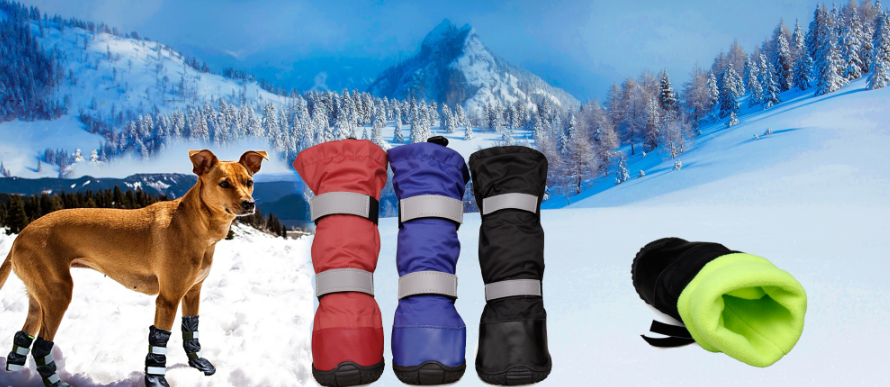
1. Why Can't One Universal Dog Shoe Fit Every Global Market?
In B2B pet product development, a "one-size-fits-all-climates" boot usually ends up compromising on too many critical performance metrics—too stiff for hot summer pavement, too porous for winter slush, or too narrow for broad-pawed working breeds. Understanding regional disparities in weather, ground surfaces, and pet ownership habits is the foundation of sustainable dog shoe regional requirements.
How Do Regional Climates and Ground Surfaces Change Functional Priorities?
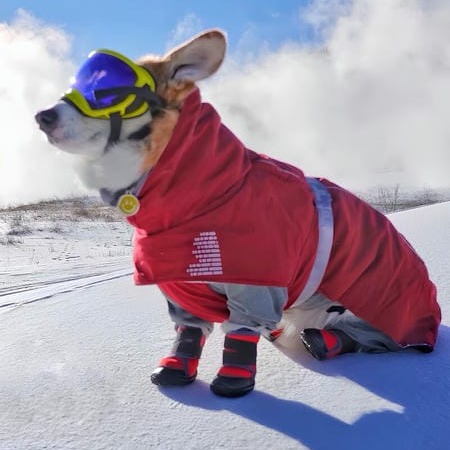
Ground temperature, ambient humidity, precipitation frequency, and surface abrasiveness dictate what a dog's paw pads actually need to survive a daily walk. In cold-weather regions with heavy winter snowfall, municipal road crews spread sodium chloride, calcium chloride, and magnesium chloride de-icers that chemically burn exposed digital pads and freeze into painful ice balls between a dog's toes. Boots engineered for these markets require closed bellows gussets, water-resistant or waterproof uppers, and low-temperature flexible rubber compounds (maintaining elasticity down to -20°C or lower) so the sole does not stiffen into a slippery plastic block.
Conversely, in hot, humid, or sun-baked urban concrete environments, internal heat retention and trapped moisture become the primary failure points. Because dogs dissipate heat through panting and sweat glands located in their paw pads, sealing a warm paw inside a non-breathable synthetic boot in 32°C+ (90°F+) heat can trigger discomfort, pad maceration, or fungal irritation. Meanwhile, on smooth indoor tiles, wet city granite, or jagged mountain scree, outsole tread geometry, Shore A durometer hardness, and tear-resistant toe bumpers matter far more than thermal insulation.
How Do Pet Ownership Culture and Breed Mix Shape Product Demand?
Regional breed demographics and human-pet lifestyles vary sharply across global markets and directly dictate footwear geometry and SKU assortment. Markets with strong outdoor recreation cultures—such as hiking, trail running, camping, and skijoring—and high populations of medium-to-large sporting and working breeds (Labradors, Golden Retrievers, German Shepherds, Huskies) require reinforced rubber toe caps, high-tenacity uppers, and dual-strap or cinch retention systems capable of withstanding high shear forces during vigorous sprinting and sharp turns.
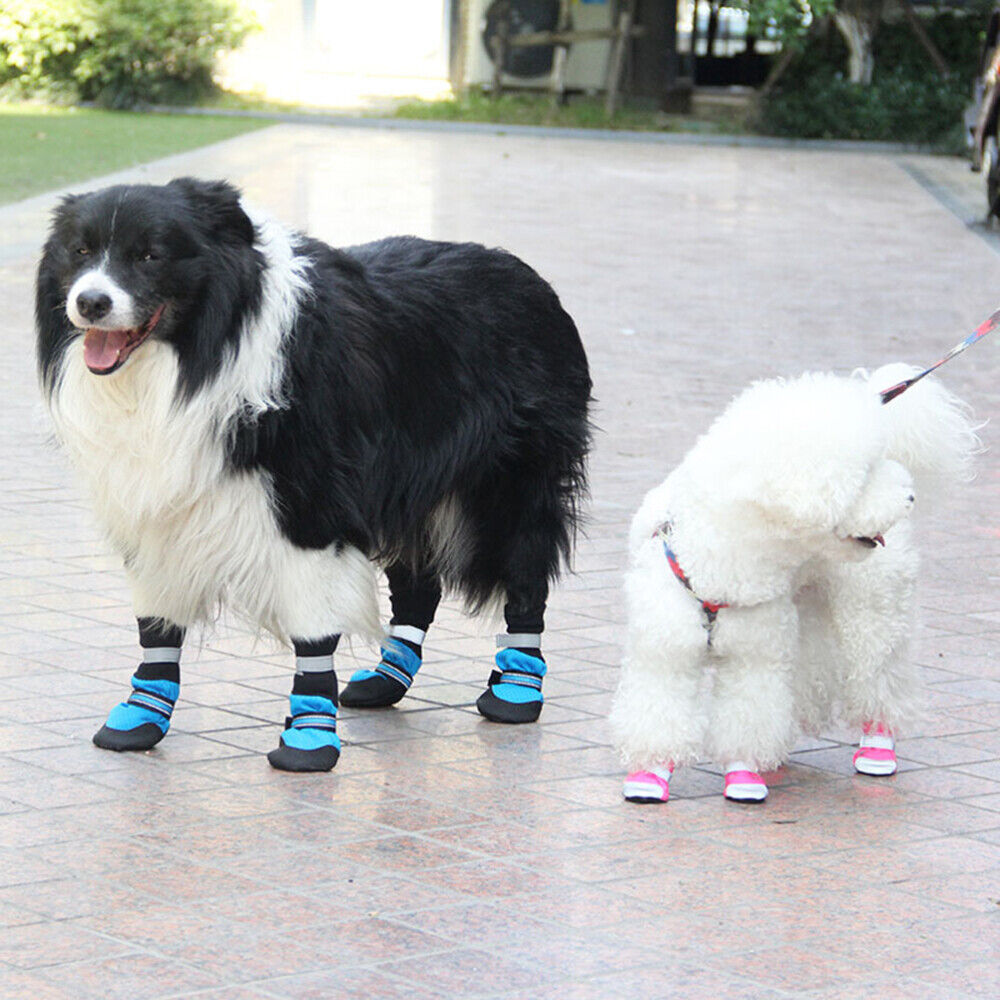
In high-density urban apartment markets where toy and small companion breeds dominate—such as Toy Poodles, Pomeranians, Chihuahuas, French Bulldogs, and Maltese—consumers prioritize ultra-lightweight construction, wide-opening slip-on entry, reliable traction on polished indoor flooring, and clean, coordinated aesthetics. Furthermore, in markets where dogs frequently accompany owners into pet-friendly cafes, shopping malls, and shared indoor living spaces, buyers scrutinize indoor sole cleanliness, quiet step acoustics, and comfortable ankle cuff padding much more closely.
Why Do Generic Imports Fail in Overseas Retail and E-Commerce Channels?
Generic boots imported without regional engineering adaptation frequently suffer from high return rates, negative customer reviews, and customs or retail compliance friction. The most common field failures include sizing charts that mismatch local breed proportions, outsoles coated in mold-release residue that slide dangerously on hardwood or tile, hook-and-loop straps that snag long coat fur, and missing chemical test reports or localized warning labels.
For B2B buyers, distributors, and private-label brand owners, high return rates erode gross margin rapidly once international ocean or air freight, import duties, warehouse handling, and unsellable returned stock are factored in. On major e-commerce platforms, defect-driven return rates above 8% to 10% can also trigger algorithmic ranking penalties or listing suppression. Tailoring product specs to each target market prior to mass production protects margin and turns regional expansion into a repeatable growth channel.
2. How Should You Develop Dog Shoes for North America?
North America (the United States and Canada) is the largest, most mature, and most commercially demanding global market for dog boots for different climates. Rather than behaving as a single climate zone, North America spans sub-arctic Canadian winters, scorching Southwestern desert pavements, humid Southeastern summers, and rugged Rocky Mountain and Pacific Northwest trail networks. For B2B product developers, importers, and private-label brands, succeeding in North America requires engineering bifurcated seasonal product lines, building broad size curves for large working breeds, and satisfying strict retail compliance and consumer return-rate thresholds.
What Climate, Terrain, and Lifestyle Factors Define North American Demand?
North American canine footwear demand is driven by three distinct environmental and lifestyle use cases that rarely overlap in a single boot architecture:
- Severe Winter Snow, Ice, and Chemical De-Icers (Northern US & Canada): From November through April across the Midwest, Northeast, Mountain West, and Canadian provinces, municipalities and homeowners apply rock salt (sodium chloride), calcium chloride, magnesium chloride, and liquid brine to sidewalks and roads. These chemicals cause painful chemical burns on digital pads, crack skin, and trigger toxic ingestion when dogs lick their paws after walks. Simultaneously, wet snow clumps tightly into frozen ice balls between the toes of medium- and long-haired breeds (such as Golden Retrievers, Bernese Mountain Dogs, and Aussies). Boots for this segment must seal out slush and brine while staying pliable at -20°C to -30°C (-4°F to -22°F).
- Extreme Hot Pavement and Sun-Baked Asphalt (South, Southwest & Summer Urban Markets): Across Texas, Arizona, Nevada, Southern California, Florida, and major metropolitan concrete corridors, summer air temperatures of 35°C (95°F) routinely heat dark asphalt and concrete sidewalks to 57°C–65°C (135°F–150°F)—hot enough to blister canine paw pads in under 60 seconds. Consumers in these regions buy Pet Shoes specifically as thermal barriers, requiring heat-insulating outsoles paired with high-airflow uppers so paws do not overheat from trapped body moisture.
- Active Outdoor Recreation and Backcountry Trail Sports: North America has a massive outdoor pet culture centered on hiking, trail running, camping, hunting, and overlanding, heavily skewed toward energetic sporting and working breeds (Labradors, German Shepherds, Huskies, Border Collies, and Pit Bull mixes). These consumers treat dog boots as technical outdoor gear comparable to human trail-running shoes, demanding high-abrasion toe caps, jagged-rock puncture resistance, and zero-twist retention during high-speed off-leash sprints.
Which Materials, Outsoles, and Closure Systems Perform Best in North America?
Because a single compromise boot rarely satisfies both sub-zero winter slush and 40°C desert trails, experienced North American B2B buyers structure their assortments around two specialized technical platforms:
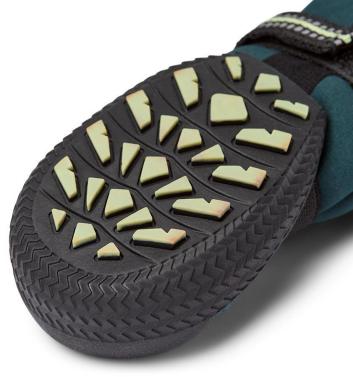
- Cold-Weather & All-Season Protection Architecture: Specify tightly woven 400D–600D ripstop nylon or stretch-woven softshell uppers laminated with a breathable waterproof membrane (minimum 3,000 mm–5,000 mm hydrostatic head) and a Durable Water Repellent (DWR) outer finish. Crucially, the upper must feature a wide-opening, full-height folded bellows gusset that wraps cleanly around the leg without gaps so packed snow and liquid slush cannot wick inside. For the outsole, select cold-formulated thermoplastic rubber (TPR) or vulcanized natural rubber (Shore A 55–62) with 2.0 mm to 3.0 mm multidirectional lugs that remain flexible below freezing rather than turning hard and slick like standard PVC or high-filler rubber.
- Hot-Pavement & Trail Breathable Architecture: Replace heavy membranes with open-cell 3D air mesh, engineered monofilament mesh, or perforated synthetic microfiber uppers (180–240 GSM) to maximize convective heat release while blocking foxtails, burrs, and gravel. Pair the upper with a slightly thicker, low-thermal-conductivity rubber outsole (minimum 2.5 mm–3.5 mm base thickness) that insulates digital pads from hot asphalt while wrapping upward into a molded rubber toe bumper to resist toe-drag abrasion on granite and concrete.
- High-Retention Closure Engineering: North American consumers frequently reject single-strap boots because active dogs kick or twist them off within minutes. High-performing North American designs use either a dual-strap hook-and-loop configuration (one primary cinch strap positioned right at the narrowest anatomical waist above the carpal/tarsal pad, plus a secondary upper cuff stabilizer strap) or a hybrid hook-and-loop strap paired with an elastic drawcord and spring toggle at the top collar. Use industrial-grade 100% nylon hook-and-loop tape (rated for ≥ 5,000 cycles) rather than cheap polyester tape that clogs with fur, and reinforce all strap anchor points and rear heel pull tabs with box-X or bar-tack stitching rated to at least 15 kgf (147 N).
What Regulatory, Labeling, and Chemical Compliance Rules Apply in North America?
While pet footwear is not governed by a single federal footwear statute in the United States or Canada, B2B suppliers face stringent chemical, state-level, and retail compliance requirements that can block customs clearance or trigger costly marketplace delistings if overlooked:
- California Proposition 65 & State Chemical Restrictions: California's Safe Drinking Water and Toxic Enforcement Act (Prop 65) strictly regulates consumer exposure to hundreds of listed chemicals—most relevantly lead, cadmium, ortho-phthalates (DEHP, DBP, BBP, DINP, DIDP, DnHP), and certain flame retardants or solvent residues commonly found in PVC coatings, synthetic leathers, screen-print inks, and rubber adhesives. Because dogs lick and chew their boots, major US national retail chains and e-commerce platforms enforce Prop 65 chemical limits nationwide across all inventory. Suppliers should maintain accredited third-party lab test reports (SGS, Intertek, or Bureau Veritas) verifying total lead (< 90 ppm), phthalates (< 0.1% by weight), and banned azo dyes.
- Retail Packaging, Country-of-Origin & Bilingual Labeling: Under US Customs and Border Protection (CBP) and FTC rules, every retail unit and master carton must display clear, permanent Country of Origin marking ("Made in [Country]"). If distributing into Canada—or selling pan-North American retail SKUs—packaging and mandatory warning statements (such as polybag suffocation warnings) must comply with Canada's Consumer Packaging and Labelling Act, requiring bilingual English and French text for key product identity, net quantity (e.g., "4 Boots / 4 Bottes"), and care instructions.
- GS1 Barcodes & Omnichannel Readiness: Brick-and-mortar pet specialty chains and major online fulfillment centers require authentic GS1-registered UPC-A barcodes printed at ANSI Grade B or higher scan quality, paired with compact, peggable retail packaging (hanging boxes or header cards with tactile material touch-windows) that minimizes dimensional freight weight.
How Should You Structure Size Curves, Fit Guidance, and Return-Prevention for North American Buyers?
Sizing mismatch is the single largest profit killer in North American dog footwear, where liberal consumer return policies mean poor fit guidance routinely drives 15% to 25% return rates. Developing a North American-ready size architecture requires both technical calibration and clear point-of-sale communication:
- Full-Spectrum Size Grading (XS to XXL): Unlike Asian urban markets dominated by toy breeds, North American sales volume spans the entire canine size spectrum—with heavy demand in Medium, Large, and Extra-Large sizes (paw widths from 55 mm to 95+ mm) for Retrievers, Shepherds, Huskies, Doodles, and giant breeds. Your size chart should offer 6 to 8 distinct steps with consistent 5 mm to 7 mm width increments so large-breed owners are not forced to size up into overly long boots that trip their dogs.
- Weight-Bearing Paw Width Measurement Standard: Because canine digital pads splay outward by 10% to 15% under full body weight, B2B spec sheets and retail packaging must instruct owners to measure paw width while the dog is standing with weight on the paw (and optionally lifting the opposite paw), rather than measuring an unloaded paw in the air. Always list both imperial (inches) and metric (cm/mm) dimensions side by side.
- Front-vs.-Rear Paw Asymmetry Guidance: Roughly 60% of a dog's weight rests on its forelimbs, meaning front paws are frequently one full size wider than rear paws on medium and large breeds. B2B brands can differentiate their North American offering by selling boots in sets of two (allowing owners to buy two different sizes for front and rear paws) or by clearly highlighting front/rear fit tips on retail inserts—a practical detail that measurably reduces return rates and builds retail buyer confidence when launching new Wholesale Dog Shoes programs.
3. How Should You Adapt Dog Shoes for the European Market?
While Europe spans distinct climatic and cultural zones—from Nordic sub-arctic winters to Mediterranean coastal summers—retail buyers, importers, and distributors across the European Union and the United Kingdom share rigorous standards for chemical traceability, general product safety, environmental sustainability, and refined functional design. Sourcing or developing Pet Shoes for Europe requires more than an attractive silhouette; B2B suppliers must deliver comprehensive technical documentation alongside ergonomic, multi-surface footwear engineering.
How Do European Weather and Urban Environments Shape Boot Design?
Unlike regions dominated by extreme heat or uniform suburban sidewalks, much of Western, Central, and Northern Europe experiences extended autumn, winter, and spring seasons characterized by persistent drizzle, damp grass, mud, and wet historic stone paving, while Alpine and Scandinavian markets add deep snow, ice, and rugged mountain scree. Boots engineered for European daily life must perform seamlessly across mixed urban and park environments without feeling overly stiff or industrial.
- Weather-Resistant, Wipe-Clean Uppers: Specify tightly woven softshell or high-tenacity ripstop textiles treated with a Durable Water Repellent (DWR) finish rather than porous open knits. Because European dog owners frequently walk twice or three times daily through damp parks and muddy footpaths, uppers must shed surface grime easily and clean off with a damp cloth without losing structural integrity.
- Low-Profile, High-Traction Outsoles for Wet Stone & Transit: European city infrastructure features wet cobblestones, smooth granite plazas, gravel park paths, public transit steps, and metal drainage grates. Overly thick or rigid lug soles feel clumsy on uneven cobblestones and reduce a dog's proprioceptive feedback. Instead, specify flexible rubber or high-grip TPR compounds (Shore A 55–62) with siped, multidirectional tread blocks (1.5 mm to 2.5 mm lug depth) that maximize surface contact on slick wet stone while releasing mud cleanly.
- Low-Light & Fog Visibility Integration: Short winter daylight hours and frequent overcast or foggy weather across Northern and Central Europe make visibility a high-priority safety feature. Integrating subtle, high-luminance retroreflective piping or heat-transfer trims (aligned with EN ISO 20471 visibility principles) around the ankle collar and toe cap adds functional value without compromising clean visual styling.
What Chemical, Safety, and Sustainability Rules Matter Most in Europe?
Regulatory compliance and environmental accountability serve as primary gatekeepers for European retail shelf space and online marketplace approval. B2B product developers must build compliance into the bill of materials (BOM) before sampling begins rather than treating testing as an afterthought:
- Strict EU REACH & UK REACH Chemical Compliance: Under EU REACH chemical compliance standards and parallel UK REACH rules, importers and brands must verify that every textile, rubber compound, adhesive, screen-print ink, and metal/plastic trim complies with restricted-substance limits. Accredited lab testing (SGS, Intertek, or Bureau Veritas) should screen for Substances of Very High Concern (SVHCs), polycyclic aromatic hydrocarbons (PAHs) in rubber outsoles, ortho-phthalates, heavy metals (lead, cadmium, chromium VI), and banned azo dyes—especially critical since dogs lick and chew their boots.
- EU General Product Safety Regulation (GPSR) & Traceability: Under the EU General Product Safety Regulation (GPSR), consumer products placed on the EU market must meet strict safety and traceability obligations. Packaging and permanent care/brand labels must clearly display manufacturer and EU Responsible Person/importer contact details, batch or lot identification numbers for recall traceability, and clear usage/fitting warnings.
- Sustainability Certifications & Anti-Greenwashing Rules: European pet specialty chains increasingly evaluate suppliers on verifiable environmental criteria while enforcing strict rules against unsubstantiated "eco-friendly" claims. Incorporating GRS-certified recycled polyester uppers, fluorine-free (PFC-free) water-repellent coatings, durable double-stitched seams built for multi-season longevity, and plastic-free FSC-certified paperboard packaging gives B2B brands a measurable competitive advantage in European tenders.
How Do Aesthetic Preferences and Sizing Expectations Differ in Europe?
European pet consumers generally favor understated, technical outdoor styling over novelty prints, neon colors, or bulky constructions. Clean tailoring, muted earth or Nordic tones (slate, olive, navy, sand, charcoal), neat edge piping, and garment-grade internal finishing resonate strongly with European specialty buyers. Inspectors and buyers closely examine the interior ankle collar and dewclaw zone—mandating soft neoprene or tricot seam binding so rough stitching never chafes sensitive skin.
From a sizing and merchandising standpoint, all size charts, hangtags, and technical spec sheets must use exact metric units (millimeters and centimeters) with tight intra-pack tolerances (≤ 1.0 mm variance across a four-boot set). Because European distributors often serve multiple neighboring countries simultaneously, designing packaging with clear, universal visual paw-measuring diagrams alongside multi-language care and fitting instructions (e.g., English, German, French, Dutch, and Spanish) streamlines cross-border distribution and minimizes fit-related returns.
4. How Should You Tailor Dog Shoes for Southeast Asia?
Southeast Asia—encompassing rapidly expanding urban pet economies across Thailand, Vietnam, Malaysia, Singapore, Indonesia, and the Philippines—operates under a demanding combination of year-round equatorial heat, 75% to 90% relative humidity, sudden monsoon downpours, and dense high-rise apartment living. Unlike temperate Western markets driven by seasonal winter-versus-summer purchasing cycles, Southeast Asian demand is shaped by persistent thermal stress, wet urban pavement, smooth indoor tile flooring, and a high concentration of toy and small-to-medium companion breeds. Developing an effective dog footwear market adaptation strategy for this region requires rethinking ventilation architecture, sole softness, drainage speed, and tropical supply-chain preservation from the ground up.
Why Are Breathability, Thermal Dissipation, and Rapid Drainage Critical in Tropical Climates?
In cities like Bangkok, Ho Chi Minh City, Kuala Lumpur, and Jakarta, daytime ambient temperatures routinely sit between 30°C and 36°C (86°F to 97°F), while unshaded asphalt and concrete sidewalks can absorb solar radiation and reach surface temperatures above 50°C (122°F). Because dogs lack sweat glands across their bodies and rely primarily on panting alongside merocrine sweat glands located exclusively in their paw pads to regulate heat, enclosing a dog's foot inside a poorly ventilated boot creates an immediate thermal bottleneck. Heavy neoprene linings, thick foam padding, or non-porous PU synthetic leather uppers trap metabolic heat and pad perspiration inside the shoe cavity, leading to rapid pet discomfort, paw pad maceration, interdigital fungal irritation (pododermatitis), and foul odor after just one or two walks.
To solve this engineering challenge, Southeast Asian SKUs must prioritize high-airflow, open-structure textiles over sealed membranes:
- Open-Cell 3D Spacer Mesh & Engineered Knits: Use 180 to 230 GSM 3D air mesh or perforated fly-knit uppers with high air permeability (targeting ≥ 800–1,200 mm/s under ASTM D737) so convective airflow cools the dorsal surface of the paw with every step.
- Unlined or Moisture-Wicking Minimalist Interiors: Eliminate fleece, felt, or thick sponge linings entirely. Where seam comfort requires backing, use ultra-thin, quick-dry hydrophobic tricot that does not hold perspiration against the skin.
- Monsoon Quick-Drain & Easy-Rinse Architecture: During the Southeast Asian rainy season, dogs frequently step into deep street puddles and muddy runoff. Rather than attempting to make a boot completely waterproof—which traps sweat on dry days and holds water like a bucket if splashed over the cuff—engineer rapid-drainage uppers and non-absorbent closed-cell EVA or rubber footbeds that shed water immediately and air-dry within 30 to 45 minutes indoors.
How Do Local Breed Demographics, Indoor Flooring, and Urban Walking Habits Shape Product Specs?
Across Southeast Asia's metropolitan centers, high-rise condominiums, townhouses, and compact apartments are the dominant residential formats, driving strong consumer preference for toy and small-to-medium dog breeds—including Toy Poodles, Pomeranians, Chihuahuas, French Bulldogs, Shih Tzus, Maltese, Corgis, and Shiba Inus. At the same time, residential interiors across the region overwhelmingly feature polished porcelain, ceramic, granite, or marble tile flooring to keep living spaces cool.
This combination creates a dual-use requirement that B2B product developers must build directly into their specifications:
- High-Friction Indoor-Outdoor Outsole Compounds: Standard hard hiking rubber (Shore A 65–70) designed for rough granite trails often feels slick on smooth indoor ceramic tiles, causing small dogs or senior pets with patellar luxation and hip weakness to slip. Specify softer, high-tack TPR or natural rubber compounds (Shore A 50–58) with wide surface-contact tread blocks and fine micro-siping that grip wet outdoor concrete and dry indoor tiles alike without leaving black scuff marks.
- Downward-Calibrated Size Curves & Featherweight Construction: Heavy lugged soles cause small dogs weighing under 5 kg to lift their paws awkwardly or trip. Keep individual boot weights under 15 g to 25 g for XXS–S sizes, and calibrate internal cavity widths narrowly enough that slim-boned toy breeds do not twist inside the forefoot.
- Wide-Entry Gussets & Fur-Friendly Closures: Many popular regional breeds (Pomeranians, Shih Tzus, Poodles) have dense, fluffy coat hair around the lower leg. Wide-opening split cuffs allow owners to slip paws in smoothly without bending delicate toes, while recessed or soft-backed hook-and-loop straps prevent painful hair pulling and fur clogging.
- Hygiene-Driven Urban Utility: In many Southeast Asian households where shoes are removed at the front door and pets share sofas or beds, owners use Pet Shoes specifically to keep paws clean from wet street grime and avoid daily post-walk paw washing. Dark-toned outsoles paired with stain-resistant, machine-washable uppers directly address this daily hygiene routine.
What Packaging, Storage, and Channel Pricing Strategies Drive Commercial Success in Southeast Asia?
Even a technically well-engineered tropical dog boot can fail commercially in Southeast Asia if ocean freight moisture, warehouse humidity, or regional channel pricing tiers are overlooked during B2B planning.
Tropical Logistics & Hydrolysis Prevention: Ocean containers transiting tropical ports and non-climate-controlled regional warehouses routinely experience temperatures above 35°C and humidity levels exceeding 85%. Low-grade solvent-based polyurethane adhesives can undergo moisture-induced hydrolysis under these conditions, causing outsoles to detach before the product even reaches a retail shelf. Factories supplying Southeast Asia should use high-grade heat-activated or vulcanized bonding systems, verify moisture content below 8% prior to packing, insert a fresh 2 g to 5 g silica gel desiccant packet inside each retail polybag, and ship in moisture-resistant double-wall export cartons.
Tiered Assortment & Channel Alignment: Southeast Asian distribution spans high-margin urban pet boutiques and veterinary clinics in Singapore, Bangkok, and Kuala Lumpur alongside highly price-competitive social-commerce and marketplace ecosystems (Shopee, Lazada, TikTok Shop). B2B buyers can capture both segments by structuring a two-tier assortment:
- Core Everyday Mesh Tier: A lightweight, cost-efficient breathable mesh boot with flexible TPR sole and single reflective strap, engineered for competitive retail pricing, multi-pack bundling, and fast e-commerce turnover.
- Premium Urban/Outdoor Performance Tier: An upgraded dual-strap breathable knit or ripstop-mesh hybrid with reinforced rubber toe bumper, anti-slip siped rubber sole, and tailored ergonomic cuff for active pet parents and boutique specialty retail.
For regional importers and distributors testing local demand across multiple Southeast Asian countries simultaneously, starting with flexible MOQs via Wholesale Dog Shoes allows teams to validate country-by-country size ratios and price points before scaling into localized private-label production.
5. How Do You Standardize Sizing, Materials, and Selection Across Regions?
While regional localization is essential for market fit, developing dozens of completely unrelated molds and patterns from scratch inflates tooling costs and complicates supply-chain management. High-efficiency B2B product teams build a modular footwear platform: a standardized core sizing and last system paired with interchangeable, region-specific uppers, outsole compounds, and closure hardware.
How Should You Structure Size Charts and Paw Measurement Standards?
Canine paw geometry varies significantly across breeds—some breeds have narrow, elongated "hare feet" while others have round, compact "cat feet"—and front paws are frequently 5% to 10% wider than rear paws. Relying solely on body-weight ranges (e.g., "for dogs 10–15 kg") causes high sizing failure rates across international markets.
Standardize all B2B spec sheets and consumer size guides around internal cavity width and length, instructing buyers and end-users to trace the dog's front paw on paper while standing under full weight and add a 3 mm to 5 mm toe-clearance allowance. Maintain strict factory tolerances (±2.0 mm on internal length, ±1.5 mm on internal width, and ≤ 1.0 mm variance within a four-boot retail set) and display both metric (mm/cm) and imperial (inches) dimensions cleanly on every package.
How Do You Choose Between Breathable, Water-Resistant, and Insulated Constructions?
Rather than treating material selection as a compromise, map each construction architecture directly to the climate and terrain profile of your target sales channels:
- Breathable / Ventilated Constructions: Engineered with 3D air mesh or open-weave knits and thin, flexible soles; ideal for Southeast Asia, summer hot-pavement seasons in North America/Southern Europe, and indoor traction use.
- Water-Resistant / DWR & Gusseted Constructions: Built with tightly woven ripstop or softshell uppers, PFC-free DWR coatings, and folded bellows tongues; suited to rainy European autumns, muddy trails, and slushy urban sidewalks where splash protection and easy cleaning are priorities.
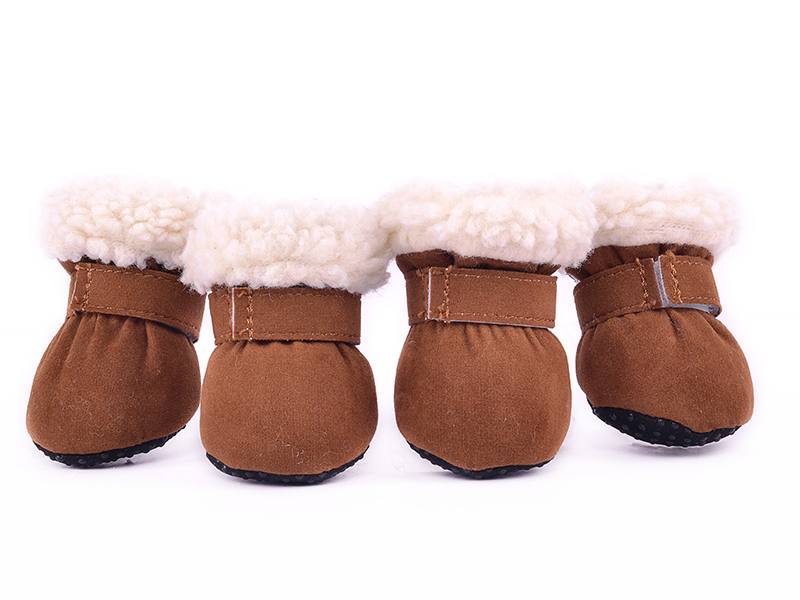
- Insulated / Cold-Weather Constructions: Featuring thermal fleece or neoprene linings, high-cut ankle cuffs, and cold-flexible rubber soles; designed specifically for sub-zero North American and Northern European winters, with internal last volume adjusted upward by 2 mm to 3 mm to accommodate lining thickness without squeezing toes.
How Do You Compare Outsole Compounds, Closures, and Use Cases?
Selecting the optimal sole compound and fastening system requires balancing unit cost, abrasion durability, wet/dry friction, and ease of application for pet owners. Use the technical comparison matrix below during product briefing and factory quoting to align component specs with target regional applications.
| Component / Feature | Option A | Option B | Best-Fit Market & Use Case | Key Selection Trade-Off |
|---|---|---|---|---|
| Outsole Material | Thermoplastic Rubber (TPR) | Vulcanized / Specialty Rubber Compound | TPR for versatile everyday/light outdoor; specialized rubber for rugged/extreme temp or high-grip needs | Balance cost, abrasion wear, cold flexibility, and wet/indoor traction |
| Upper Textile | Open / 3D Breathable Mesh or Knit | Woven Ripstop / Softshell / Coated Textile | Mesh/knit for tropical heat & airflow; woven/softshell for wind, brush, snow & moisture resistance | Higher breathability vs. higher snag resistance and weather protection |
| Closure System | Hook-and-Loop Strap(s) | Strap + Elastic Drawcord / Toggle Cinch | Hook-and-loop for quick daily on/off; strap + cinch for active movement and customizable ankle snugness | Fast adjustment vs. fur/debris resistance and secure lock during activity |
| Cuff & Gusset Design | Low/Standard Cuff with Soft Binding | Higher Cuff with Folded/Sealed Gusset | Standard cuff for mild weather/easy slip-on; gusseted cuff for snow, slush, mud & debris exclusion | Ease of putting on small/wiggly paws vs. protection against snow/debris entry |
6. What Is a Practical B2B Roadmap for Launching in New Markets?
A disciplined, phased go-to-market roadmap minimizes upfront capital risk while allowing real buyer and end-user feedback to guide deeper product customization. Whether you are launching a private-label brand or expanding a regional distribution catalog, following a structured validation workflow prevents costly inventory missteps.
How Should You Validate Demand Before Investing in Custom Tooling?
Commissioning custom outsole molds, dedicated cutting dies, and bespoke textile dye lots across multiple sizes requires substantial minimum order quantities (MOQs) and upfront tooling fees. Before locking capital into exclusive tooling for an untested region, launch pilot orders using proven, market-ready silhouettes or Wholesale Dog Shoes to test regional size distribution, price elasticity, and functional feedback.
Track sell-through velocity by size, analyze customer return reasons (such as cuff slippage, sole stiffness, or width mismatch), and gather direct input from regional retail buyers over one to two selling seasons. Once demand patterns are proven, reinvest selectively into custom outsole treads, branded hardware, or specialized regional material upgrades for your highest-turning SKUs.
How Do You Align Product Specs with Distributors, Retailers, and E-Commerce Channels?
Different B2B sales channels evaluate dog footwear through distinct operational priorities. Brick-and-mortar pet specialty chains prioritize retail-ready packaging (hanging boxes or header cards with clear sizing windows), GS1 barcodes, accurate shelf dimensions, and predictable replenishment lead times. Conversely, online marketplace sellers prioritize ultra-clear size charts, flat-pack polybag efficiency to reduce dimensional shipping fees, and low defect-related return rates.
Create a standardized Regional Technical Spec Sheet for each SKU detailing target climate/terrain, internal cavity measurements, outsole Shore A hardness, water-resistance or breathability ratings, care instructions, and chemical compliance test reports (such as EU REACH chemical compliance standards or Prop 65 screening). Sharing this specification document early with factory engineers and retail buyers eliminates ambiguity around performance claims and tolerances.
How Can You Build a Repeatable Localization Checklist for Future Expansions?
To scale smoothly across multiple international territories, codify every market entry into a repeatable pre-development checklist rather than treating each country as a one-off project. Before approving a sample brief for any new market, audit five core variables: seasonal temperature and precipitation extremes, dominant walking surfaces (snow/salt, hot asphalt, wet cobblestone, or smooth indoor tile), regional breed size distribution, mandatory chemical/safety/labeling regulations, and target retail price tiers.
By pairing a standardized core engineering and quality control framework with targeted regional adaptations in materials, sizing, and packaging, B2B teams can expand profitably across North America, Europe, Southeast Asia, and emerging pet markets worldwide.
7. Develop Dog Shoes for Different Markets Checklist
| 1 | Target Market | Checkpoint | Spec Tolerance | Inspection Method | Defect Level (Critical/Major/Minor) | Pass/Fail Status | Localization Notes |
|---|---|---|---|---|---|---|---|
| 2 | North America | Winter Snow & De-Icing Salt Protection | Water-resistant softshell/ripstop + closed bellows gusset; cold-flexible sole down to -20°C (-4°F) | DWR spray test, gusset seal check & cold-chamber flex test | Major | Pending | Protects against road salt & ice balls in US/Canada winters |
| 3 | North America | Summer Hot Pavement Thermal Resistance | Breathable 3D mesh/knit upper + heat-insulating sole compound for 55°C–65°C (130°F–150°F) asphalt | Air permeability check, durometer check & thermal/abrasion spec audit | Major | Pending | Prevents paw pad burns in hot US/SW climates |
| 4 | North America | Active & Trail Closure Retention | Dual strap or strap + drawcord/toggle cinch; pull tabs withstand >= 10 kgf (98 N) for 10s | Dynamic fit/twist check & calibrated force gauge static pull test | Major | Pending | Prevents slip-off during running, hiking & play |
| 5 | North America | Chemical & CA Prop 65 Compliance | Compliant with CA Prop 65, CPSIA & lead (< 90 ppm) / phthalate (< 0.1%) / VOC limits | 3rd-party lab report audit (SGS/Intertek/BV) & bill of materials check | Critical | Pending | Zero tolerance; dogs lick/chew boots & paws |
| 6 | North America | Dual-Unit Sizing & Retail Labeling | Clear inches + cm/mm size guide (XS–XXL), GS1 UPC barcode, care & fiber disclosures in English | Label artwork proof audit, barcode scanner check & caliper verification | Major | Pending | Reduces e-commerce size return rates |
| 7 | Europe (EU & UK) | Wet Urban & Cobblestone Traction | Grippy sole compound with siped tread blocks; stable on wet stone, rain & damp paths | Inclined-plane wet/dry slip test & tread pattern inspection | Major | Pending | Suited to damp European autumns/winters & city walks |
| 8 | Europe (EU & UK) | EU / UK REACH Chemical Compliance | Compliant with REACH SVHC limits, heavy metals, PAHs & restricted azo dyes across all layers | Accredited lab test certificates & supplier SVHC declaration audit | Critical | Pending | Mandatory chemical compliance for EU/UK entry |
| 9 | Europe (EU & UK) | EU GPSR Traceability & Labeling | Manufacturer/importer contact, batch ID, safety instructions & metric (mm/cm) sizing included | Packaging & label compliance review against GPSR requirements | Major | Pending | Required for general product safety & traceability |
| 10 | Europe (EU & UK) | Sustainability & Eco-Material Claims | Verified GRS recycled / PFC-free DWR / FSC packaging claims with zero unsubstantiated green claims | Certificate verification (GRS/FSC/DWR) & marketing claim audit | Major | Pending | Supports European retail buyer & eco-audit standards |
| 11 | Europe (EU & UK) | Tailored Finish & Dewclaw Comfort | Clean stitching, soft binding tape, zero sharp edges or protruding threads on inner cuff/toe box | Inside-out visual & tactile inspection of collar and seams | Major | Pending | Matches European preference for understated quality |
| 12 | Southeast Asia | Tropical Heat & Moisture Breathability | Open 3D mesh/knit or ventilated upper; quick-drying, non-trapping moisture management | Air permeability check, lining audit & quick-dry evaluation | Major | Pending | Prevents heat buildup & paw sweat in 30°C–36°C heat |
| 13 | Southeast Asia | Indoor Tile & Wet Concrete Grip | Pliable sole (Shore A ~50–58) with non-marking grip on smooth tile/marble & wet rain pavement | Durometer check, non-marking scuff test & slip resistance test | Major | Pending | Fits apartment/tile living & sudden tropical rain |
| 14 | Southeast Asia | Small & Toy Breed Size Grading | Granular XXS–M sizing with proportional narrow cuff & short shaft; internal variance <= 1.0 mm/pack | Internal sliding caliper & paw-last measurement across size curve | Major | Pending | Prevents tripping/slipping on small companion breeds |
| 15 | Southeast Asia | Tropical Humidity & Mold Prevention | Dry packing + 2 g–5 g silica gel desiccant per pack; zero mold, mildew or adhesive degradation | Visual/odor check, desiccant count & storage humidity check | Critical | Pending | Protects against high humidity/monsoon transit & storage |
| 16 | Southeast Asia | Tiered Channel & Value Positioning | Clear spec differentiation between everyday lightweight mesh SKU and higher-spec outdoor/rain SKU | BOM cost review, spec sheet check & channel assortment alignment | Minor | Pending | Balances price sensitivity & multi-tier retail demand |
| 17 | Cross-Market Standards | Internal Cavity vs. External Sole Sizing | Internal length tol. +/- 2.0 mm, width tol. +/- 1.5 mm; 3–5 mm toe clearance accounted for | Internal caliper / 3D paw last measurement vs. published size chart | Major | Pending | Prevents sizing mismatch from thick outer bumpers |
| 18 | Cross-Market Standards | Outsole Bonding & Stitch Integrity | 8–10 SPI bonded thread; peel strength >= 2.5–3.5 N/mm; zero sole separation or seam blowouts | Stitch counter, manual 90° peel check & peel-strength test | Major | Pending | Core structural durability across all regions |
| 19 | Cross-Market Standards | Fastener Cycle & Snag Resistance | 100% nylon hook/loop or cinch hardware; >= 80% grip retention after cycles; no hook overhang on knit | Cycle/pull test & fit check on narrow/wide leg mandrels | Major | Pending | Prevents fur tangling & premature strap failure |
| 20 | Cross-Market Standards | Pre-Tooling Pilot Validation | Pilot/in-stock test order completed before custom molds; return reasons & size velocity logged | Pilot sales/return review & regional buyer feedback log | Minor | Pending | Reduces custom tooling & MOQ risk in new markets |
| 21 | Cross-Market Standards | Pre-Shipment Carton & Barcode Audit | Double-wall carton (>= 200 lb / 32 ECT), H-tape seal, scannable barcodes & accurate shipping marks | Barcode verifier scan, carton spec check & drop/mark inspection | Major | Pending | Ensures smooth customs, warehouse & retail intake |
How to Choose the First Footwear for Small Dogs
Best Anti Slip Dog Shoes Secure Grip for All Terrains
Related Article