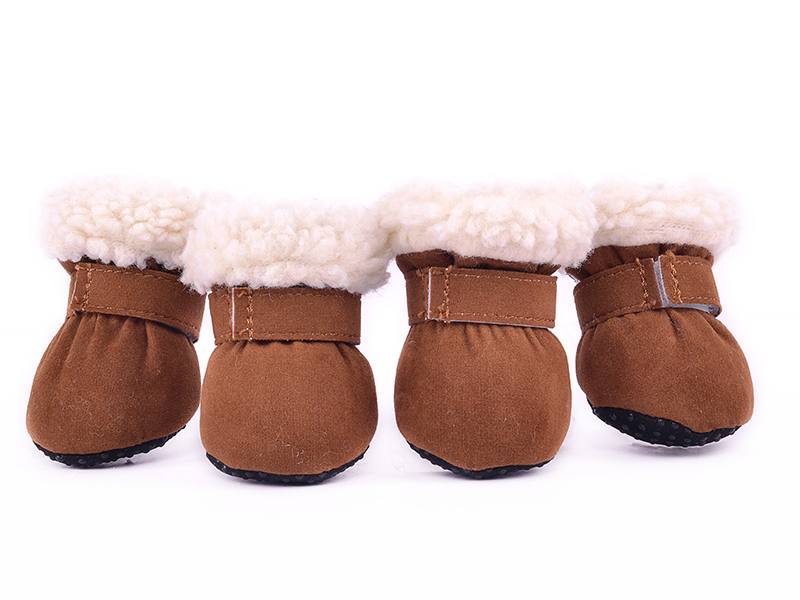
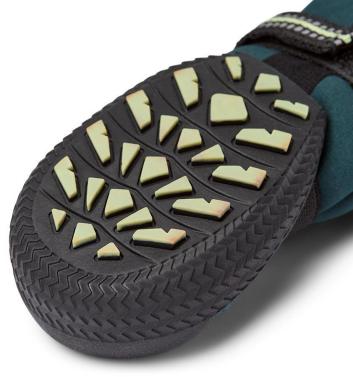
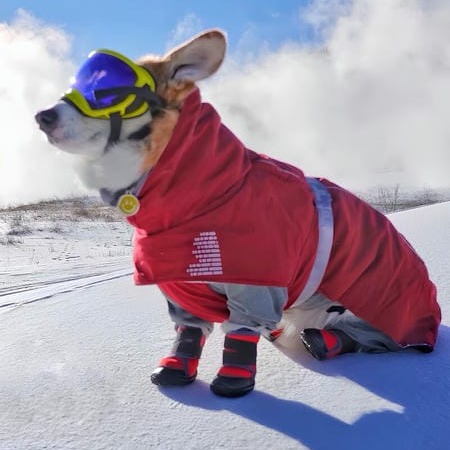
What Makes Waterproof Dog Socks Keep Paws Dry and Warm
This is where waterproof dog socks become an interesting product category for pet brands, wholesalers, distributors, and retailers. Unlike ordinary knitted dog socks, waterproof styles are designed to reduce water penetration through the fabric or construction. Depending on the design, they may combine a water-resistant outer layer, a waterproof membrane or coating, a warm lining, an elastic opening, and a protective sole.
However, not every product marketed as dog socks waterproof offers the same level of protection. Some products resist splashes but are not suitable for prolonged exposure to water. Others combine a textile upper with a coated or rubberized bottom, providing protection mainly around the paw. Understanding these differences is essential when selecting products for a particular market.
From a B2B perspective, waterproof dog socks also create opportunities for seasonal product development, private-label branding, and wholesale distribution. This guide examines the materials, waterproofing technology, insulation, grip, production considerations, and sourcing options that buyers should evaluate before adding waterproof socks for dogs to their product lines.
1. What Are Waterproof Dog Socks and How Do They Protect a Dog's Paws?
Waterproof dog socks are protective coverings designed to reduce the amount of moisture that reaches a dog's paws. They are generally made from textile or synthetic materials that have been treated, coated, laminated, or combined with a waterproof layer. Some designs also include a reinforced sole to improve traction and protect against rough surfaces.
The exact construction varies. A lightweight indoor paw sock may use a knitted upper with a water-resistant bottom, while a more protective outdoor style may use a coated textile or laminated fabric with a secure closure. For B2B buyers, the important question is not simply whether a product is called waterproof, but which parts of the product are protected and under what conditions.
How Do Waterproof Dog Socks Reduce Direct Contact with Water?
The primary function of waterproof dog socks is to create a barrier between the paw and wet surfaces. When a dog walks across damp pavement, wet grass, shallow puddles, or slushy snow, the outer material helps reduce direct moisture contact. This can make cleaning easier after a walk and help prevent the paw from becoming soaked as quickly as it might in an ordinary fabric sock.
However, the level of protection depends on the entire construction. A waterproof lower panel does not automatically make the whole sock waterproof. If the upper fabric absorbs water, if the seams allow moisture to pass through, or if water enters through the opening, the paw may still become wet. A well-designed product therefore needs to consider the upper, sole, seams, and opening as one connected system.
Are Waterproof Dog Socks Different from Ordinary Dog Socks?
Yes. Ordinary dog socks are often designed mainly for indoor comfort, warmth, or traction. They may use knitted cotton, polyester, or other flexible fabrics. These materials can be comfortable, but they may absorb water quickly when exposed to rain or wet ground.
Waterproof or water-resistant versions require additional material treatment or construction features. These may include coated fabric, a waterproof membrane, laminated layers, sealed seams, or a protective sole. The extra components can increase manufacturing complexity and material cost, but they also create a clearer functional difference for customers who need protection from wet conditions.
What Should Buyers Understand About Waterproof Versus Water-Resistant Claims?
This distinction is particularly important for retailers and importers. Water-resistant products can help repel light moisture or splashes, but they may not prevent water penetration during prolonged exposure. A waterproof construction aims to provide a stronger barrier, although actual performance still depends on the fabric, seams, closures, and product design.
For example, a sock with a coated sole and ordinary knitted upper may protect the bottom of the paw from damp flooring but should not automatically be promoted as fully waterproof. Buyers should ask suppliers which parts of the product have been treated and whether the waterproof claim has been evaluated through a defined test method.
2. Which Waterproof Fabrics and Technologies Are Used in Dog Socks?
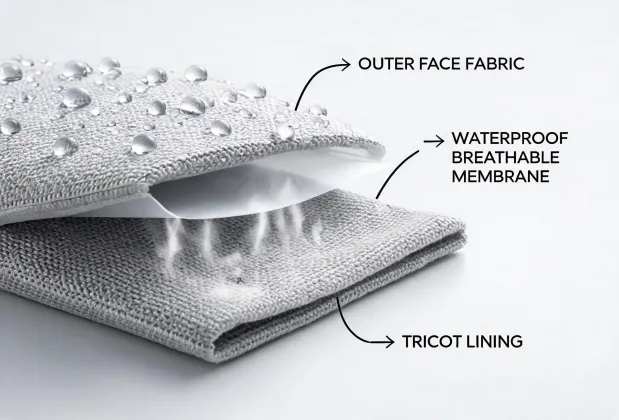
Material selection determines much of a waterproof dog sock's performance. A product may look similar to an ordinary sock from the outside, but its internal construction can be very different. The fabric needs to manage water exposure while remaining flexible enough for a dog's natural paw movement.
For manufacturers, the challenge is balancing waterproof performance with comfort, breathability, softness, durability, and cost. A thick waterproof layer may provide a stronger barrier but can make the sock stiff. A very lightweight material may improve flexibility but require additional reinforcement to withstand repeated friction.
How Does a Waterproof Membrane Work in Dog Socks?
A waterproof membrane is a thin functional layer placed between the outer fabric and inner lining. Its purpose is to reduce liquid water penetration while, depending on the membrane technology, allowing some water vapor to pass through. This can help manage moisture inside the sock while protecting the paw from external wet conditions.
In a three-layer construction, the outer fabric provides the visible surface and some abrasion protection. The membrane acts as the functional barrier, while the inner lining protects the membrane and creates a more comfortable surface against the paw. The layers must be compatible and properly bonded so that they do not separate during repeated flexing or washing.
For dog footwear, flexibility is particularly important. A membrane that performs well in a stationary textile application may behave differently when repeatedly bent around a moving paw. Manufacturers should therefore assess the complete assembled product rather than relying only on a fabric supplier's technical description.
Can PU-Coated or PVC-Coated Fabrics Be Used for Waterproof Dog Socks?
Polyurethane, commonly known as PU, is used in many coated textile applications. A PU coating can help reduce water penetration while retaining a degree of flexibility, depending on its formulation and thickness. It can be applied to suitable textile substrates to create a protective surface for dog footwear.
PVC-coated materials are another possible option. They can provide a relatively strong moisture barrier and are often considered for products where water protection and easy cleaning are important. However, the finished material may feel heavier or less flexible depending on the construction. Buyers should evaluate the material's softness, flexibility, surface durability, and suitability for the intended product.
Neither PU nor PVC should be treated as an automatic guarantee of complete waterproof performance. Coating quality, thickness, bonding, seam construction, and wear resistance all influence the final result.
How Should Buyers Compare Common Waterproof Dog Sock Materials?
Different materials serve different product positions. A low-cost indoor sock does not need the same construction as a premium winter product intended for repeated outdoor use. The table below provides a practical starting point for comparing common material options.
| Material or construction | Main characteristics | Potential application | Buyer considerations |
|---|---|---|---|
| PU-coated textile | Flexible surface with moisture-barrier potential | Rainy-day and everyday protective socks | Check coating durability, flexibility, and surface cracking |
| PVC-coated textile | Protective surface that can be easy to wipe clean | Selected wet-weather and utility designs | Evaluate weight, stiffness, and material suitability |
| Waterproof breathable membrane laminate | Layered construction designed to block liquid water while managing vapor | Premium outdoor and performance-oriented products | Check membrane bonding, seam construction, and finished-product testing |
| Water-resistant knitted fabric | Soft, flexible textile with limited moisture resistance depending on treatment | Indoor socks and light splash protection | Do not overstate waterproof performance |
| Rubberized or coated sole panel | Protective lower surface with potential grip benefits | Indoor traction socks and paw-protection products | Check sole coverage, adhesion, flexibility, and grip |
3. How Can Waterproof Dog Socks Keep Paws Warm in Cold Weather?
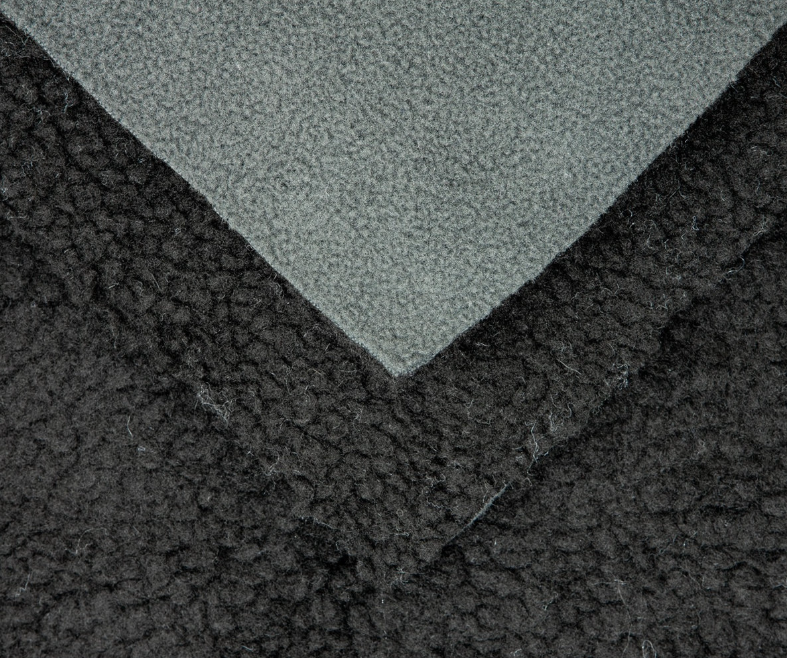
Waterproof protection and thermal insulation are two different functions, but they often work together in winter dog socks. A waterproof outer layer helps reduce exposure to wet snow, rain, and damp ground. A warm inner lining helps retain heat around the paw and improves the product's comfort in colder conditions.
For pet brands targeting winter markets, combining these functions can create a more practical product than simply making a thicker sock. The design should protect against moisture without becoming so bulky that the dog struggles to walk naturally.
Which Inner Linings Are Suitable for Warm Waterproof Dog Socks?
Fleece is a common lining choice because it is soft, lightweight, and available in different thicknesses. It can create a comfortable layer between the dog's paw and the outer material. Sherpa-style fleece offers a thicker, plush surface that may suit selected winter products where warmth is a major selling point.
Other textile linings can also be considered, depending on the target price and product design. A thinner lining may be preferable for a lightweight rain sock, while a thicker lining may be appropriate for cold-weather use. The key is to avoid excessive bulk around the toes and ankle opening, where too much material can make the sock difficult to put on or cause uncomfortable pressure.
Why Is Moisture Management Important for Winter Dog Socks?
Warmth is not only about adding insulation. If moisture becomes trapped inside the sock, the paw may feel damp and uncomfortable even when the outside remains dry. Sweat, condensation, and moisture entering through the opening can all affect the internal environment.
This is why lining selection should be considered together with the waterproof layer and overall fit. A breathable construction may help manage water vapor, while a lining that does not retain excessive moisture can improve comfort. However, no textile construction should be described as completely eliminating internal moisture under all conditions.
How Can Manufacturers Balance Warmth, Weight, and Flexibility?
A thick lining can feel warm in the hand, but the finished sock must still allow a dog to move comfortably. Too much insulation can increase the product's weight, reduce flexibility, and make the opening difficult to stretch. It can also change the internal dimensions, meaning the pattern may need to be adjusted to accommodate the lining thickness.
Manufacturers should evaluate the complete sock with the intended lining, outer fabric, and sole attached. Buyers should request samples and check whether the product can be put on easily, stays in position, and allows the dog to walk without obvious restriction.
4. Which Waterproof Dog Socks Are Best for Rain, Snow, and Everyday Outdoor Use?
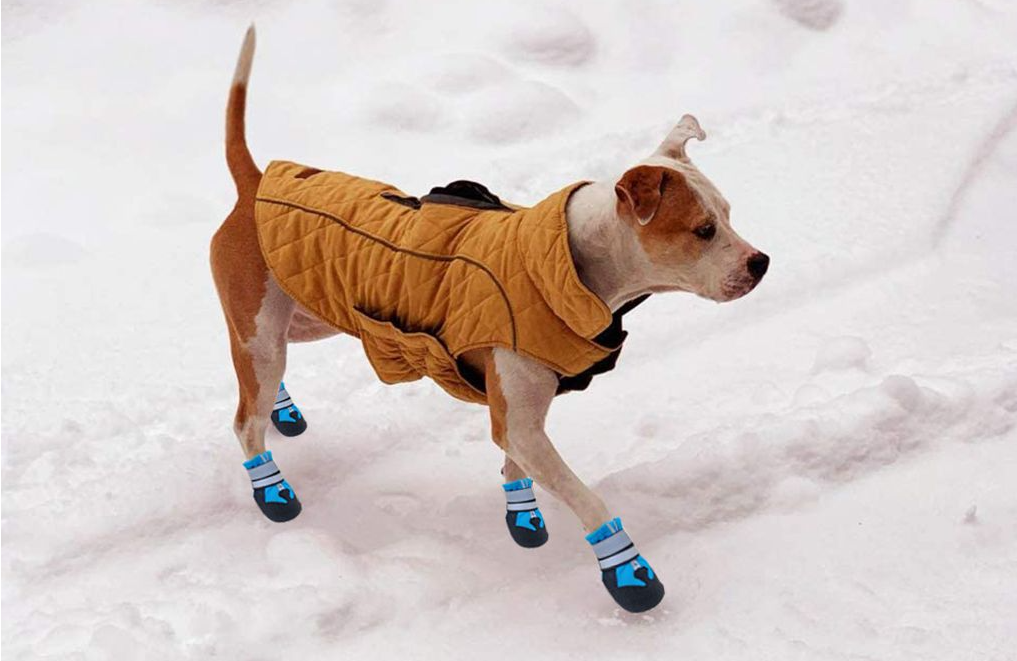
Not all waterproof dog socks are designed for the same environment. A product suitable for a short walk on wet pavement may not provide enough coverage for deep snow or prolonged outdoor exposure. B2B buyers should therefore define the intended application before choosing materials and construction.
Product positioning also influences purchasing decisions. Customers shopping for rainy-season protection may prioritize water resistance and easy cleaning. Winter customers may look for warmth, insulation, and secure fastening. Indoor customers may care more about softness and anti-slip performance.
Are Waterproof Dog Socks Suitable for Rainy-Day Walks?
Rainy-day styles are intended to reduce direct contact with wet pavement, damp grass, and shallow puddles. A flexible outer fabric and protective lower section can make these products useful for short outdoor walks and everyday paw protection.
For this application, the opening and fastening system deserve particular attention. Water can enter from the top if the sock is too short, too loose, or exposed to splashing. A secure fit helps keep the product in position, although it should never be so tight that it restricts circulation or causes discomfort.
What Features Matter Most in Waterproof Socks for Snow and Winter Conditions?
Winter products often need a combination of moisture protection, insulation, sole traction, and adequate coverage. Snow can melt against a warm paw or inside a poorly sealed construction, so the product should be designed for the expected level of exposure.
For colder markets, buyers may consider fleece-lined constructions, taller openings, adjustable closures, and flexible protective soles. However, a sock designed for light snow should not automatically be positioned as suitable for deep snow, ice hiking, or prolonged exposure to freezing conditions. The marketing description should match the actual product performance.
Can Waterproof Dog Socks Be Used Indoors on Slippery Floors?
Some dog socks are designed for indoor use, especially for dogs that need extra traction on smooth floors. These products may use silicone dots, printed grip patterns, or rubberized sole sections. A waterproof lower surface can also make cleaning easier, but waterproofing and traction are separate performance characteristics.
For indoor products, the sole should provide grip without becoming excessively rigid. A very hard or heavy sole may interfere with natural paw movement. Buyers should test the finished product on representative surfaces and check whether the grip pattern remains effective after repeated use and cleaning.
5. How Do Anti-Slip Soles Improve the Safety and Performance of Waterproof Dog Socks?

Waterproof protection alone does not guarantee a useful dog sock. If the lower surface becomes slippery when wet, the product may create a different problem. Anti-slip features help improve contact with indoor floors and selected outdoor surfaces, depending on the sole material and tread design.
For manufacturers, the challenge is to create a sole that offers useful traction without making the sock too stiff. The sole must also remain securely attached to the textile upper during repeated bending, walking, and cleaning.
Which Sole Materials Are Commonly Used for Dog Socks?
Silicone printing, rubberized coatings, and flexible synthetic compounds are among the possible options for traction-focused lower surfaces. Silicone grip patterns can be applied in dots, lines, paw shapes, or other layouts. Rubberized materials may provide a more continuous protective surface, depending on the design.
The best option depends on the target use. Indoor traction socks may use a patterned grip surface, while outdoor waterproof styles may require a more protective sole construction. Buyers should not assume that a product with silicone dots has the same abrasion resistance or water protection as a fully coated outsole.
How Should Anti-Slip Patterns Be Designed for Dog Paw Movement?
A grip pattern should follow the functional area of the paw rather than being added only for decoration. The pattern needs sufficient contact with the floor while allowing the sock to flex naturally. If the grip material is concentrated in the wrong area, it may not provide useful traction when the dog puts weight on the paw.
Pattern spacing, material hardness, thickness, and surface texture can all influence performance. A pattern that is too sparse may provide limited contact, while an overly thick or rigid coating may reduce flexibility. Testing the finished product on the surfaces it is intended for is more useful than judging the grip design from a product photograph.
How Can Manufacturers Prevent the Sole from Peeling Away?
The connection between the sole and upper is a common point of concern in footwear construction. If the materials are incompatible, the surface is not prepared correctly, or the bonding process is inconsistent, the sole may begin to separate during use.
Manufacturers should confirm material compatibility, surface preparation, adhesive selection, and curing conditions. They should also inspect the sole edges and conduct appropriate adhesion checks on representative samples. For B2B orders, buyers should agree on the inspection method and acceptance criteria before mass production.
6. How Should Waterproof Dog Socks Fit Different Dog Paw Sizes?
Fit is one of the most important factors in the performance of waterproof dog socks. Even a high-quality waterproof material cannot deliver a good user experience if the sock slips off, twists around the paw, or creates pressure during walking.
Dogs have different paw shapes and proportions. Some have relatively wide paws, while others have longer or narrower paws. A product that fits one breed comfortably may not work equally well for another. This makes accurate sizing and pattern development essential for manufacturers and B2B buyers.
Why Should Buyers Consider Both Paw Length and Paw Width?
Measuring paw length alone may not be enough. If a sock is selected only by length, a dog with wider paws may find the opening or toe area too tight. Conversely, a product that is wide enough may still be too long, causing excess material to fold or move inside the sock.
Buyers should request the supplier's measurement instructions and size chart. They should also confirm whether the chart is based on paw length, paw width, or a combination of measurements. Sample testing across representative dog sizes can help identify whether the grading system works in practical use.
How Do Elastic Cuffs and Adjustable Straps Help Keep Socks in Place?
An elastic cuff can help the sock stay around the lower leg, while an adjustable strap may provide additional control over the fit. These features are particularly useful when a product is intended for outdoor walking, where repeated movement can cause loose footwear to rotate or slide.
However, the fastening system must balance security and comfort. An opening that is too loose may allow the sock to fall off, while one that is too tight can create pressure. Manufacturers should evaluate the elasticity, strap placement, closure strength, and ease of adjustment using the finished product.
How Can a Factory Develop a Consistent Size Range?
Size grading involves adjusting the pattern to create different product sizes while maintaining the intended proportions and fit. Simply increasing every dimension by the same amount may not produce a comfortable result because paw proportions do not always change in a perfectly linear way.
A practical development process includes reviewing paw measurements, creating size specifications, producing samples, and checking fit across representative sizes. For B2B buyers, the supplier should explain how the size range is developed and how dimensions are controlled during production.
7. How Are Waterproof Dog Socks Manufactured and Quality-Checked?
Waterproof dog socks require careful coordination between material preparation, cutting, sewing, coating or bonding, sole application, finishing, and inspection. The exact production sequence depends on the design. A simple coated-bottom sock may use a different process from a multi-layer waterproof product with a membrane and sealed seams.
For manufacturers, repeatability matters. A product should not perform well only in the first sample. The same materials, construction details, and quality requirements need to be maintained across the production batch.
What Happens During Material Preparation and Cutting?
Before production begins, the factory checks the incoming fabric, lining, waterproof layer, sole material, elastic components, and other accessories against the approved specification. Materials may be inspected for visible defects, color variation, thickness differences, coating damage, or contamination.
The approved materials are then cut into the required pattern pieces. Cutting accuracy is important because small dimensional differences can affect the opening, toe shape, seam alignment, and overall fit. Components should also be identified by size, color, and production batch to reduce the risk of mixing different specifications.
How Are the Upper, Lining, and Waterproof Layers Assembled?
The assembly method depends on the product construction. A multi-layer sock may require the outer fabric, membrane, and lining to be laminated or joined in a controlled sequence. A simpler design may use coated fabric as the main outer material and a separate lining for comfort.
Seams require particular attention because needle holes and poorly finished joining areas can become potential water-entry points. Depending on the design, manufacturers may use seam-sealing methods or construction details intended to reduce moisture penetration. The effectiveness of these methods should be checked on the finished product rather than assumed from the material specification.
Which Quality Checks Should Be Performed Before Shipment?
Quality inspection should cover both appearance and function. Typical checks may include size dimensions, seam consistency, lining placement, sole adhesion, closure performance, surface defects, and left-right product matching. For products sold with waterproof claims, buyers should request an agreed water-resistance or waterproof test method appropriate to the intended use.
It is important to distinguish between checking the raw fabric and checking the finished sock. A fabric supplier may provide technical data for a waterproof material, but the finished product can still leak through seams, openings, or poorly bonded areas. Testing the complete construction provides more useful evidence of real product performance.
For a B2B order, inspection criteria should be agreed before production. Buyers can request sample approval, production updates, inspection photographs, or a pre-shipment inspection depending on the order's size and requirements.
8. What Should B2B Buyers Consider When Developing Custom Waterproof Dog Socks?
Custom waterproof dog socks can help a pet brand create a product that fits its target market more closely. Rather than competing only on price, a brand can differentiate its range through material selection, color combinations, lining, sole design, branding, packaging, and size options.
However, customization should begin with a clear product brief. If the buyer only asks for a waterproof dog sock without defining the intended use, the supplier may not know whether the priority is light rain protection, winter warmth, indoor traction, or more demanding outdoor use.
Which Product Features Can Be Customized for a Private-Label Range?
Depending on the product and supplier's capabilities, customization may include outer fabric, lining thickness, color, printed patterns, sole material, grip design, elastic cuffs, fastening straps, labels, logos, and packaging. Buyers can also discuss changes to the product's dimensions or construction when the existing model does not meet their target requirements.
Not every change has the same cost or development impact. Changing a color may be relatively straightforward, while developing a new waterproof construction or changing the sole structure may require additional sampling, material testing, or tooling. Buyers should ask which modifications can be made to an existing product and which require new development.
How Can OEM and ODM Services Support Waterproof Dog Sock Development?
OEM (Original Equipment Manufacturing) is generally suitable when a buyer has a defined design or technical specification and needs a manufacturer to produce it. The buyer may provide the design concept, dimensions, materials, logo artwork, construction requirements, and packaging instructions.
ODM (Original Design Manufacturing) is often more suitable when a buyer wants to work from an existing product or supplier-developed design and adapt it for a specific brand or market. This can be useful for retailers that want to launch a differentiated product without developing every component from the beginning.
Guangzhou Petsun provides OEM/ODM dog footwear services, including product development, customization based on existing models, branding, and packaging options. Its OEM & ODM custom services page outlines different customization routes, sample development, and project requirements.
According to the published service information, selected existing-model customization projects have a stated minimum order quantity of 500 sets per color, with sample creation generally listed at 7–14 days and production at 30–60 days. These figures apply to the described customization services and should be reconfirmed for a waterproof dog sock project, since the exact product structure and materials may affect the requirements.
What Information Should Buyers Prepare Before Requesting a Custom Quote?
To receive a useful quotation, buyers should prepare the target product application, expected order quantity, preferred materials, size range, color requirements, branding files, packaging specifications, and destination market. If waterproof performance is a key selling point, the buyer should also explain the intended exposure conditions and the level of protection expected.
Reference photographs, sketches, technical drawings, and physical samples can help communicate the desired construction. It is also useful to identify which features are essential and which are flexible. This gives the manufacturer room to suggest practical alternatives when a requested material or construction would create unnecessary cost or production complexity.
9. How Can Wholesale Waterproof Dog Socks Create Better Business Opportunities?
Waterproof dog socks can fit into several pet product categories, including rainy-season accessories, winter paw protection, indoor traction products, and general outdoor footwear. For wholesalers and retailers, this creates opportunities to build a product assortment around different customer needs rather than relying on one basic sock design.
Seasonality can influence demand. Customers in regions with frequent rain may look for products that help keep paws cleaner throughout the year, while colder markets may show stronger interest in insulated designs during winter. Retailers can plan inventory around local weather patterns, sales channels, and customer preferences.
Why Can Waterproof Dog Socks Be a Useful Addition to a Pet Retail Product Range?
They address a practical problem that customers can understand quickly: keeping paws cleaner and reducing direct exposure to wet surfaces. A product with clear benefits can complement dog coats, rainwear, outdoor accessories, and winter collections.
For online sellers, product differentiation can come from clear size information, close-up material photographs, realistic waterproof descriptions, and practical usage guidance. Customers need to understand whether a product is intended for indoor floors, rainy walks, light snow, or more demanding outdoor conditions.
How Can Wholesale Buyers Reduce the Cost of Sourcing Waterproof Dog Socks?
Wholesale pricing is influenced by order quantity, material selection, product complexity, customization, packaging, and shipping arrangements. A standard existing style may be more economical than a fully customized design because the buyer may avoid some development costs and additional sampling work.
Buyers can also improve purchasing efficiency by planning size combinations, consolidating orders, and selecting a consistent material specification across several color options where practical. However, lowering the unit cost should not mean removing essential waterproof or durability features. A cheaper product that generates frequent returns can become more expensive over time.
How Can Buyers Compare Wholesale Quotes More Accurately?
Ask each supplier to quote against the same product specification. Compare the material construction, lining, sole design, size range, packaging, minimum order quantity, sample fees, lead time, and shipping terms. If one quotation includes a membrane and another uses a simple water-resistant coating, the two products should not be treated as equivalent.
It is also useful to calculate the total landed cost rather than comparing factory prices alone. Freight, duties, packaging, inspection, and any additional handling expenses may influence the final margin. A clear cost breakdown helps the buyer understand where the real price differences come from.
10. What Wholesale Options Does Guangzhou Petsun Offer to Pet Product Buyers?
For B2B buyers, sourcing decisions often depend on how quickly products can be supplied, how much inventory investment is required, and whether the supplier can support different sales models. Some businesses want to test an existing product before developing a private-label collection. Others already have a clear brand identity and need a supplier that can support customization.
Guangzhou Petsun focuses on pet footwear development, manufacturing, and wholesale supply. Buyers can explore the company's dog shoe product catalog to review available styles and identify products for further discussion. The company lists different product categories, including summer footwear, winter products, rain boots, and casual dog shoes.
Can Buyers Start with Existing Products Instead of Developing a New Design?
Yes. For businesses that want to test a product category or replenish inventory quickly, existing products can be a practical starting point. Buyers can review available styles, confirm sizes and colors, and ask about current inventory before placing an order.
Guangzhou Petsun's in-stock wholesale service lists a ready-stock minimum order quantity starting at 10 sets, with four pieces per set. The page also states that available in-stock products can be dispatched within 48 hours. Actual availability and dispatch timing should be confirmed when the order is placed.
The same service page describes custom packaging options for ready-stock orders, including stickers, paper cards, and packaging bags from 50 sets. This can help retailers add some brand identity without undertaking a full product-development project.
What Should Buyers Confirm Before Ordering Ready-Stock Products?
Ready-stock availability can change, so buyers should confirm the exact style, size, color, and quantity before arranging payment. They should also ask whether different sizes can be mixed, what packaging is included, and whether custom labels or stickers are available for the selected order.
For a waterproof dog sock project, buyers should take one additional step: confirm whether the exact product is currently available and whether its waterproof performance matches the intended application. The presence of waterproof dog shoes or rain boots in a supplier's broader catalog does not automatically mean that a particular waterproof sock model is available.
How Can Guangzhou Petsun Support Buyers Who Need a More Customized Product?
When existing products do not meet a brand's requirements, custom development may be a better route. Guangzhou Petsun's published custom services describe options such as adjusting existing models, changing materials, modifying sole colors or hardness, adding branding, and developing new products.
For buyers interested in waterproof dog socks, the next step is to discuss the required construction directly with the company. Explain whether the product needs a waterproof upper, a coated sole, a warm lining, a specific closure system, or custom packaging. The company can then confirm which features are feasible, what sample work is needed, and the applicable minimum order quantity.
By offering both existing product sourcing and custom development routes, Guangzhou Petsun gives B2B buyers different ways to approach pet footwear purchasing. The right choice depends on the product requirements, sales plan, order quantity, and launch schedule.
11. How Should Buyers Evaluate the Price and Profit Potential of Waterproof Dog Socks?
Waterproof dog socks can occupy different price positions depending on the materials, construction, and intended use. A simple water-resistant sock may have a lower material cost, while a multi-layer product with a waterproof membrane, warm lining, reinforced sole, and adjustable fastening may require more processing and higher-quality components.
For wholesalers and brand owners, the objective is not simply to find the lowest factory price. It is to select a product whose construction supports the retail price, customer expectations, and expected service life.
Which Product Features Have the Greatest Influence on Manufacturing Cost?
Material selection is often a major cost factor. A coated textile, laminated membrane, thick fleece lining, and reinforced sole may cost more than a basic knitted fabric. The number of components and the complexity of assembly can also influence labor requirements.
Customization adds another layer of cost. Special colors, printed patterns, custom labels, logo application, new packaging, and new product development may involve additional setup, sampling, or minimum quantity requirements. Buyers should ask suppliers to separate these costs where possible so that the commercial impact of each feature is clear.
How Can Buyers Balance Retail Appeal with Wholesale Pricing?
A product does not need every possible feature to be commercially successful. A lightweight rain sock may not need the thickest winter lining, while a cold-weather product may justify additional insulation and a more protective sole. Matching the construction to the target customer helps prevent unnecessary material and labor costs.
Buyers can develop a good-better-best product range. An entry-level style may focus on basic water resistance and indoor use. A mid-range style may add a more durable sole and improved fastening. A premium style may include a layered waterproof construction, insulation, and more extensive product testing.
How Can Retailers Protect Their Margins After Purchasing Waterproof Dog Socks?
Retail margin depends on more than the difference between factory price and selling price. Import costs, shipping, platform fees, packaging, advertising, returns, and customer service all affect the final result. A product with an attractive unit price may not be profitable if sizing problems or unclear performance claims lead to frequent returns.
Clear product descriptions are especially important for waterproof dog socks. Retailers should explain whether the product is intended for light rain, wet ground, indoor use, or winter conditions. They should also provide accurate size guidance and care instructions. Setting realistic expectations can improve customer satisfaction and reduce avoidable complaints.
12. What Should Buyers Check Before Placing a Bulk Order for Waterproof Dog Socks?
Before approving a bulk order, buyers should make sure that the product specification is clear and that the supplier understands the intended market. Waterproof dog socks combine several functional requirements, so small differences in material or construction can change the final product significantly.
Which Product Specifications Should Be Confirmed Before Production?
Buyers should document the outer fabric, waterproof layer or coating, lining, sole material, dimensions, size range, colors, fastening system, logo placement, and packaging. If the product has a waterproof claim, the expected level of protection should also be defined.
It is helpful to approve a physical sample before mass production. The sample should be checked for fit, comfort, flexibility, ease of putting on and removing, sole attachment, and the performance expected under the intended conditions.
Which Quality-Control Requirements Should Be Included in the Purchase Agreement?
The purchase agreement should explain how the finished product will be inspected. This may include visual inspection, size measurement, seam checks, closure tests, sole adhesion checks, and agreed waterproof performance tests. The buyer and supplier should define acceptable defect levels and how nonconforming products will be handled.
Where a product is intended for repeated washing, buyers should also consider whether the relevant materials, coatings, and bonding methods can withstand the expected care process. Care instructions should be based on the product's actual material properties rather than generic assumptions.
How Can Buyers Reduce Communication Problems During Production?
Clear documentation is often more effective than relying on long conversations or scattered messages. Buyers should keep the approved artwork, size chart, material specification, sample photographs, packaging details, and final quotation in one reference set. Any change should be confirmed in writing so that the production team is working from the correct version.
It is also useful to agree on key milestones, such as sample approval, material preparation, bulk production, inspection, and shipment. This gives both sides a shared understanding of progress and helps identify delays before they become urgent problems.
13. What Are the Most Frequently Asked Questions About Waterproof Dog Socks?
Are Waterproof Dog Socks Completely Waterproof?
Not necessarily. The term waterproof should be supported by the actual construction and testing method. Some products are only water-resistant and are designed for splashes or damp surfaces. Others use a waterproof membrane, coated fabric, or more protective construction. Buyers should confirm whether the entire sock, including seams and openings, has been evaluated for the claimed level of water protection.
Can Dogs Wear Waterproof Socks in Snow?
Some waterproof dog socks are suitable for light snow and cold outdoor conditions, particularly when they include insulation and a protective sole. However, the suitability depends on sock height, closure security, thermal lining, and water protection. Products designed for light snow should not automatically be used for deep snow or prolonged exposure to freezing conditions.
Are Waterproof Socks for Dogs Breathable?
Some designs use breathable waterproof membranes that aim to block liquid water while allowing water vapor to pass through. Other products use coated materials that prioritize moisture resistance but may provide less vapor permeability. Breathability depends on the specific material system and should be verified through product information or testing.
Can Waterproof Dog Socks Be Washed and Reused?
Many dog socks are designed for repeated use, but care requirements depend on the materials, coatings, adhesives, and sole construction. Buyers should request the manufacturer's washing instructions and check whether the waterproof layer and sole remain intact after the recommended cleaning process. A product should not be marketed as machine washable unless that capability has been confirmed.
What Is the Difference Between Waterproof Dog Socks and Dog Rain Boots?
Dog socks are generally softer and more flexible, while rain boots may offer a more structured protective shape and greater coverage. Some waterproof socks use coated soles and textile uppers, whereas rain boots may use more extensive waterproof materials. The better choice depends on the dog's activity, weather exposure, desired flexibility, and level of protection.
Can Guangzhou Petsun Develop Custom Waterproof Dog Socks?
Guangzhou Petsun offers custom dog footwear services, including material and construction customization on selected products and new product development. Buyers interested in waterproof dog socks should share their desired fabric, lining, sole, waterproof requirements, and quantity so the company can confirm whether the project is feasible and provide the relevant sample and MOQ details. Visit the OEM/ODM services page for an overview of its customization process.
What Is the Minimum Order Quantity for Wholesale Dog Footwear?
Minimum order quantities depend on whether the buyer selects existing stock or requests customization. Guangzhou Petsun's published in-stock service information lists a starting MOQ of 10 sets for ready-stock dog shoes, with four pieces per set. Custom projects have different requirements depending on the development route, material, color, and product design. Buyers should confirm the MOQ for the exact waterproof sock or footwear model before ordering.
14. Why Should Pet Brands Consider Waterproof Dog Socks for Their Product Collections?
Waterproof dog socks offer an opportunity to connect practical paw protection with seasonal product demand. They can be positioned for rainy walks, wet grass, selected winter conditions, and indoor environments where a protective or anti-slip lower surface is useful. For retailers and distributors, they can complement broader pet footwear and outdoor accessory collections.
But product success depends on more than a waterproof label. The material should match the intended environment, the lining should provide suitable comfort, the sole should offer appropriate grip, and the size range should work for the target dogs. Clear product descriptions and realistic performance claims are also important for building customer trust.
For brands that want to expand their product range, Guangzhou Petsun provides several sourcing paths to explore. Buyers can browse the product catalog, discuss OEM/ODM development and customization, or review in-stock wholesale options.
Before placing an order, confirm whether the selected model is available as a waterproof dog sock, what level of water protection it provides, and whether its materials and construction are suitable for the intended market. A clear product brief and approved sample will help turn a general sourcing idea into a more reliable wholesale or private-label project.
15. Where Can Buyers Explore Waterproof Dog Footwear and Wholesale Services?
Buyers researching waterproof dog socks and related pet footwear can use the following Guangzhou Petsun pages as starting points:
- Guangzhou Petsun Products — explore available dog footwear styles and identify products for further sourcing discussions.
- Guangzhou Petsun OEM & ODM Custom Services — review product development, customization, branding, and packaging options.
- Guangzhou Petsun In-Stock Wholesale Services — review ready-stock ordering, MOQ information, and wholesale arrangements.
- Guangzhou Petsun Rain Boots — explore related dog footwear designed for wet-weather protection.
- Guangzhou Petsun Winter Products — explore winter dog footwear and cold-weather product options.
For a more accurate quotation, buyers should prepare their target application, expected quantity, preferred materials, waterproof performance requirements, size range, branding needs, and packaging expectations. This information helps the supplier determine whether an existing product, an adapted model, or a new custom design is the most suitable route.
How to Choose the First Footwear for Small Dogs
Related Article